
Aspirations of Impermanence – Designing Experience in Outdoor Recreation Areas
Where the natural environment already bears pressure of human presence, the question for architects is not whether or not to intervene, but how. We carry both drive to explore, grow and expand, and a desire for stewardship, care and protection – a paradox that Edward Wilson identifies as central to human relationship with nature, and one that has become a real threat for the natural environment. Humanity leaves traces behind, that may even be irreversible.
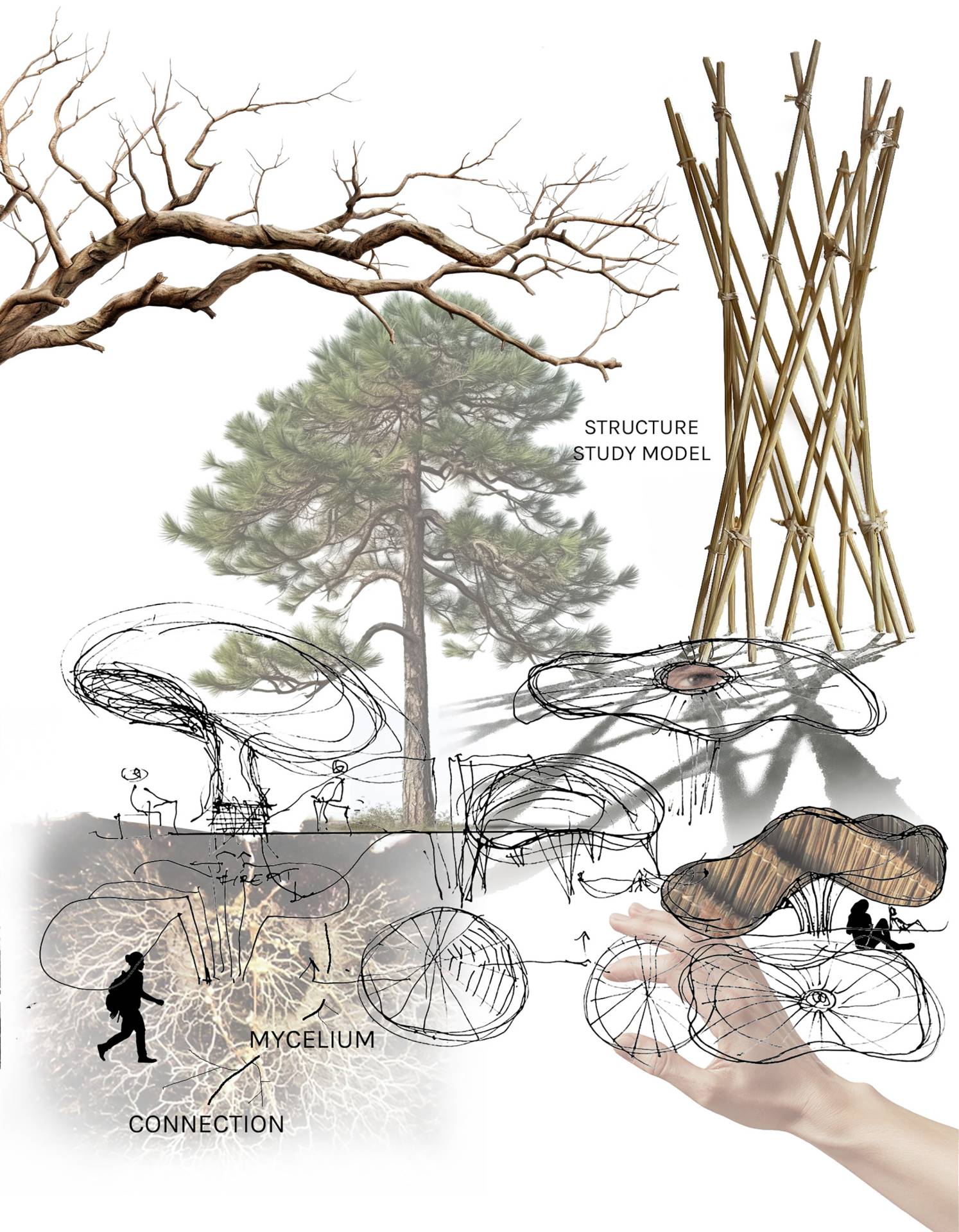
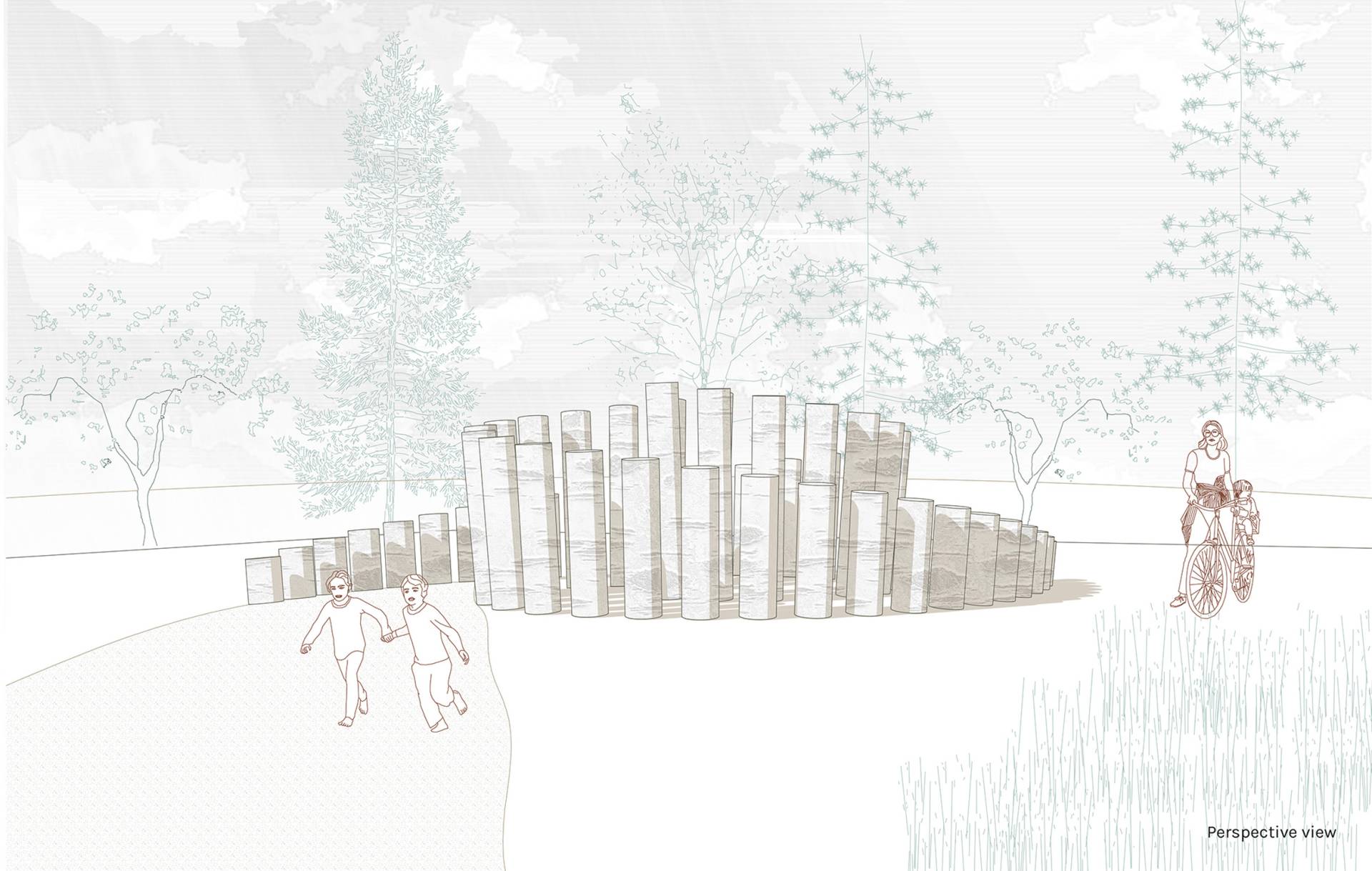
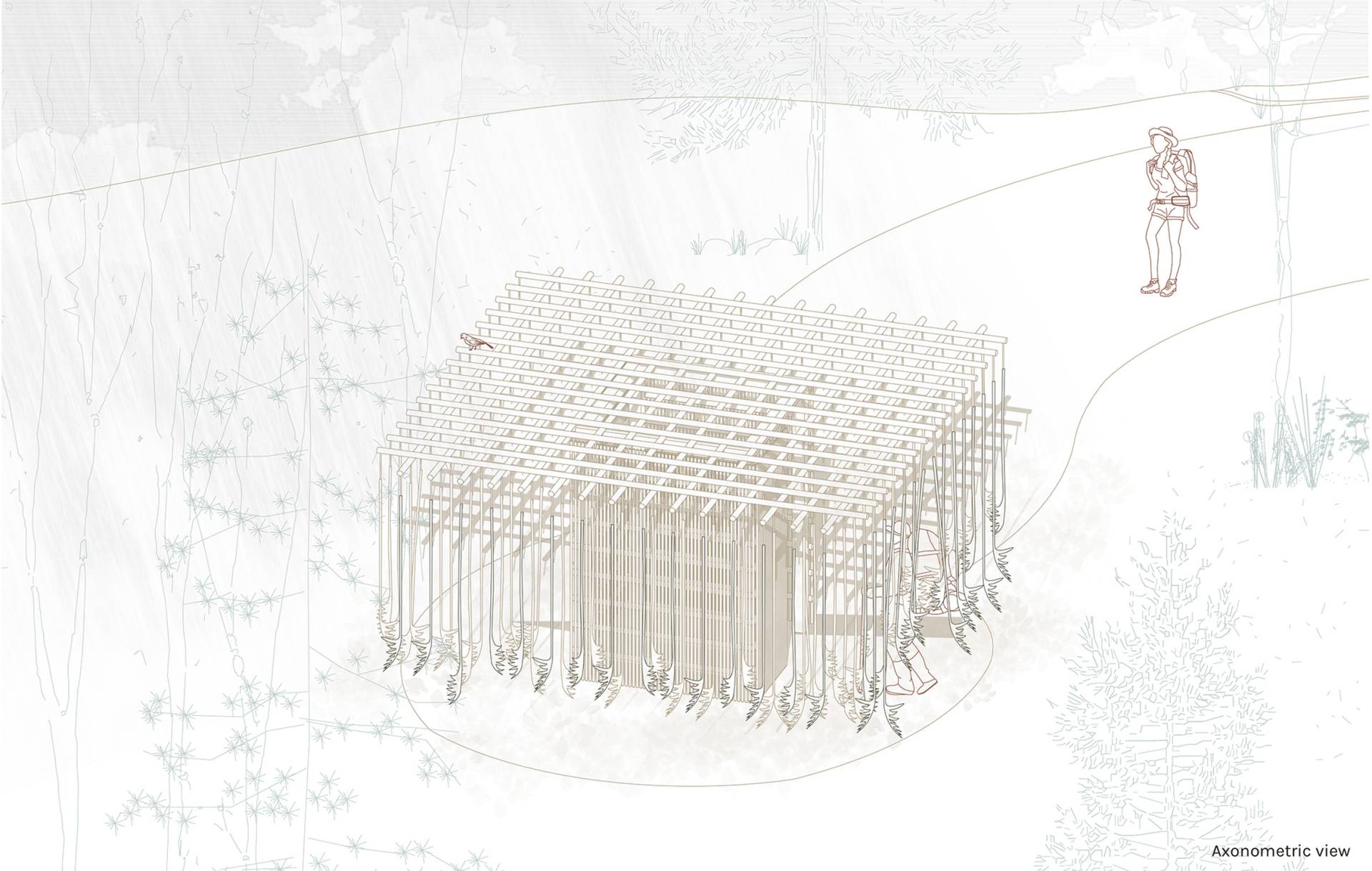
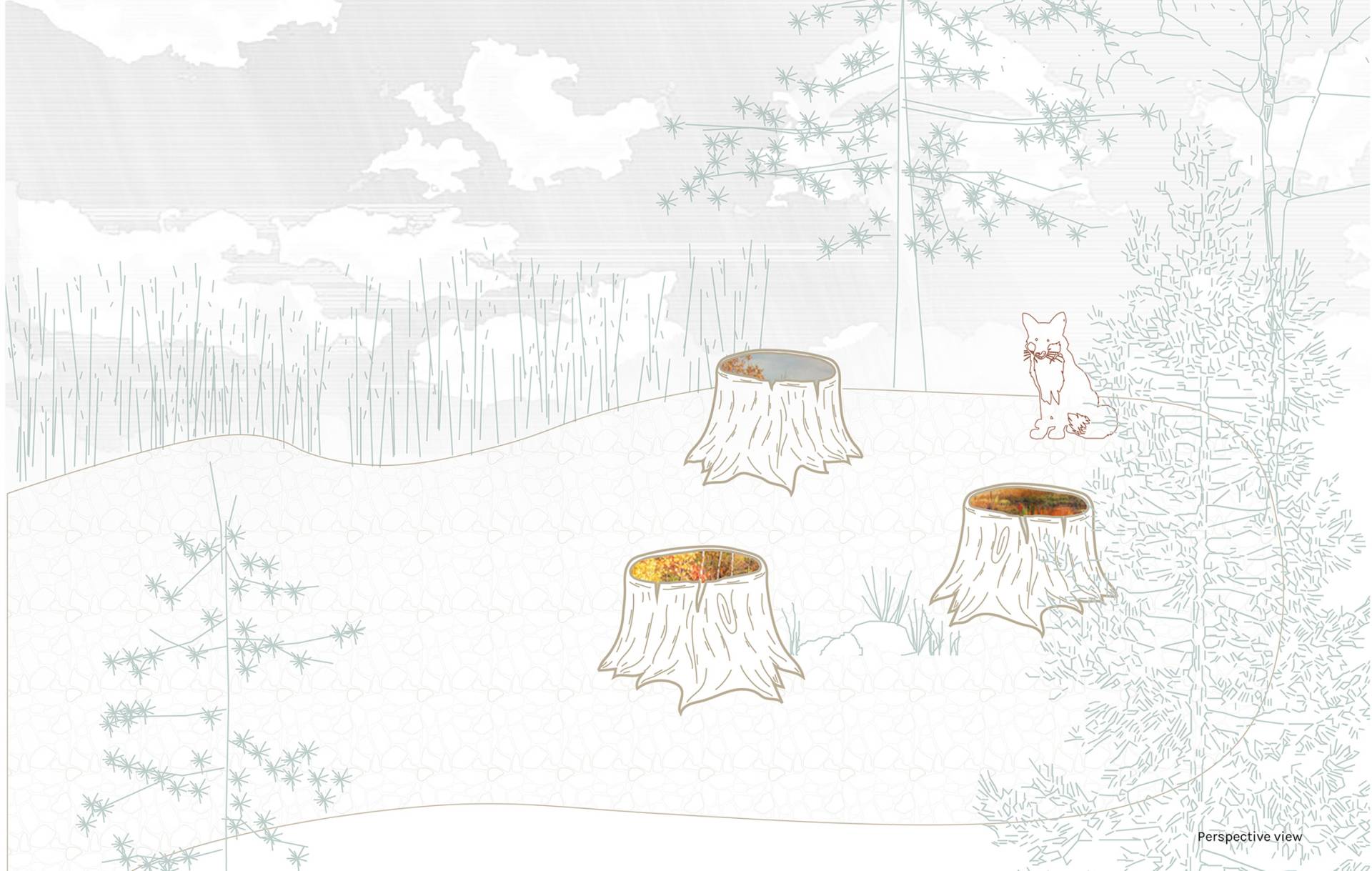
This project explores ephemeral architecture as a way of intervening in the natural environment. A project, built for specific purpose that once fulfilled, disappears. This does not make such spaces less significant than permanent ones; they are simply different.
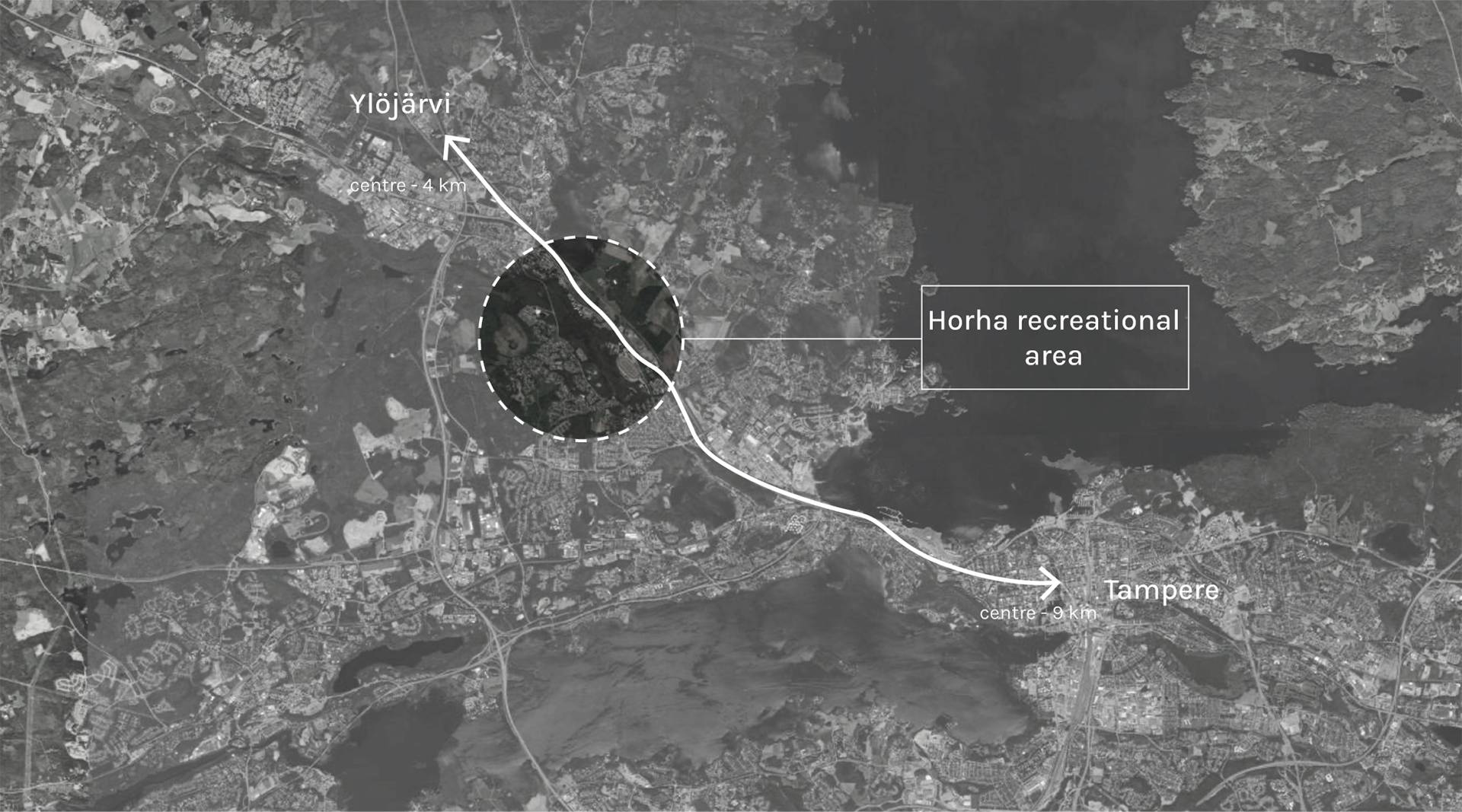
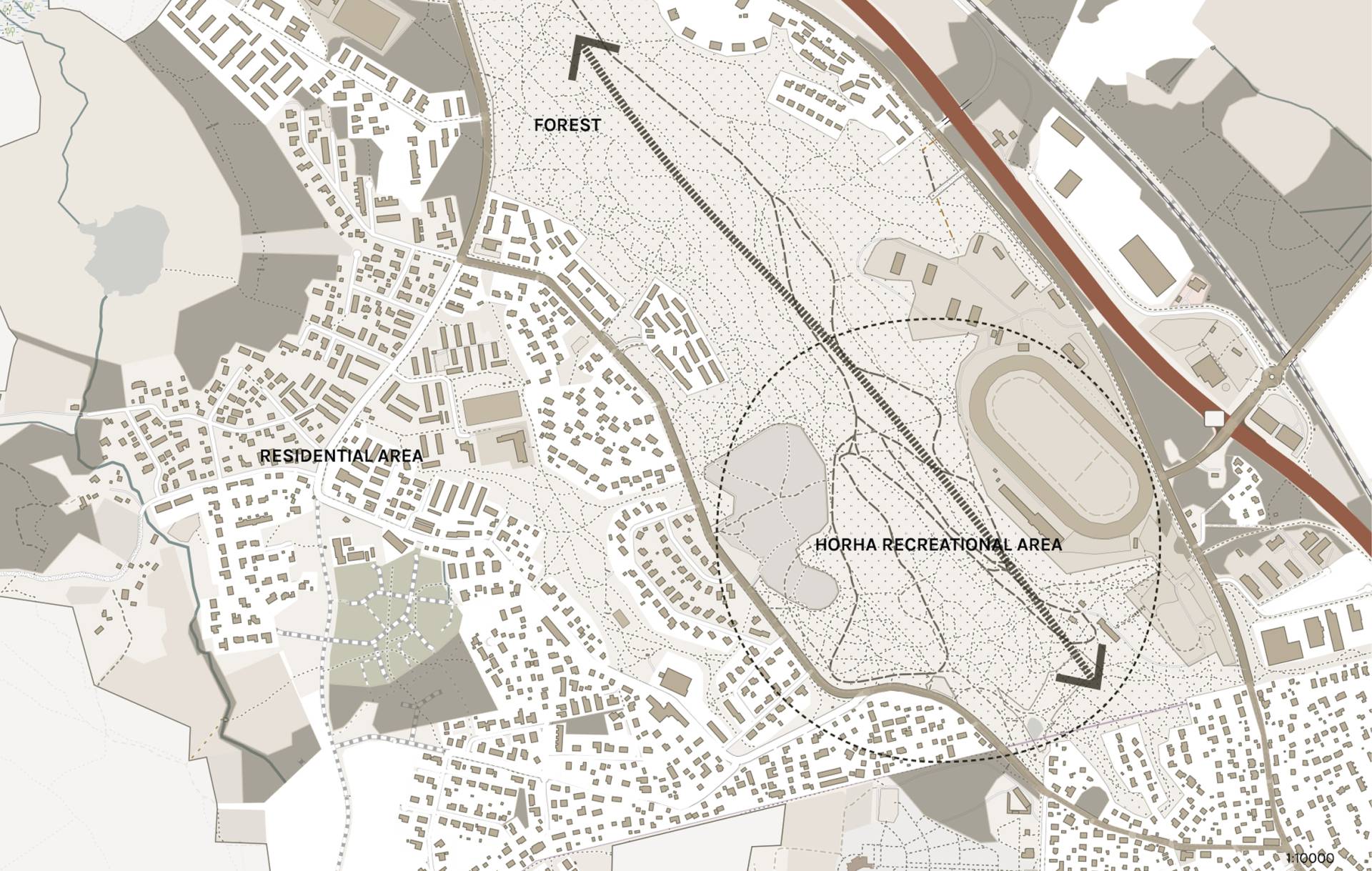
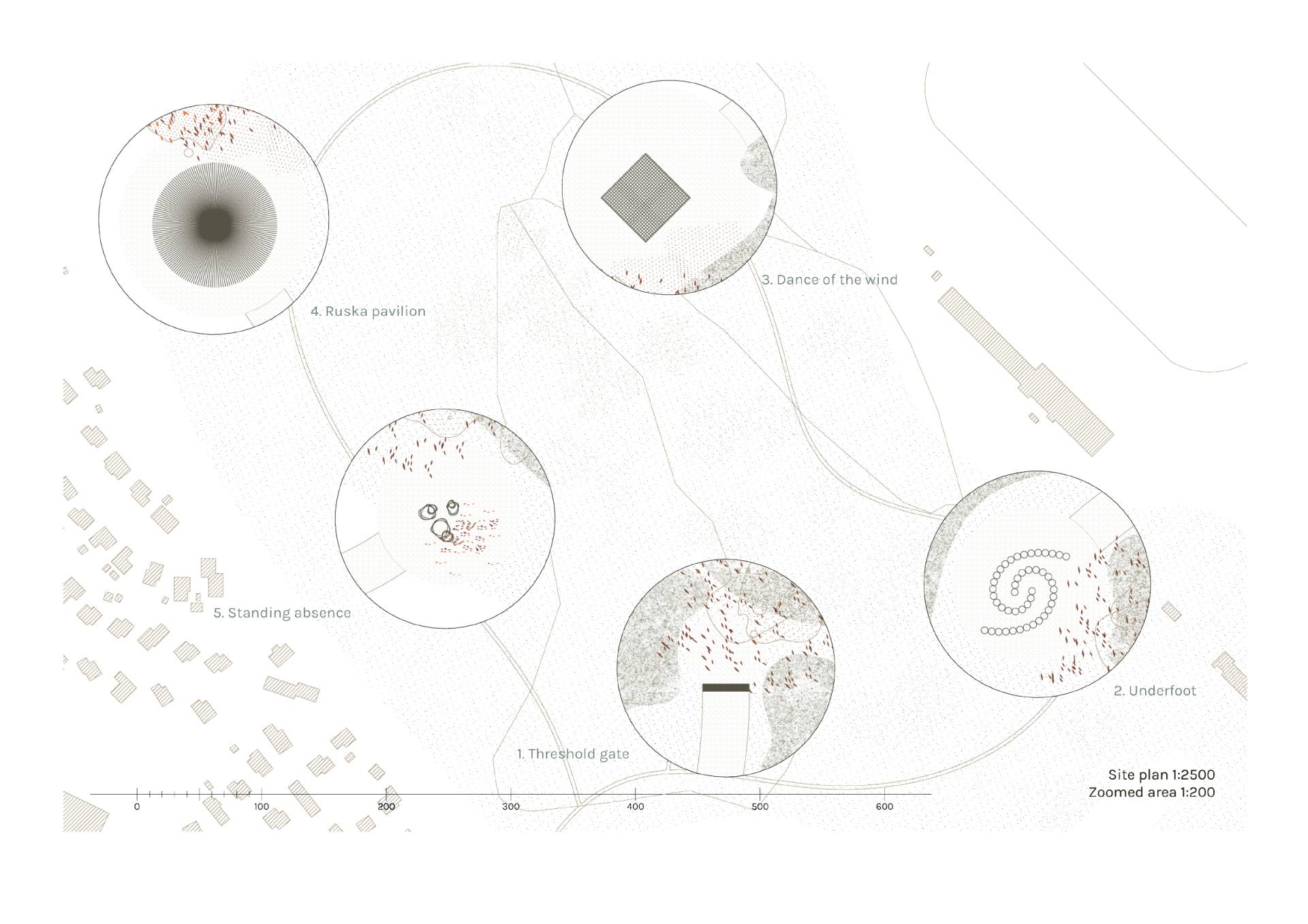
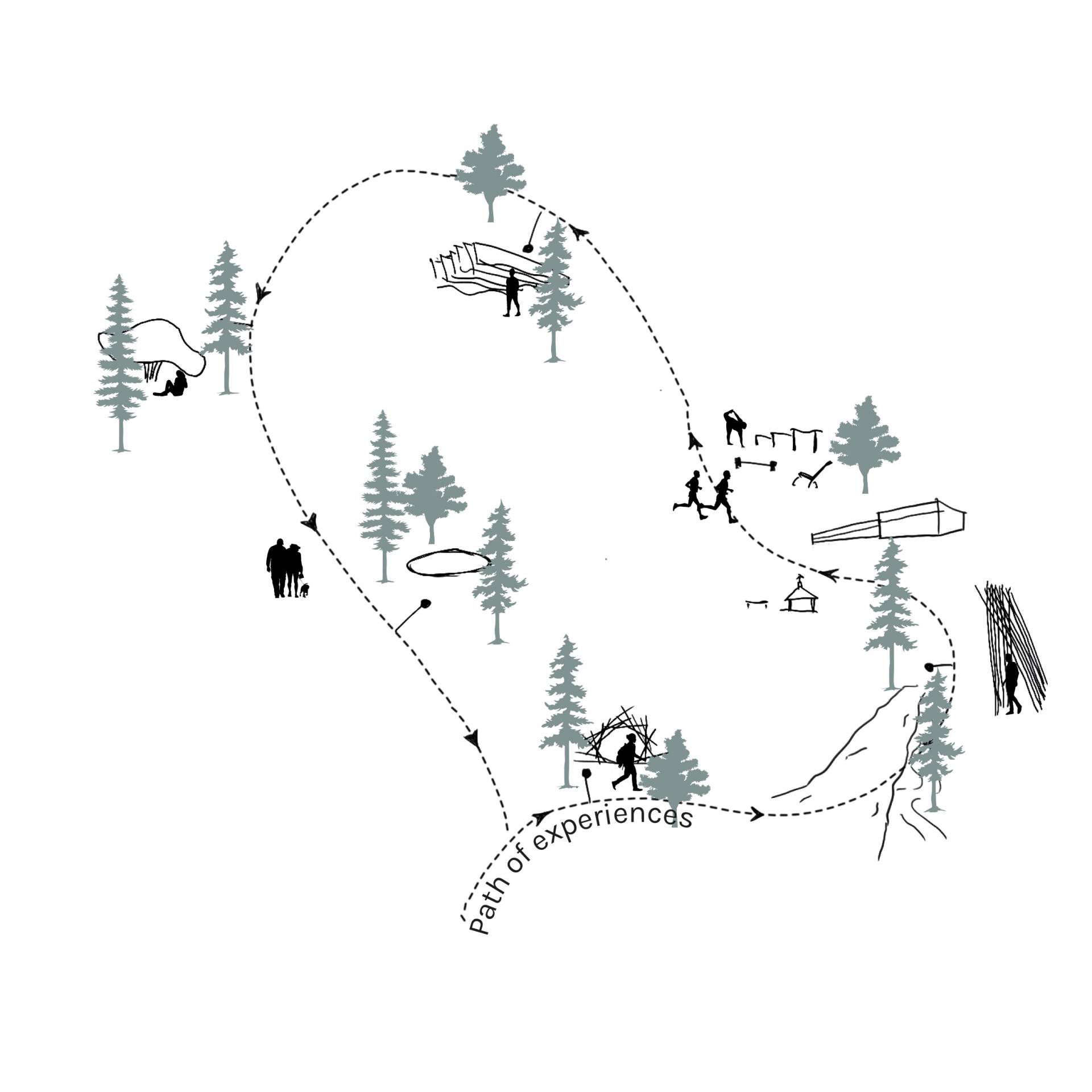
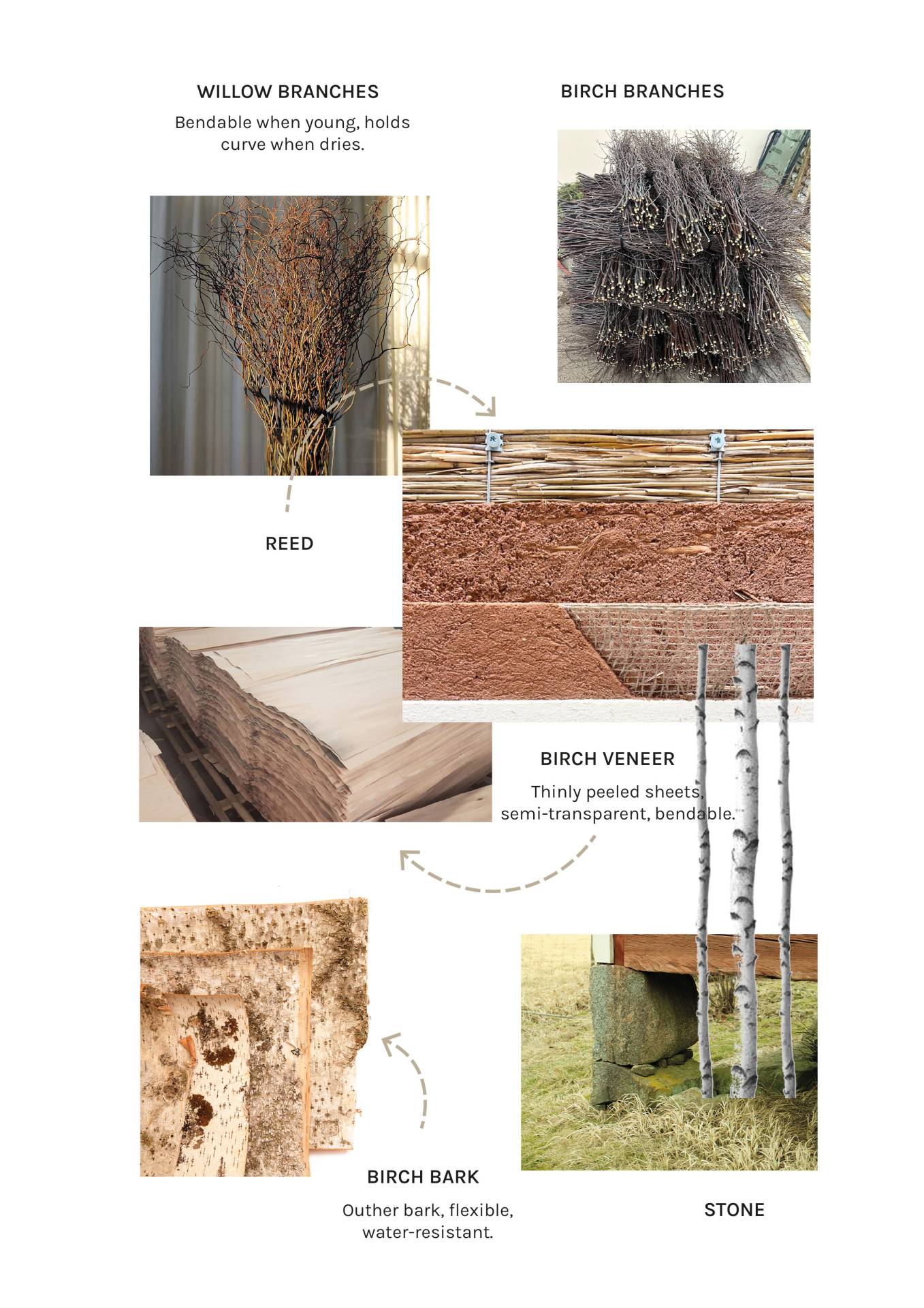
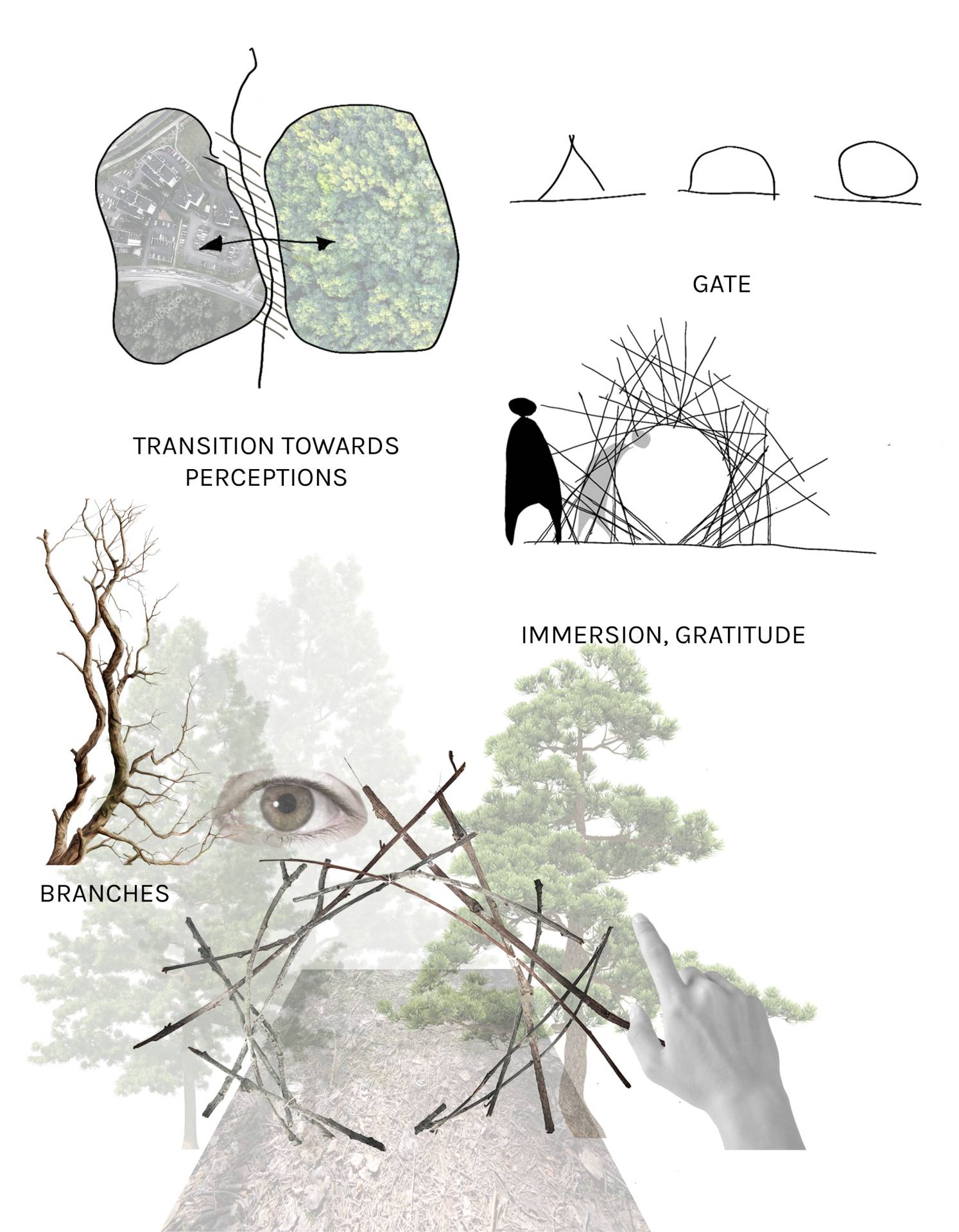
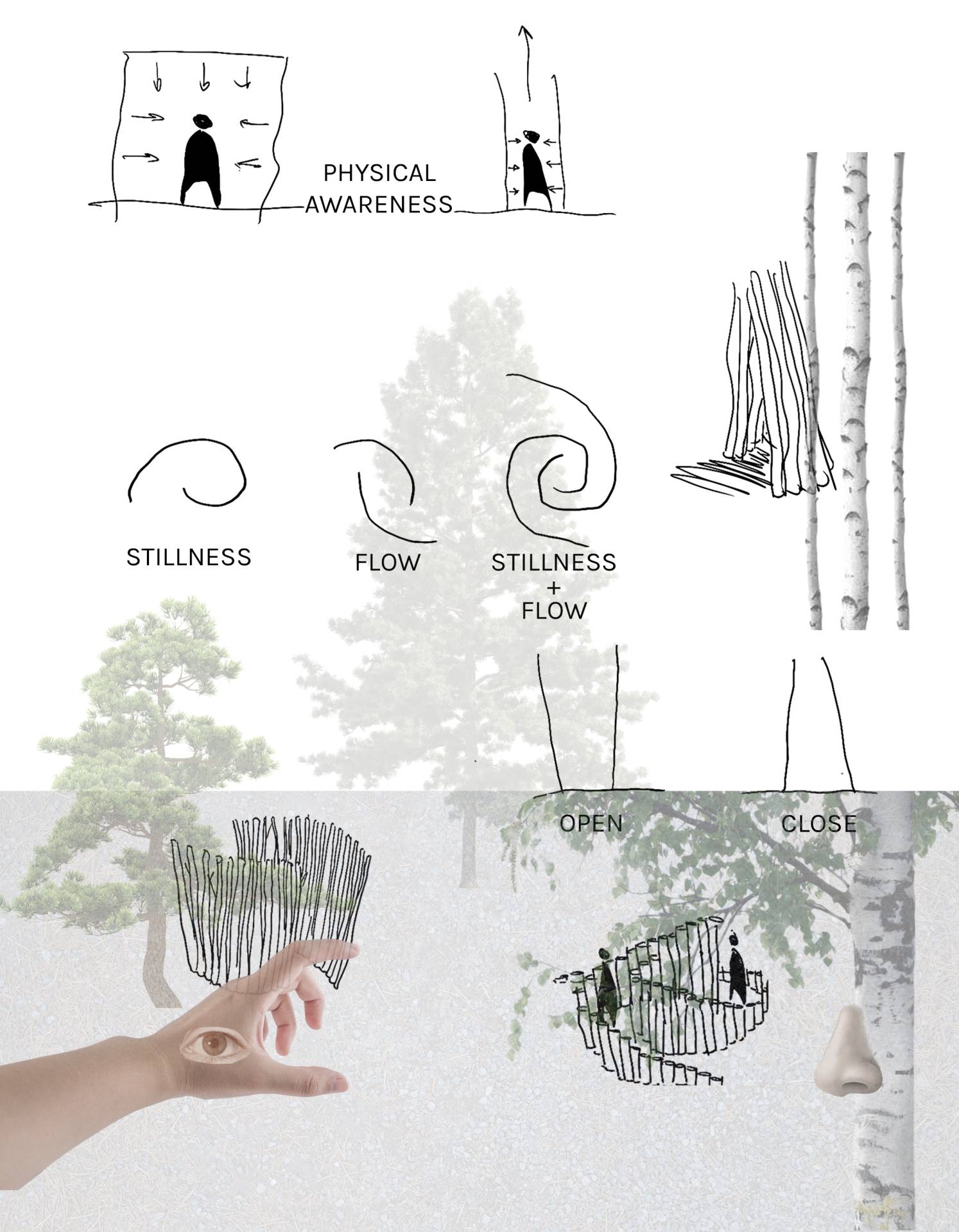
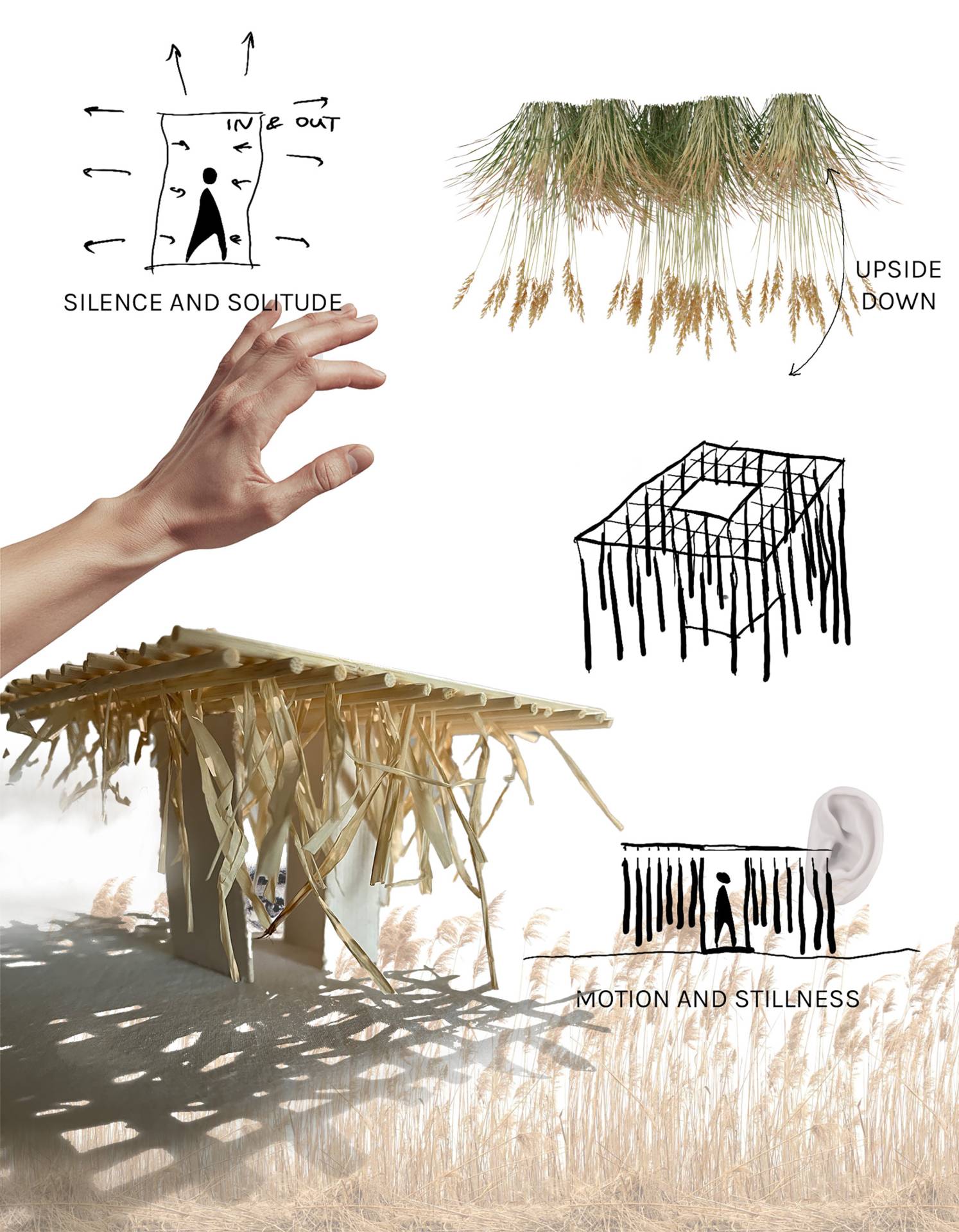
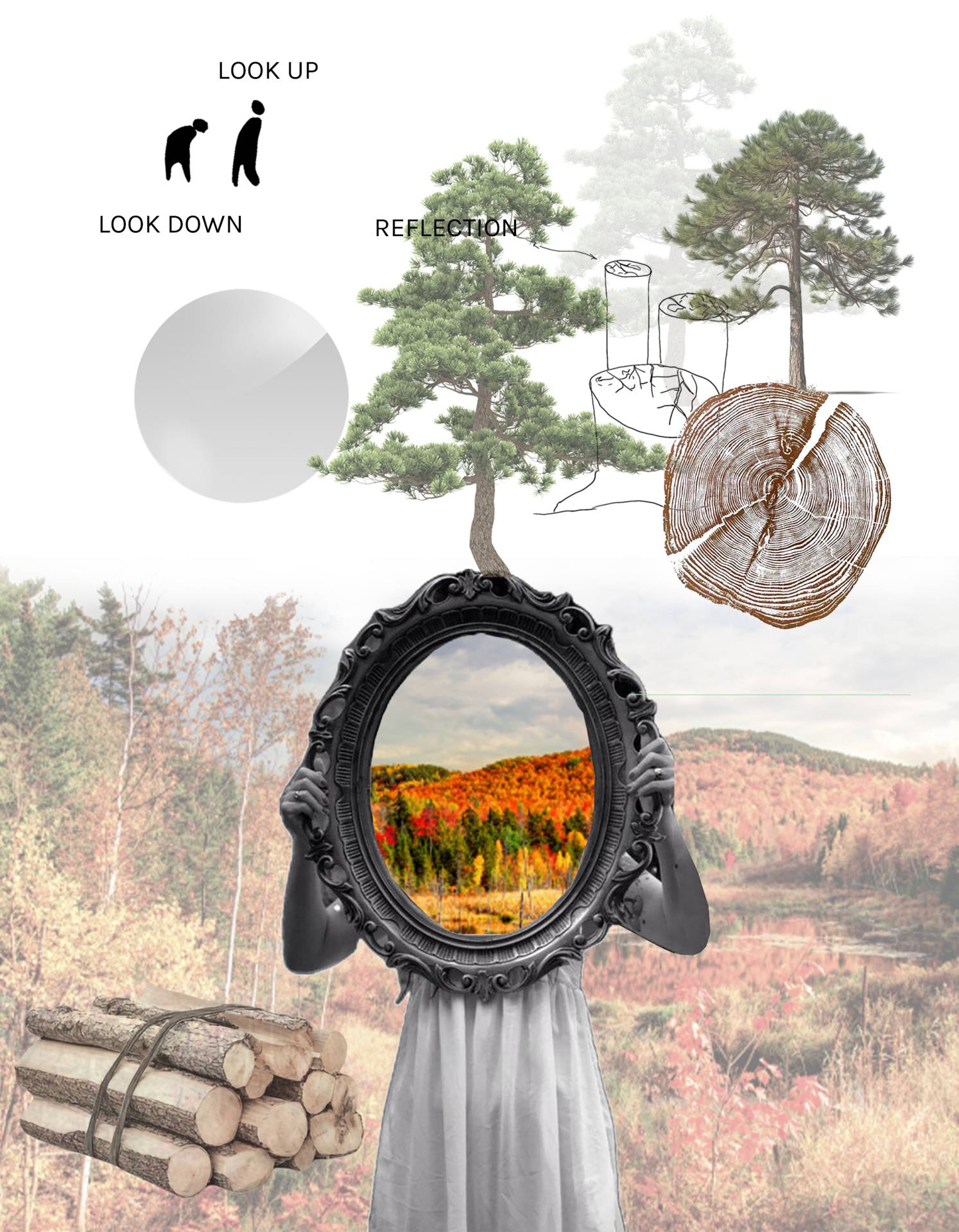
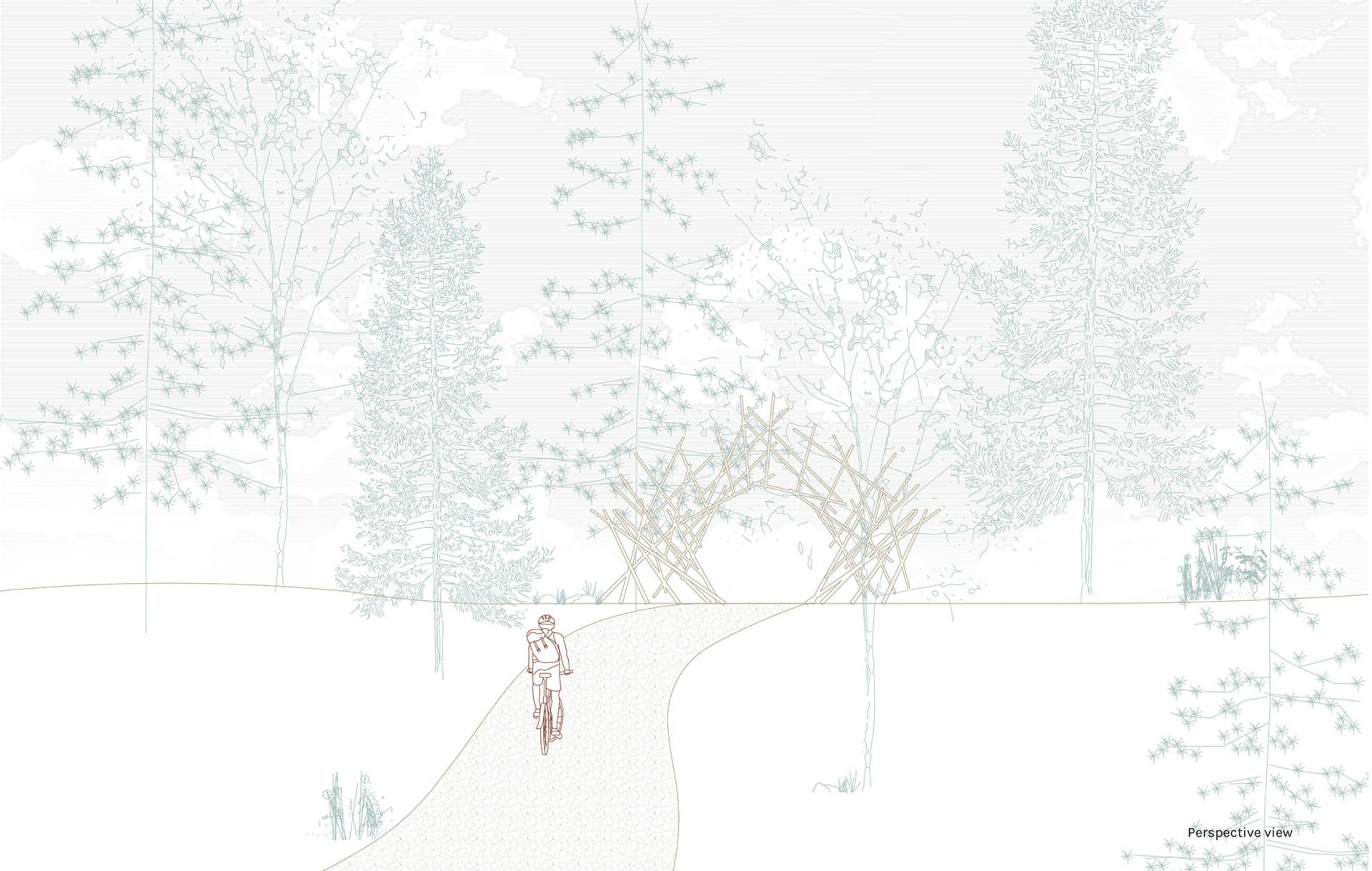
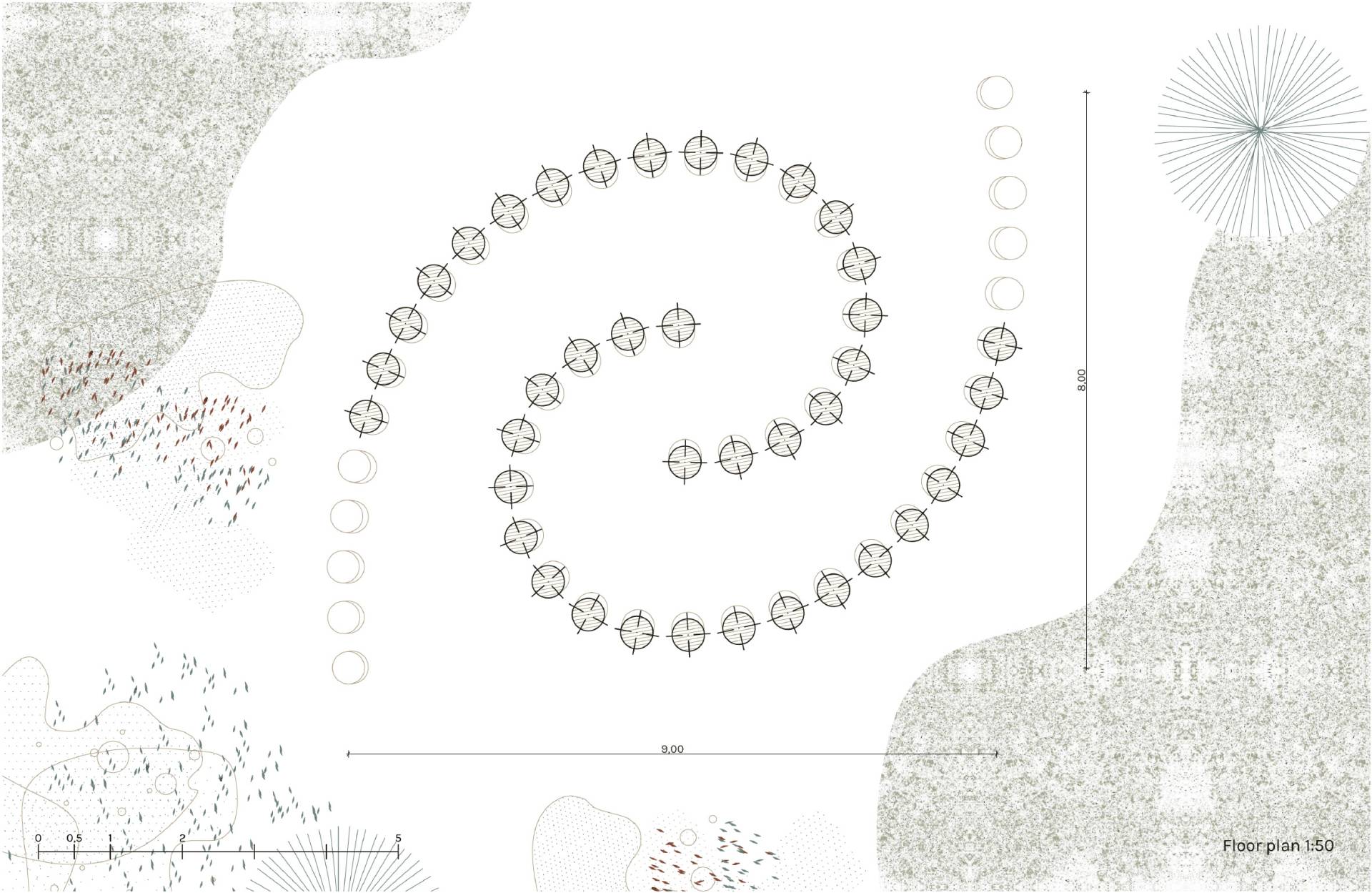
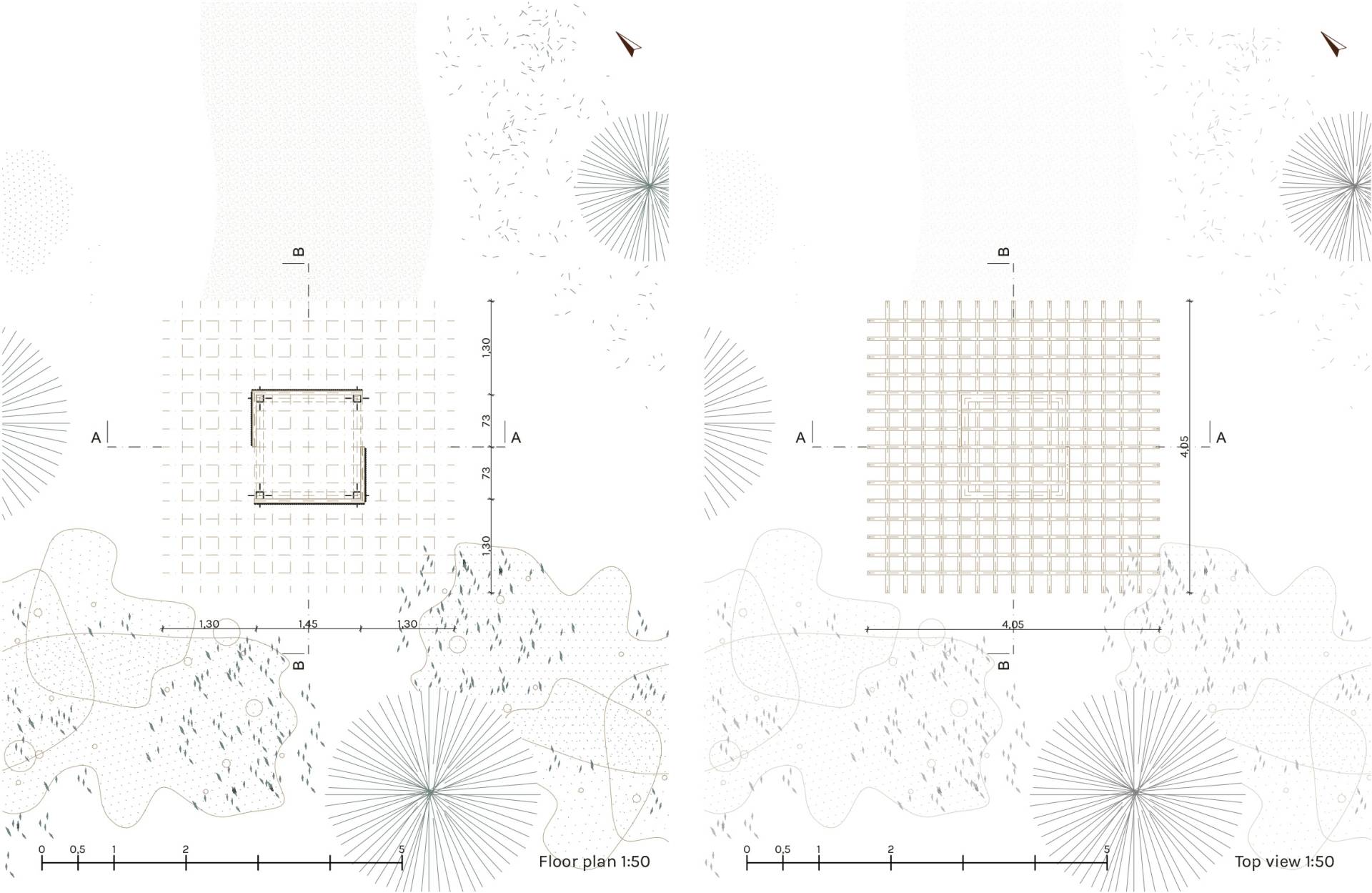
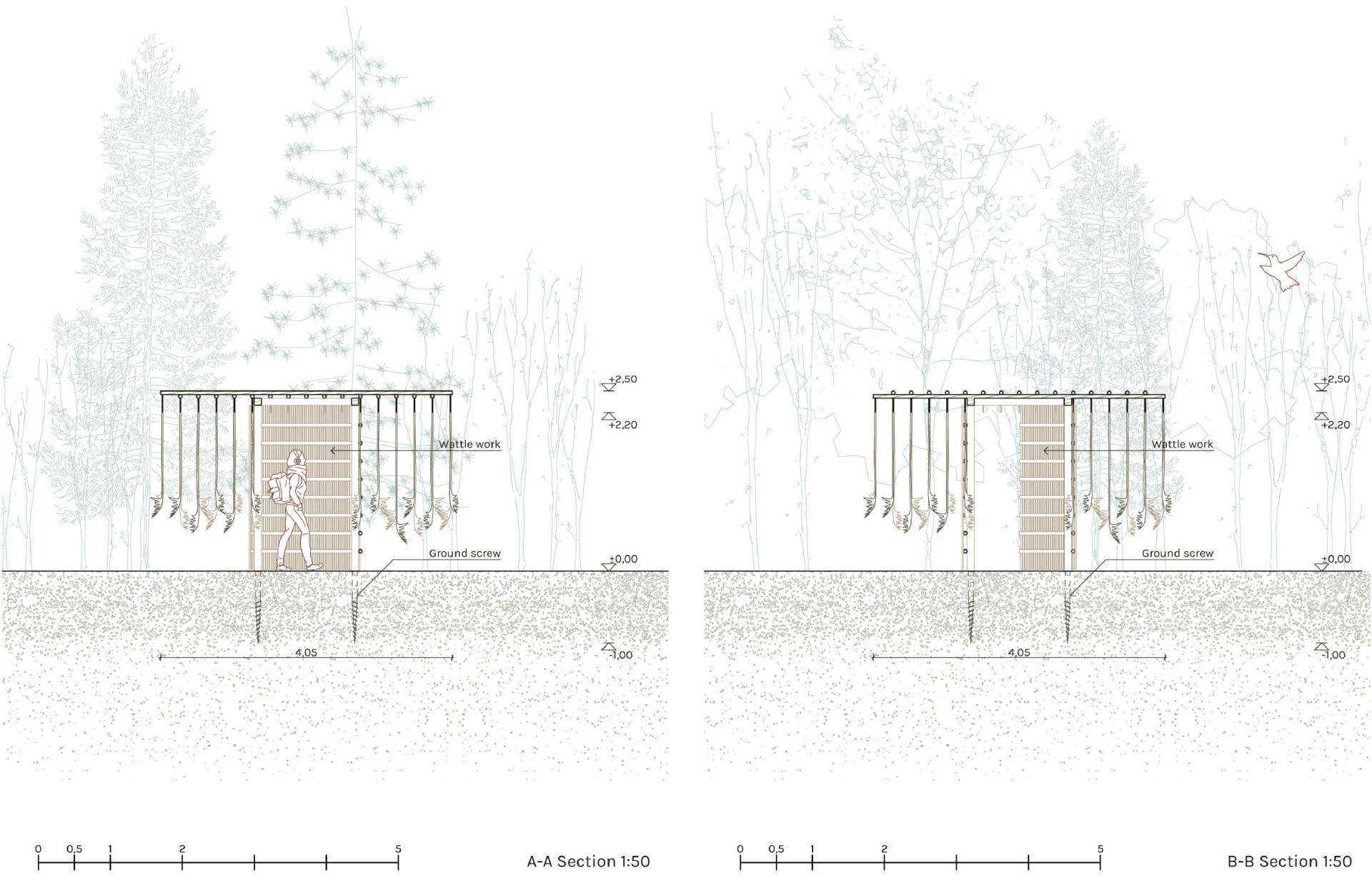
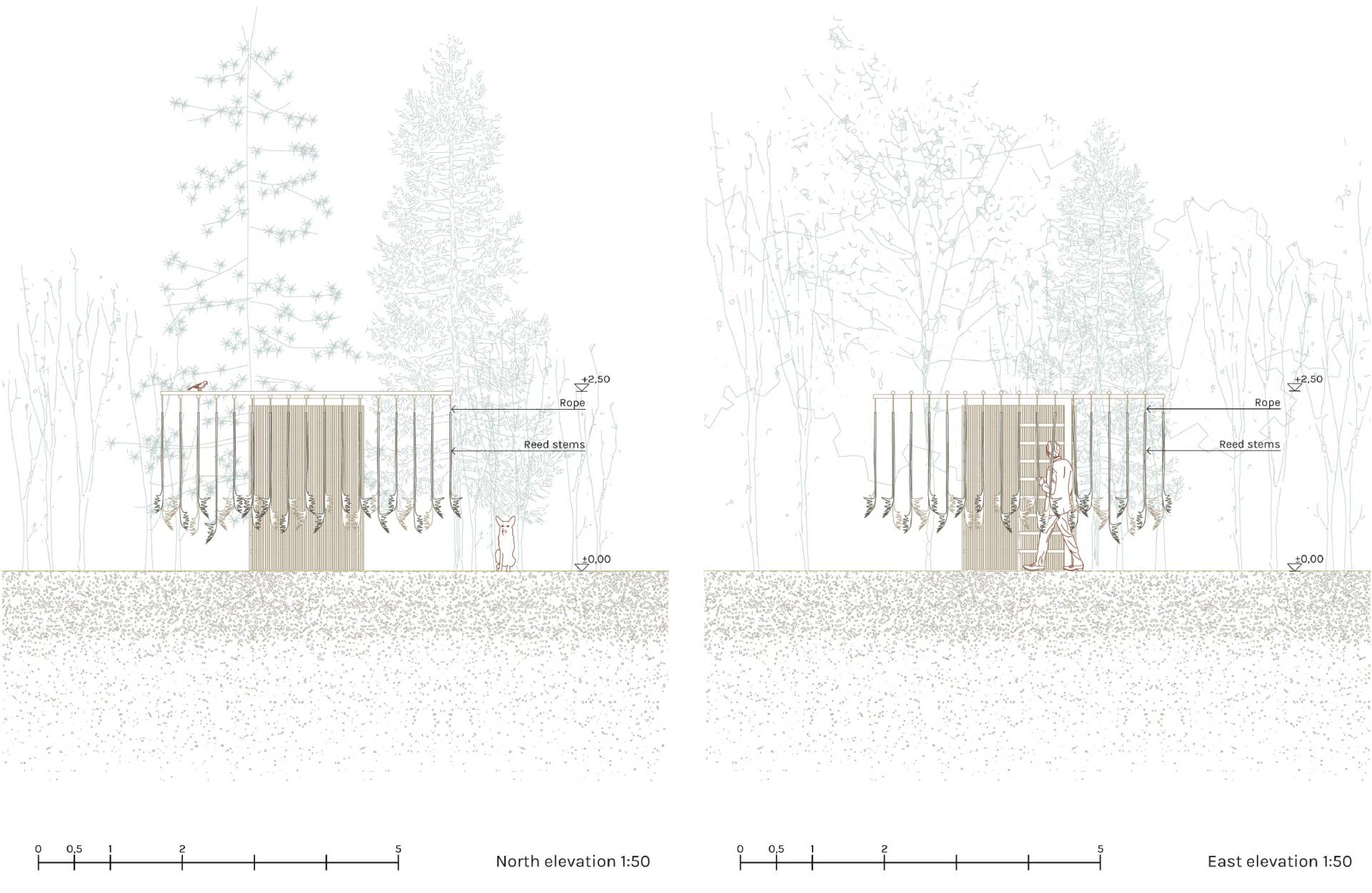
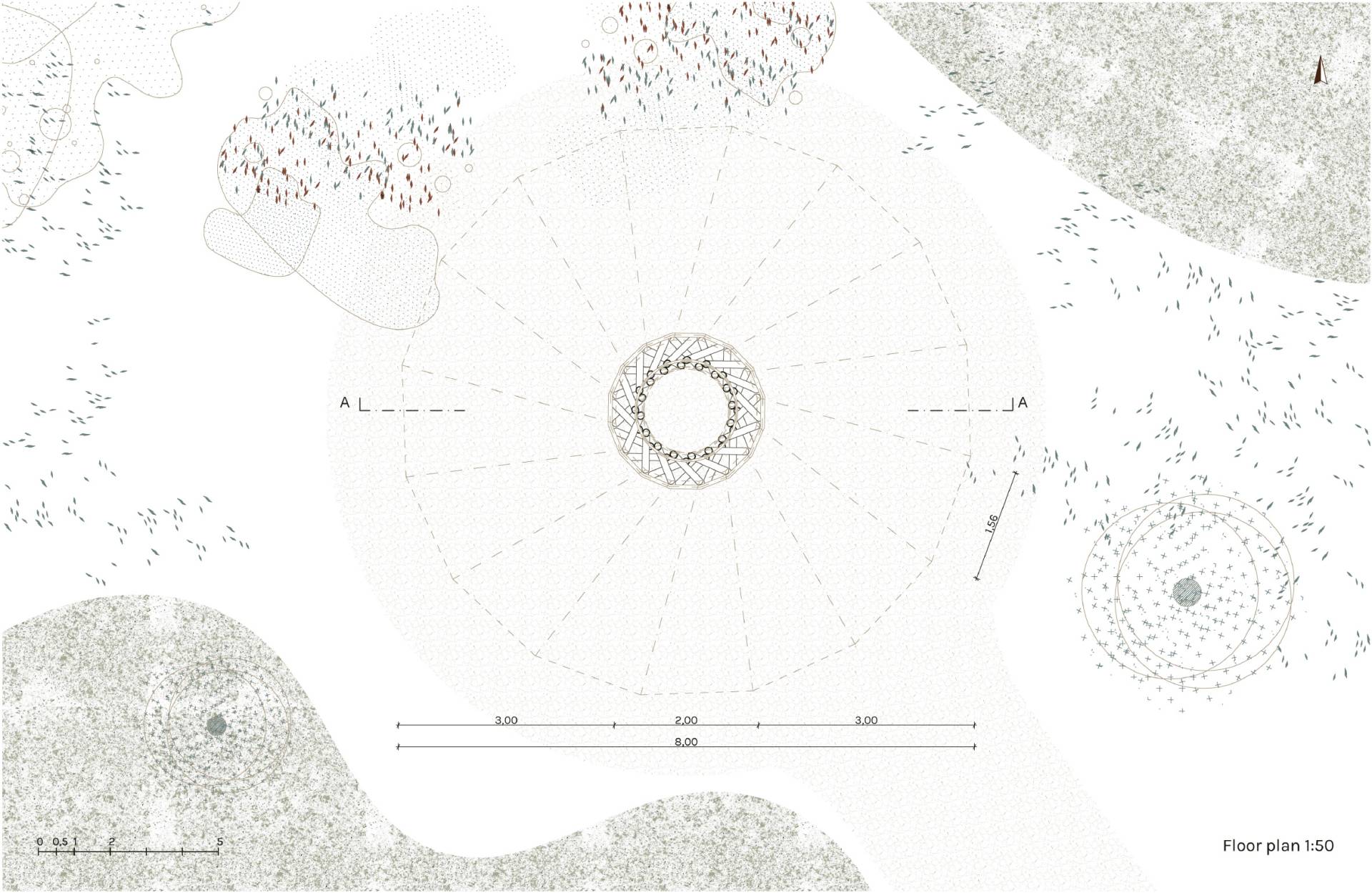
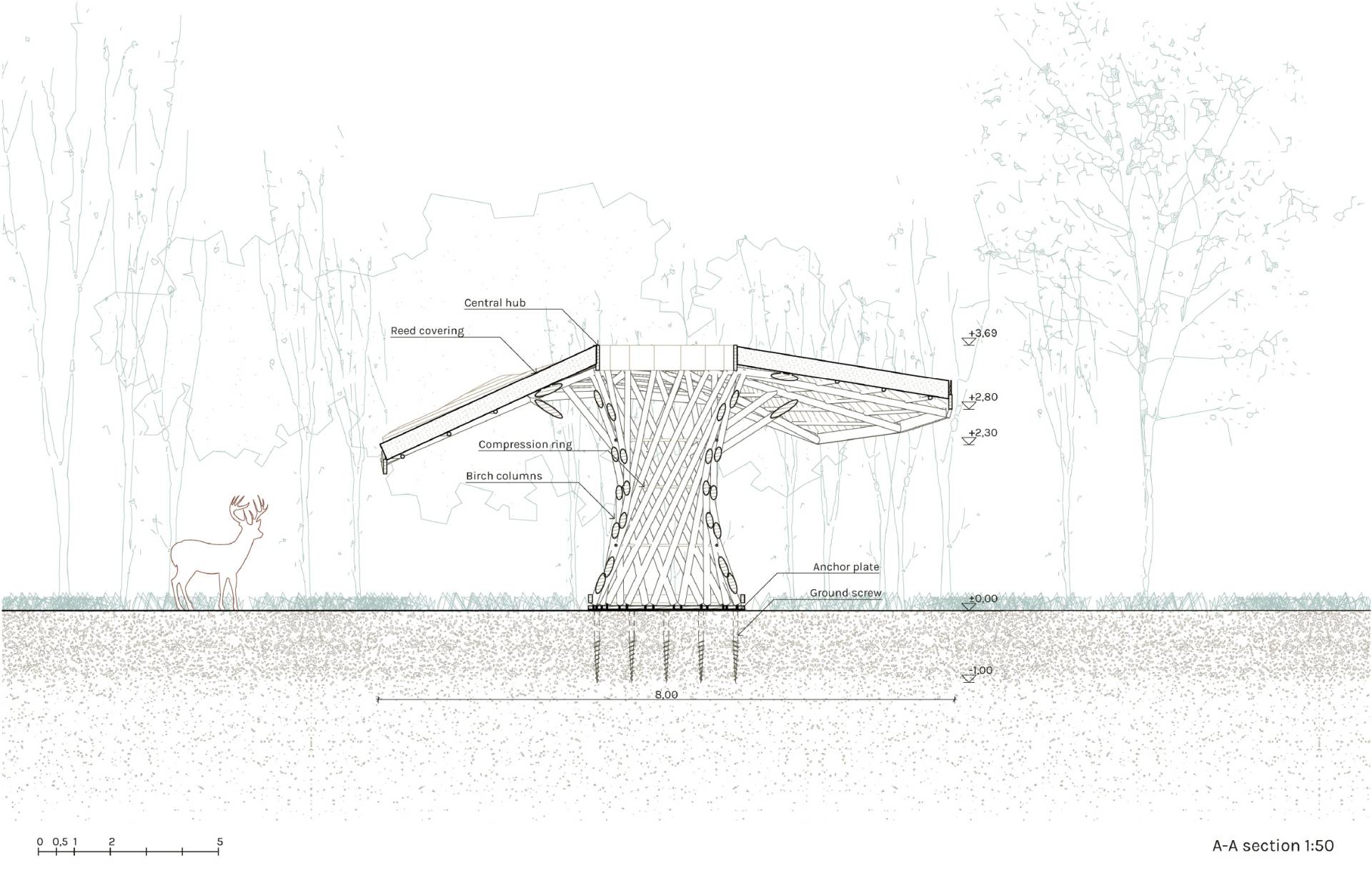
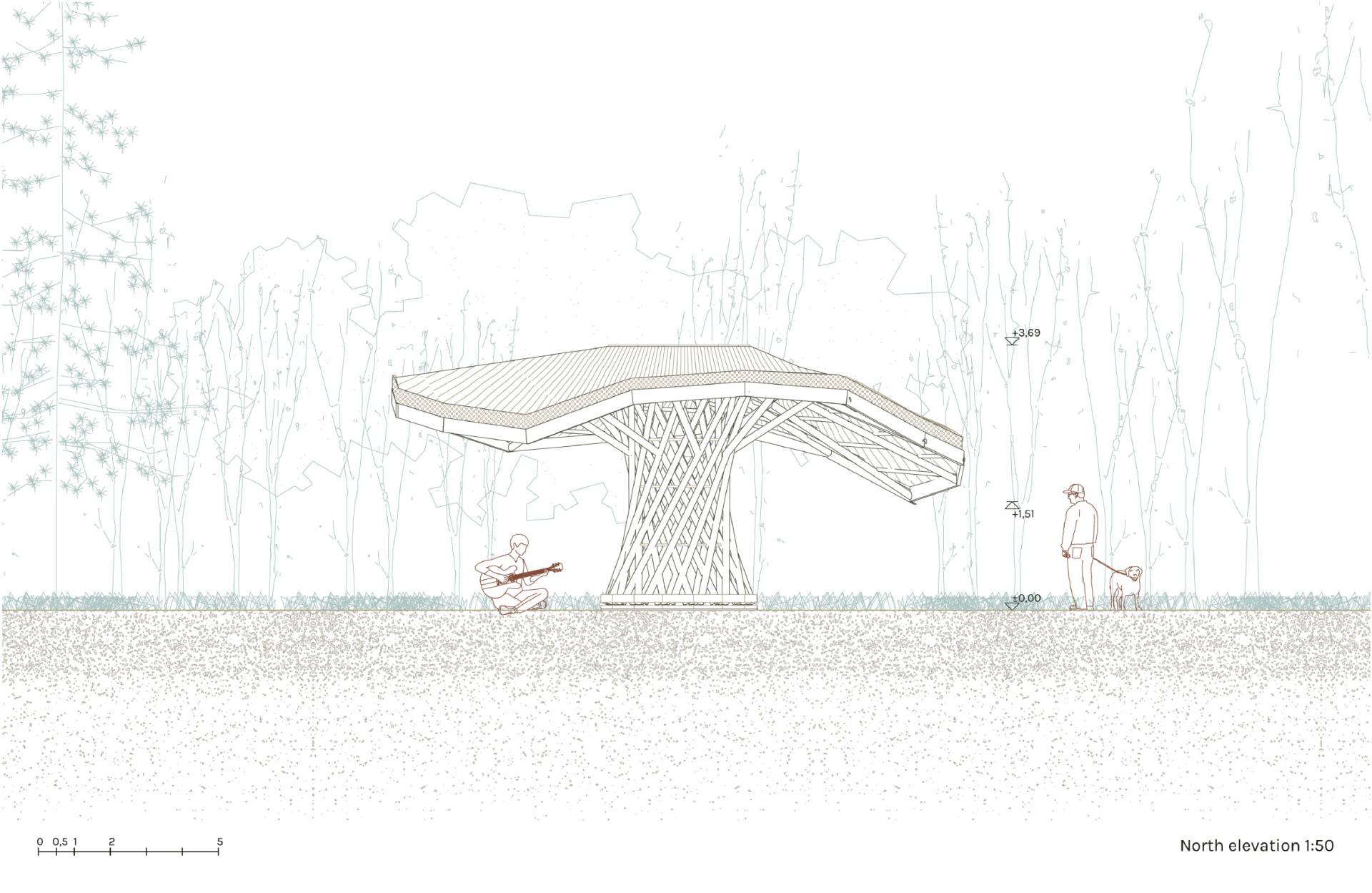
The goal is not for the intervention itself to leave a physical trace, but rather for its impact to do so. Situated in the forest of Horha and timed to ruska, the design proposes a trail of five stations that engages senses other than sight, contributing to immersion and human-forest relationship. Built from natural, biodegradable materials, the stations can be dismantled after ruska, and their materials can be returned to the forest.
The design process therefore does not end with the construction: ephemerality is not a limitation but the architectural argument itself. An example, for how a temporary intervention can be a chapter in the story of the forest, but not its end.