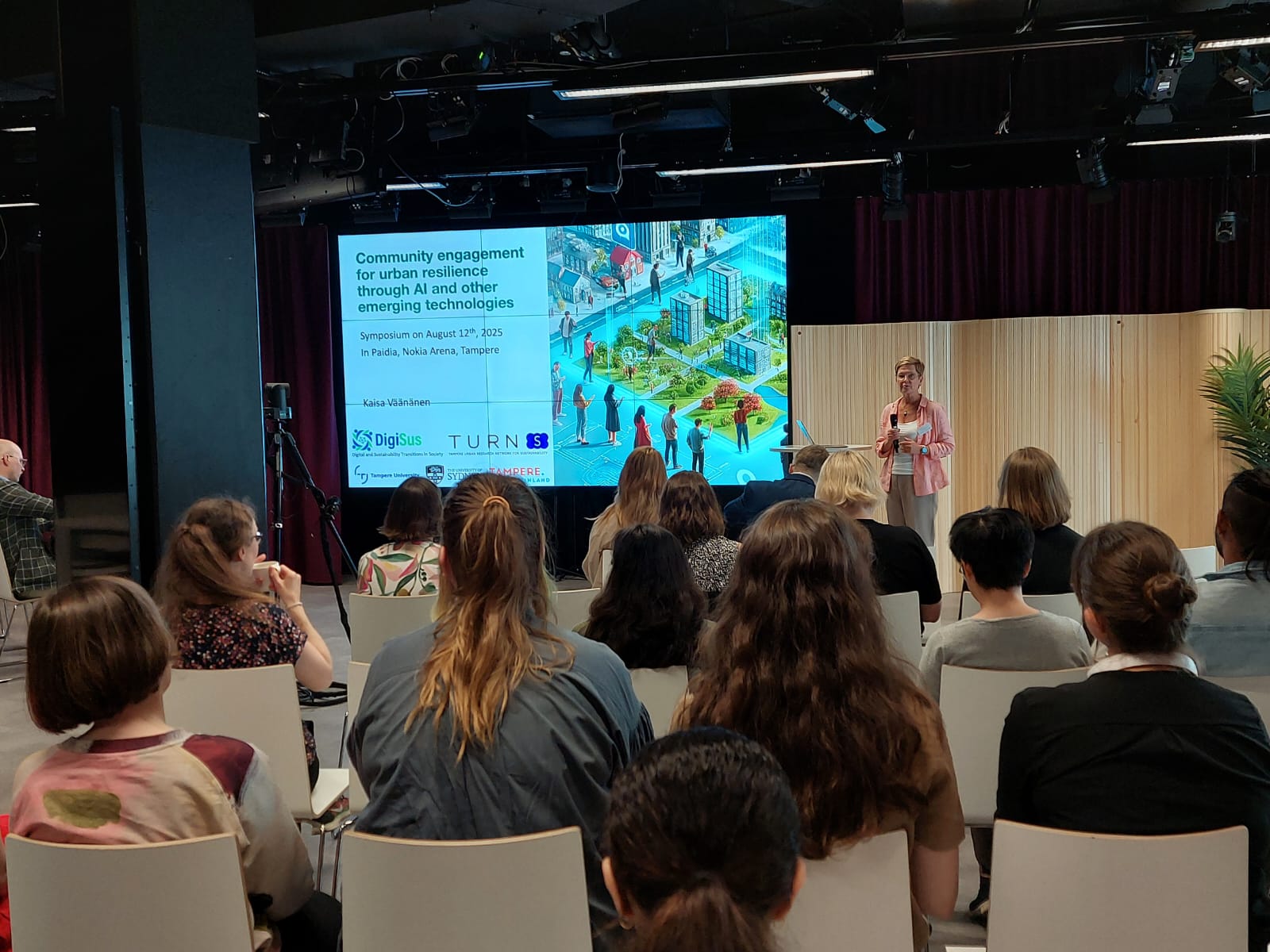
Tampere University hosted a half-day symposium exploring the intersection of urban resilience, artificial intelligence, and emerging technologies. The event brought together a diverse group of researchers, city representatives, and industrial actors with a shared goal: to examine how technology can support communities in anticipating and adapting to the disruptions that increasingly challenge urban life.
Urban resilience, as defined throughout the symposium, is not merely about surviving crises but also about evolving through them. Whether facing climate-related events, infrastructure breakdowns, or social fragmentation, cities must find ways to remain inclusive, adaptive, and sustainable. This symposium offered a space to reflect on these challenges and to imagine new strategies for addressing them.
The event opened with welcoming remarks by Professor Kaisa Väänänen from Tampere University, who framed the day’s discussions around the urgent need for human-centered approaches to technological innovation in cities. The keynote speaker, Dr Joel Fredericks from the University of Sydney, then delivered a thought-provoking presentation on the role of AI-supported tools in community engagement before, during, and after crisis events. His talk emphasized the importance of inclusive design and the potential of immersive technologies to foster multispecies resilience, which considers not only human stakeholders but also the non-human entities that share urban spaces.
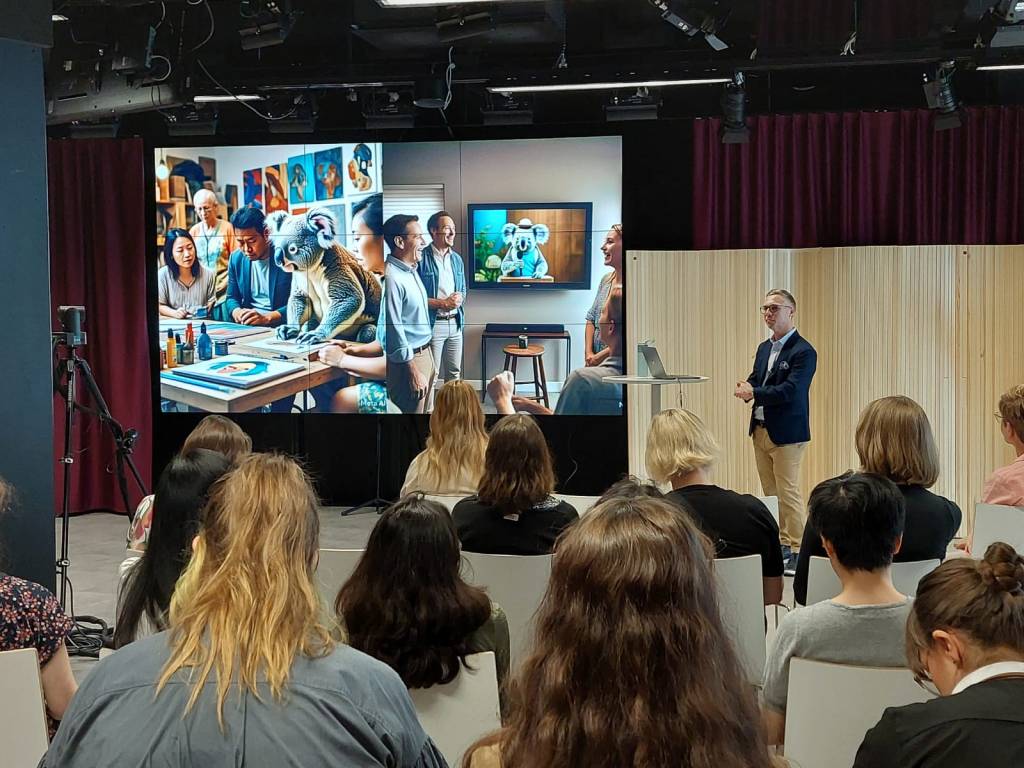
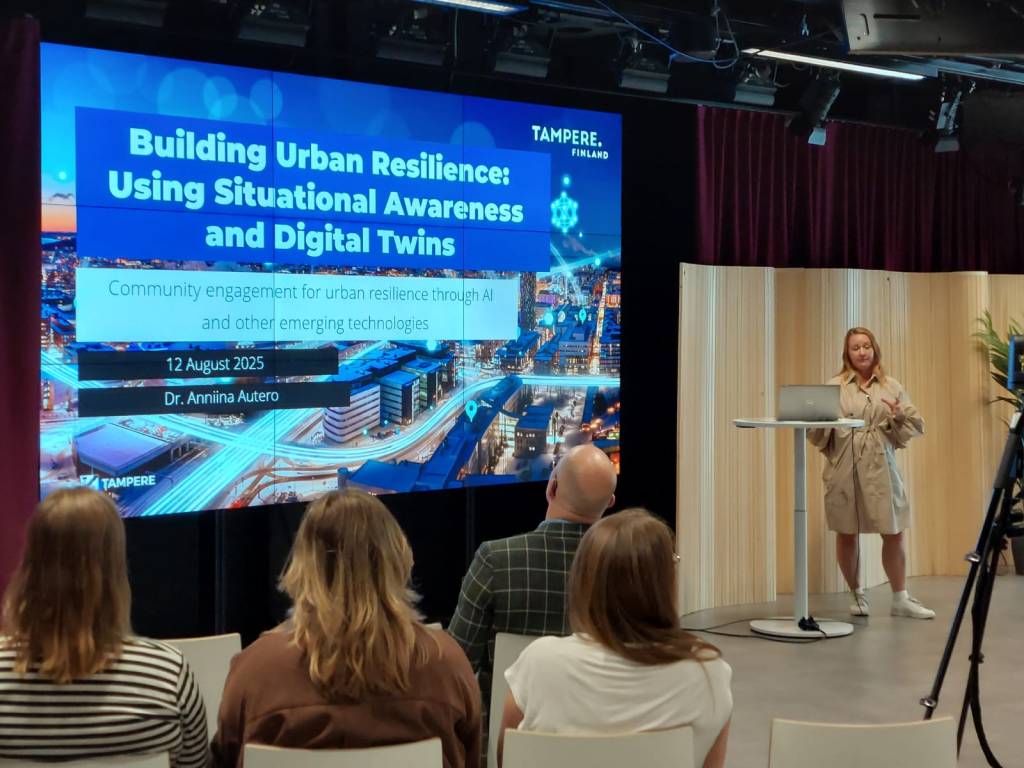
Following the keynote, a series of presentations showcased current projects and perspectives. Anniina Autero from the City of Tampere introduced the SURE project, which focuses on smart urban resilience and security, and the digital twin of the Tampere station area. Salla Eckhardt from SEE Bright discussed the digital building lifecycle and its transformative potential for the built environment. Jenna-Riia Oldenburg from Sitowise explored how immersive technologies can be used to co-create the future of cities through citizen engagement.
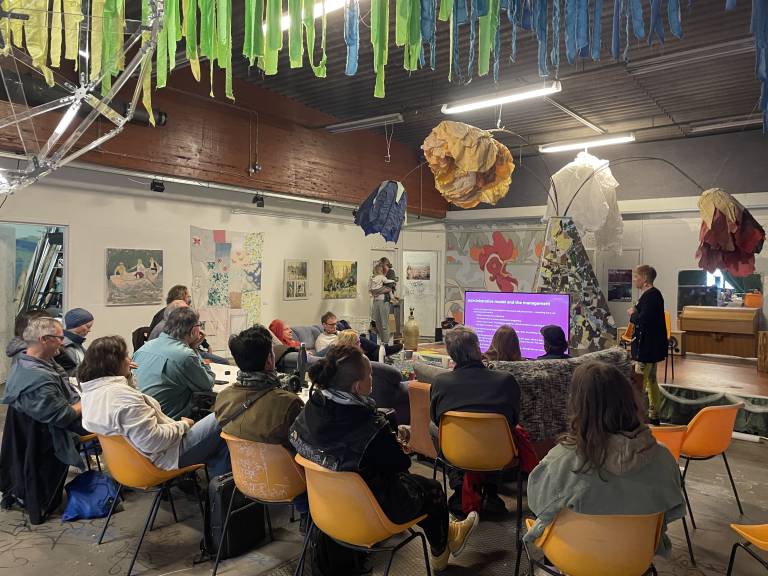
The second half of the symposium was dedicated to a workshop, where participants rotated between three themed tables to engage in structured, small-group discussions. Each table focused on a different theme: multispecies resilience, community engagement, and the sustainable built environment.
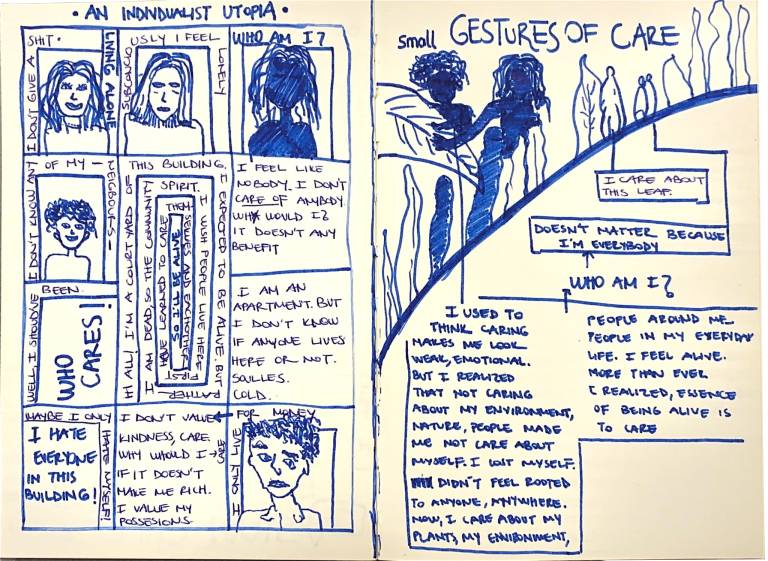
At the table led by Dr Joel Fredericks, participants explored the concept of multispecies resilience. The discussion centered on how non-human stakeholders, such as animals, plants, and even cultural heritage, can be considered in urban planning. Participants reflected on the metaphorical “voices” of the non-human actors and how humans could represent them in decision-making processes. At best, technology was seen as both a contributor to environmental impact and a tool for understanding it, particularly through data collection and storytelling. The group emphasized the importance of education and bottom-up approaches, suggesting that future strategies should incorporate non-human perspectives more explicitly.
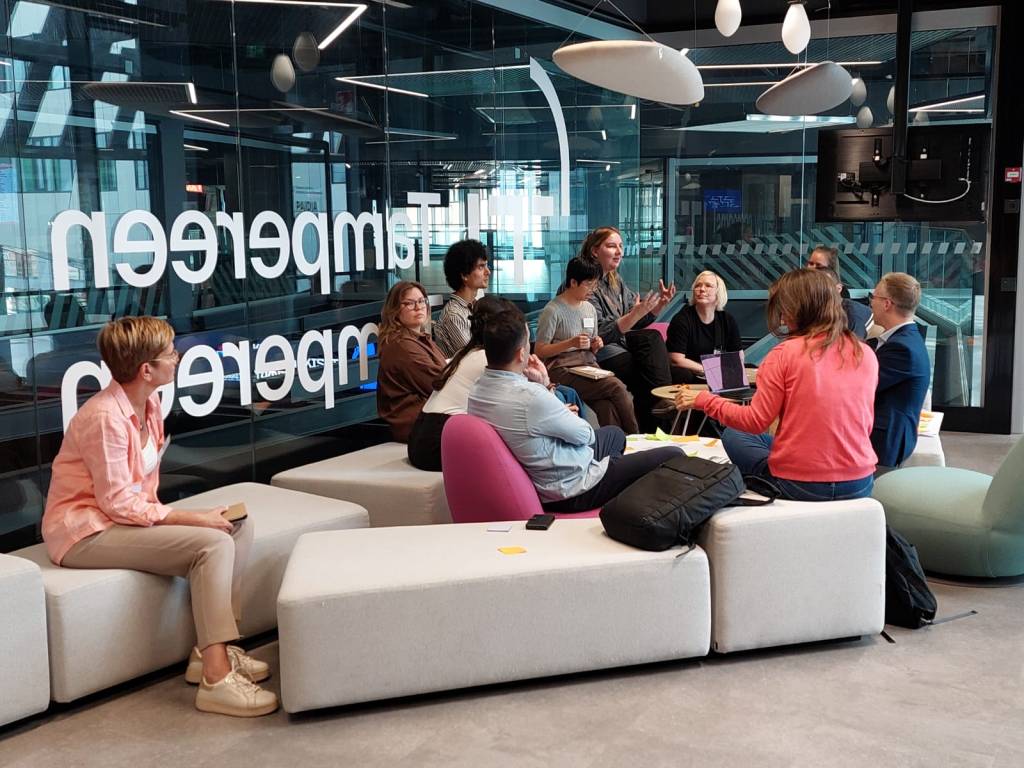
Dr Eeva Puumala facilitated the table on community engagement, where participants examined who is currently included in participatory processes and who remains excluded. In addition to human communities, the conversation acknowledged the presence of non-human actors like insects and robots in cities. Some minority groups were seen to be left outside urban development, such as children, elderly people, and disabled people. Structural issues, too, such as siloed knowledge, biased data, and ethical concerns were identified as major obstacles for community engagement. Participants discussed how AI and open data could be used to improve communication and fact-checking, while also cautioning against the dominance of multinational corporations in shaping technological solutions. The need for local, low-threshold technologies and interdisciplinary education on AI was highlighted as essential for meaningful engagement.
The third table, chaired by Dr Antti Kurvinen and Dr Mika Lehtimäki, addressed the sustainable built environment. Stakeholders and actors that were identified included municipalities, businesses, scientists, and even machines. The participants discussed many urban resilience challenges such as skill erosion, extreme weather conditions, and the need for scalable infrastructure. AI was seen as a promising tool for decision-making, scenario modeling, and long-term planning. However, concerns were raised about bias, loss of human control, and the risk of reinforcing existing inequalities. Participants stressed the importance of transparency, equitable access, and the integration of AI into both urban and rural contexts.
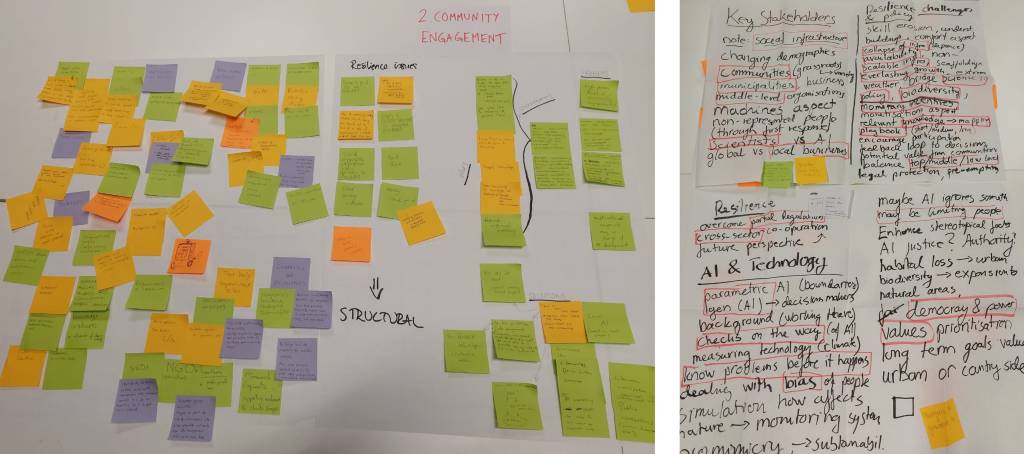
Across all three tables, the workshop aimed to build a collective understanding of the actors involved in urban resilience, the challenges they face, and the opportunities and risks that emerging technologies present in cities. The workshop format encouraged participants to build on each other’s ideas, resulting in a rich tapestry of insights and proposals.
In closing, the symposium underscored the importance of inclusive and interdisciplinary collaboration in shaping resilient urban futures. As cities continue to grapple with complex disruptions, events like this symposium provide a vital space for cross-disciplinary discussions, innovation, and critical reflection.
Riina Lundman & Copilot
* * *
The Urban Resilience Symposium was organized on 12 August 2025 by Tampere University’s research platforms DigiSus and TURNS, in collaboration with the City of Tampere. Symposium: Community engagement for urban resilience through AI and other emerging technologies
Riina Lundman is the Project Manager of TURNS Research Platform at Tampere University. Riina has earlier studied co-creativity between human artists and AI in a LuotAI project. Microsoft Copilot is an AI-powered assistant integrated into various Microsoft tools. This text has been co-written in the way that Riina gave a prompt for Copilot to write a narrative report based on her notes and other available information on the event, after which Riina curated the text. Read more about the co-creative process with AI here: (Nordström & Lundman 2023) Evolving Coagency between Artists and AI in the Spatial Cocreative Process of Artmaking.