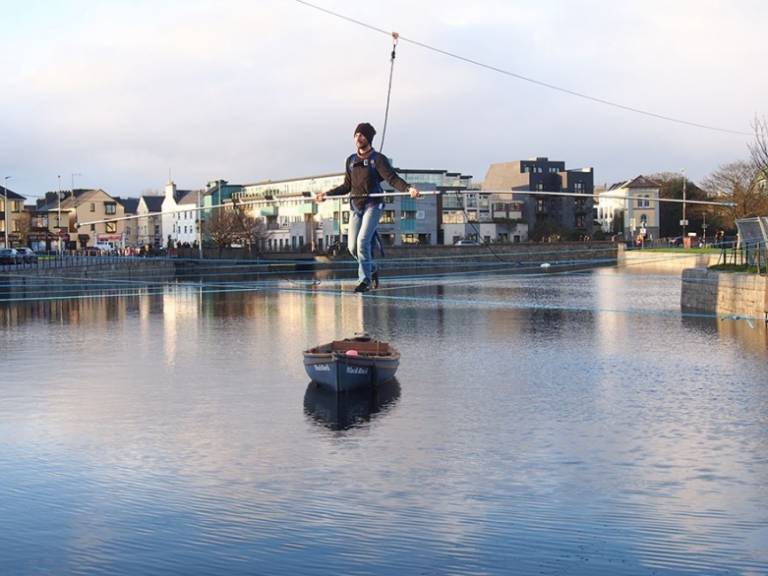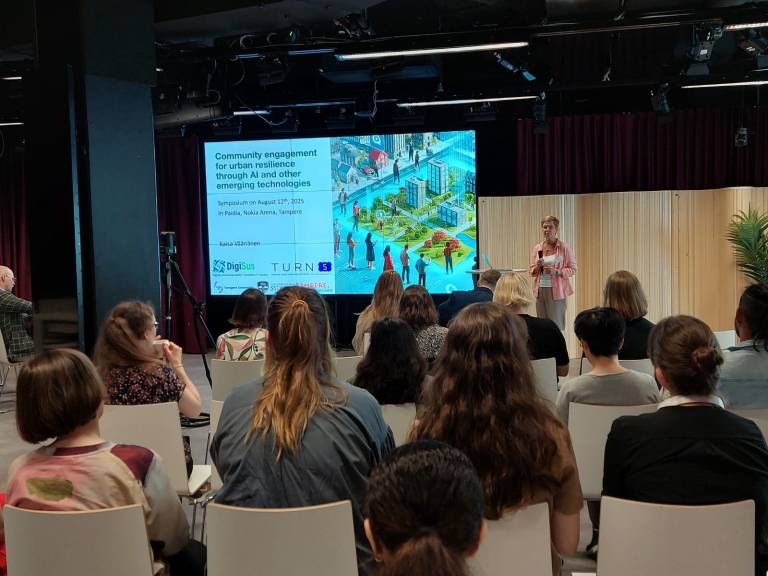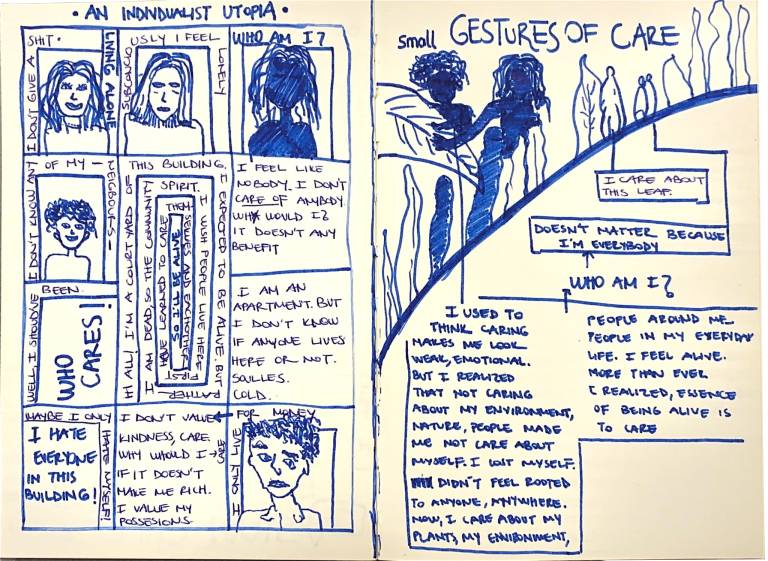
Last summer, I joined TURNS as an intern, and one of the first projects that I was involved in was the INURA conference. The conference, titled ‘In war we fight, in peace we build’, explored the histories and topical movements of safety and civil societies’ resilience in Finland and Ukraine.
INURA, the International network for urban research and activism, engages in multidisciplinary approaches to understand contemporary urban phenomena. Each year, its conference dives into different locations and different topics, getting familiar with the selected theme guided by local actors.
The phrase ‘In war we fight and in peace we build’ is rooted in Finnish wartime history, and it resonates deeply in today’s geopolitical climate. The conference explored how war and the threat of war reshape the relationship between state and civil society, and how communities respond, resist, and rebuild in times of crisis. Tampere played an important role in the Finnish civil war, and signs of the war are still present and visible in the cityscape. After the WWII, there were strong and active welfare policies in Finland; this is what ‘In peace we build’ clearly stands for. The Finnish welfare policies still have a strong echo in Tampere, and during the event, we explored different approaches the city and state still support or don’t support its citizens.
My task at the conference was to coordinate and communicate the program to the attendees and local guides. Given the context, only recently having started my internship position, INURA was the first academic conference that I took part in, and it took me a while to understand the structure, goals, and attendees’ motives for joining us in the rainy summer of Tampere. Later, I noticed how the attendees and organizers approached topics with curiosity and solicitude and how much the structure of the conference supported this.
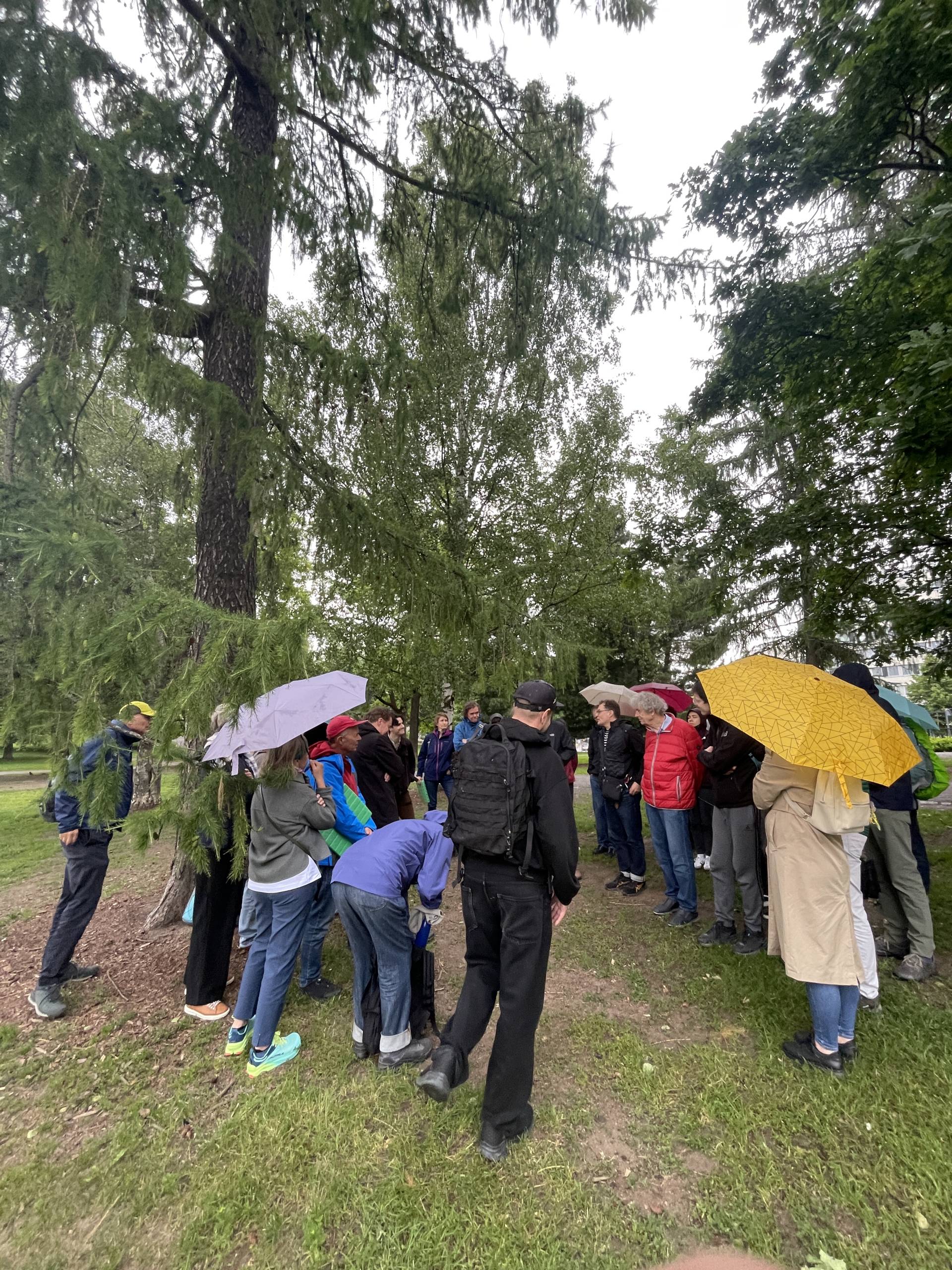
The conference’s first day started off with city explorations: the attendees walked through Tampere with minimal instructions and let their curiosity and intuition lead the way. They were invited to share their findings: what things can be learned about Tampere just by walking and looking at it. Four local Tampere “guides” joined the discussion to hear the conference attendees’ learnings and questions and to share their perspectives on Tampere. In addition to the local guides sharing historical facts of Tampere, they also shared stories: lived experiences of their city.
After the first day, the conference days were divided into two parts: city walks and theory-focused evening panels. The aim was to examine the theme together with theorists and local urban practitioners. The walks were hosted by local experts: urban activists, researchers, and city officials. There was a total of 16 different tours.
The walks included visiting Tampere’s security infrastructures and getting familiar with some of the city’s biggest development projects: the Tram, Hiedanranta, Hervanta, and the Arena. As civic action projects, the tours visited projects such as Kalevan Hallit cultural space, DIY Skatepark, and the graffiti scene of Hiedanranta, Villivyöhyke rewilding project, and lastly squatted neighbourhood space Pyynikin Aikamatkat. There were also walks to Annikki Wooden block housing and Housing First projects, social housing facilities, and a tour that explored city trees.
Meanwhile, we had online and hybrid tours to Ukraine on topics such as ‘Artistic practices in wartime Kyiv’, ‘Volunteer movement in Kharkiv’, and ‘The full-scale invasion’s impact on architectural education’.
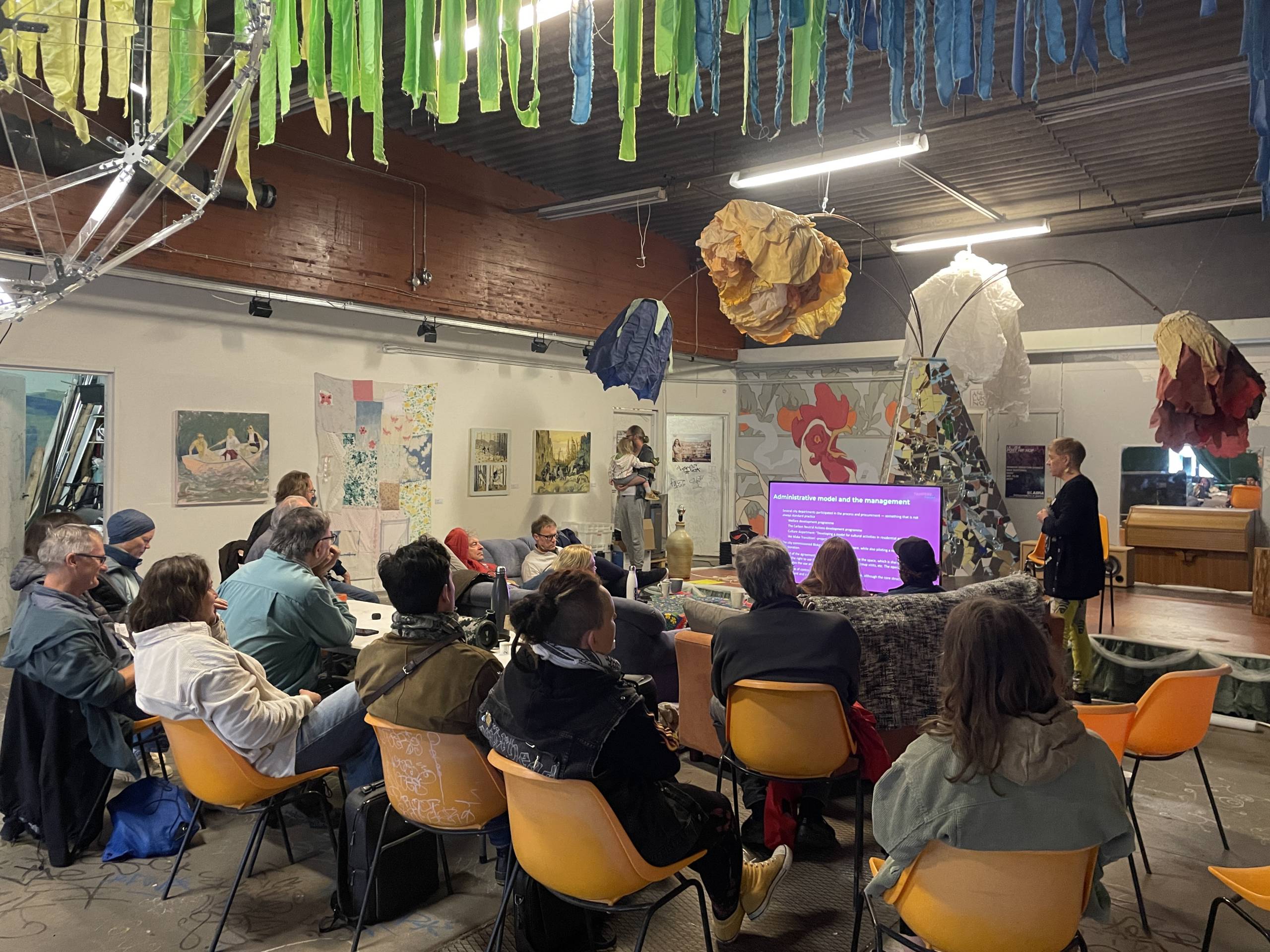
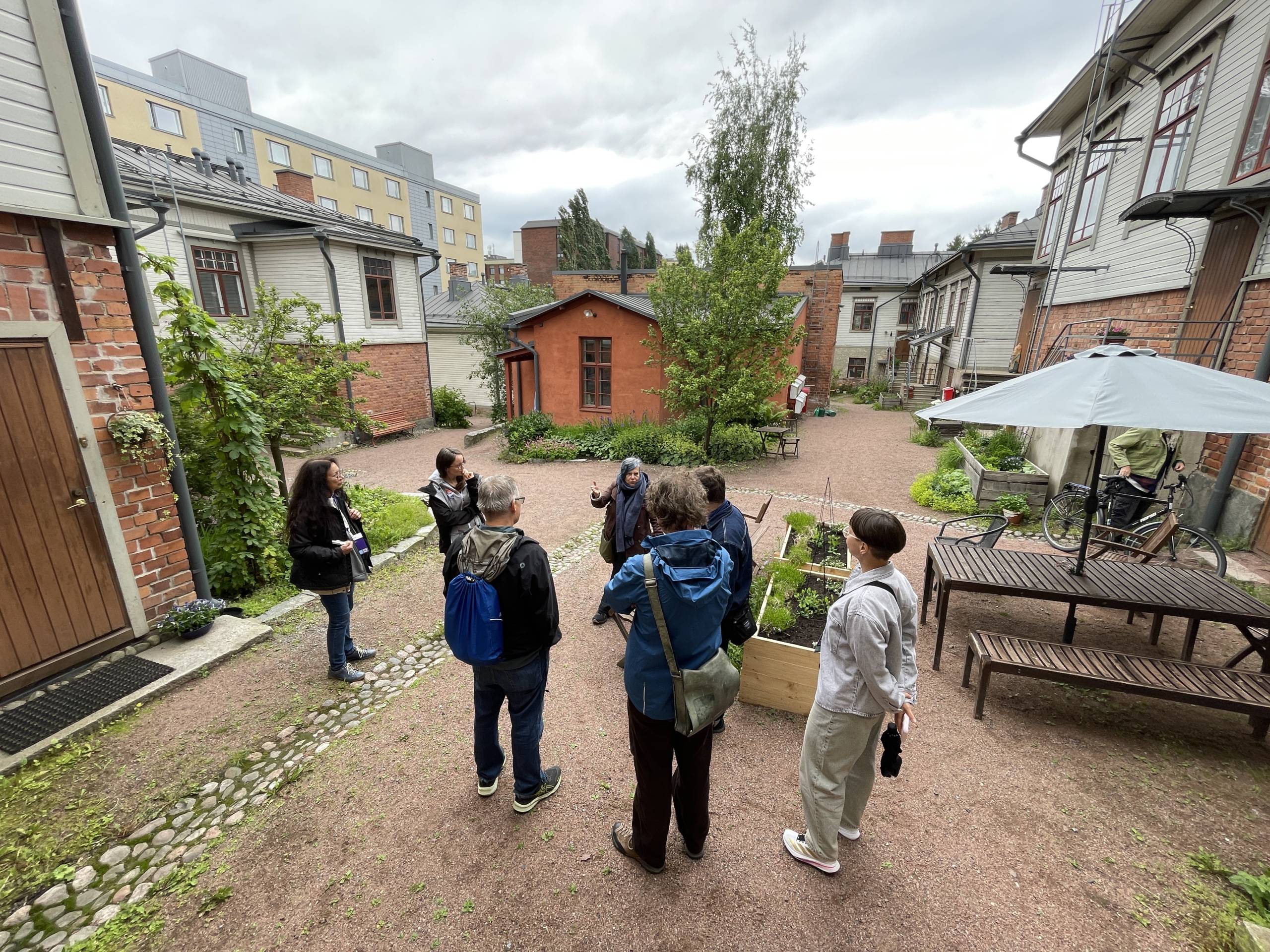
The topic of ‘In war we fight, in peace we build’ gave a lot of room for different approaches; each participant was able to attend only four walks and tours. At first glance, the program seemed like it had a little bit of everything. When discussing civil resilience and regenerative society, it seemed natural to approach the topic from multiple perspectives: historical and topical. In the evening panels, we discussed ‘Social innovation and civic action’ and ‘The future of democracy and the role of the state’. The panel discussion aimed to bring an opportunity for attendees to tie the learnings of the day to current research conducted.
The last part of the conference was hosted as a retreat, where attendees went out of the city, reflected on what they had learned in the first parts of the event, and planned for the following events and themes. I did not take part in the retreat, but having now attended multiple academic conferences, this seems like the juiciest part that most events miss. Information in a ‘regular conference’ is usually reflected in the informal settings, but I claim that reflecting and synthesizing all the new information requires time.
The network’s methodology challenges the traditional notion of academic conferences, where research is isolated into academic spaces. It invited activists and researchers to approach the topic with curiosity. All participants of the event are invited to join and contribute to the network’s following events. As the first academic conference I have ever attended, INURA set a great example that research and researchers can find ways to co-create together with civil society. Better yet, it can give back to urban activists and movements functioning as part of a democratic and just society.
Last, I would like to credit the organizers of the event who had curated the plan much before I joined the team. Thank you Mariia Prystupa, Jens Brandt, Anna Koskinen, and Panu Lehtovuori.
The next INURA conference will be held in Istanbul in June 2026. More information here: INURA Istanbul.
Annika Annala is an Architecture Master’s student at Tampere University and simultaneously works at the coordination group of TURNS (Tampere Urban Research Network for Sustainability). Annika actively questions the frames that academic surroundings set for researchers and students.