
The majority of the world’s workers, in both rural and urban settings, earn their income in the informal economy – economic activities, enterprises, jobs, and workers that are, in law or in practice, not covered by formal regulation or social and legal protections (WIEGO, n.d.) Addressing economic informality has important implications for achieving the Sustainable Development Goals (SDGs) of decent work (SDG 8), reducing inequalities (SDG 10), and for building sustainable cities and communities (SDG 11).
As the informalized share of the global economy shows no sign of decreasing (rather the opposite, see International Labour Organization 2018; 2023), digitalization has been hailed as a pathway to formalization. For instance, a recent report by the United Nations Development Programme optimistically asserts that “[o]n top of the usual … implications in terms of efficiency and access to customers and suppliers… the digitalization of informal businesses offers a new angle on informality itself. The use of digital tools increases their visibility and legibility to the rest of society… This could open new ways for development policies to support and include the owners of informal businesses” (Gustale and Cottica 2023).
So far, so good. I wanted to learn more about the potential of digital technologies to reduce economic informality, particularly in the context of cities in the Global South, where informal economic activities are more widespread than in the Global North. With TURNS mobility funding, I travelled to Dar es Salaam, the largest city and commercial hub of Tanzania, where I had earlier conducted research among street vendors. I was curious to hear if, since my previous visits in 2014-2016, vendors had started using digital platforms.
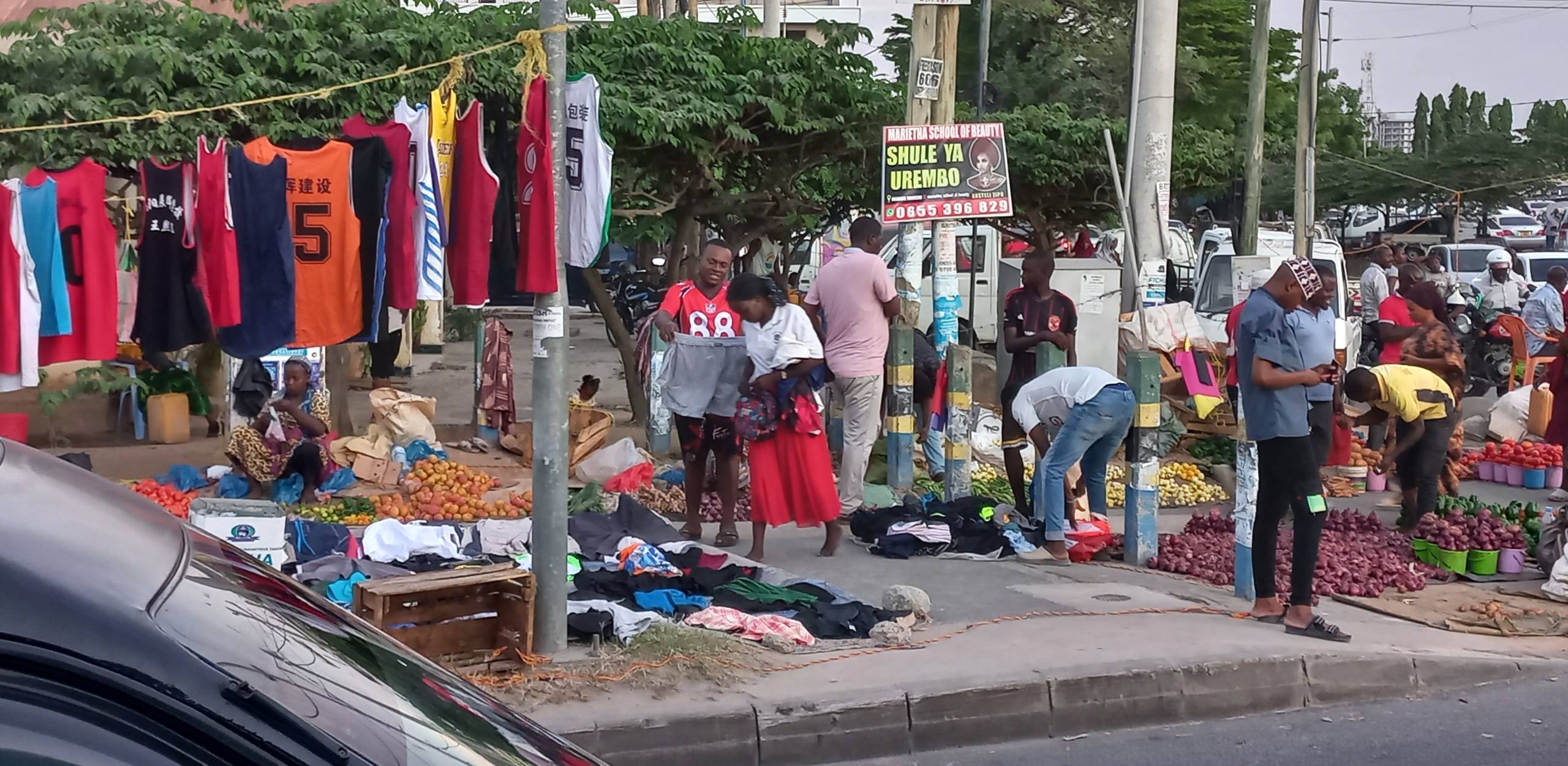
Similar to many other fast-growing metropolises in sub-Saharan Africa, the informal share of the urban economy is high in Dar es Salaam (estimated at 70 per cent), and at least half a million of its 6,5 million inhabitants depend on an income from street vending. This work is rarely formally registered but nonetheless ubiquitous. It keeps the city alive and running, offering entry-level job opportunities and providing affordable goods and essential services, particularly for poorer groups. Yet vendors also face frequent—and sometimes violent—conflicts with the municipal authorities and licensed shopkeepers. The high number of street vendors, moreover, results in the congestion of public spaces and tough competition among the vendors, and many are struggling to find good vending space and earn sufficient income.
In principle, digital technologies offer low-cost solutions to these challenges: vendors could use social media platforms such as Facebook or Instagram, e-commerce platforms like Etsy, eBay or locally owned platforms to advertise their wares and find customers online. This would reduce congestion and improve efficiency. The municipal government could deploy platforms to register vendors and allocate trading spaces to them, making street trade more orderly and enabling increased revenue collection. Platforms could further be used as communication channels among vendors and municipal administrators to enhance collective organization and participation in public decision-making (Steiler and Nyirenda 2021).
Of course, a two-week visit to a dynamic and crowded city like Dar es Salaam cannot capture the diverse experiences of its many street vendors. But from discussions with vendors at markets across the city, it quickly emerged that the hype and hope around digital platforms for improving informalized urban livelihoods largely miss the point. Overall, a mixed but sobering picture emerged: although some vendors successfully used Instagram, Facebook, and WhatsApp to advertise their products, find customers, and increase their sales, for the majority, platforms were inaccessible or impractical.
Inside the Machinga Complex, a shopping centre designed for small-scale businesses, one female vendor who assisted her mother in selling manufactured handbags confirmed that Instagram and Facebook helped boost the family business. She explained that their wall-to-wall shop, located on the third floor of the shopping centre, was a good and safe place for decoratively exhibiting the handbags, but too few customers found their way there for the business to be lucrative. Posting images of their uniquely designed handbags increased their visibility across all of Dar es Salaam. Interested customers could then visit their shop in person or place an online order, which would be delivered by one of the mobile vendors who were hired to peddle the handbags along the city’s busy roads. With the combination of a safe and affordable physical space, online visibility, and traditional door-to-door hawking, their business was going well.
This story resonated with two young male vendors who had jointly set up a business for imported smartphone cases and other smartphone accessories. They had also invested in a portable rotating display for the accessories, with which they attracted walk-by customers on a sidewalk in Kariakoo, one of the busiest areas in the city. As one of them explained, their products were hard to come by and therefore popular. Additional advertising on Instagram and WhatsApp not only allowed them to increase their sales but also to evade the sidewalk in the event of bad weather or clearing raids by the municipal authorities. They hoped that expanding their e-commerce further would eventually gain them sufficient capital to open their own wall-to-wall shop in the city centre.
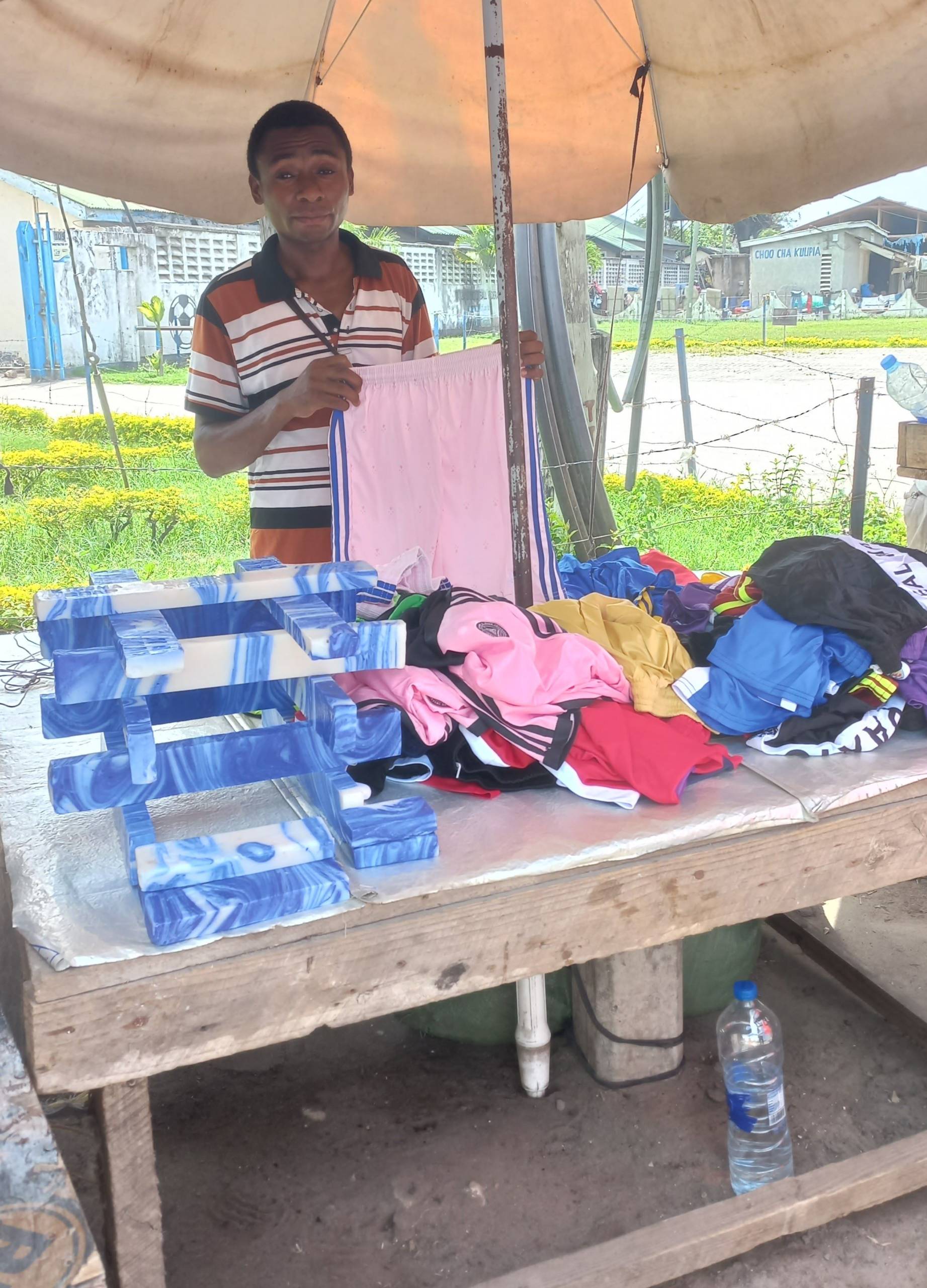
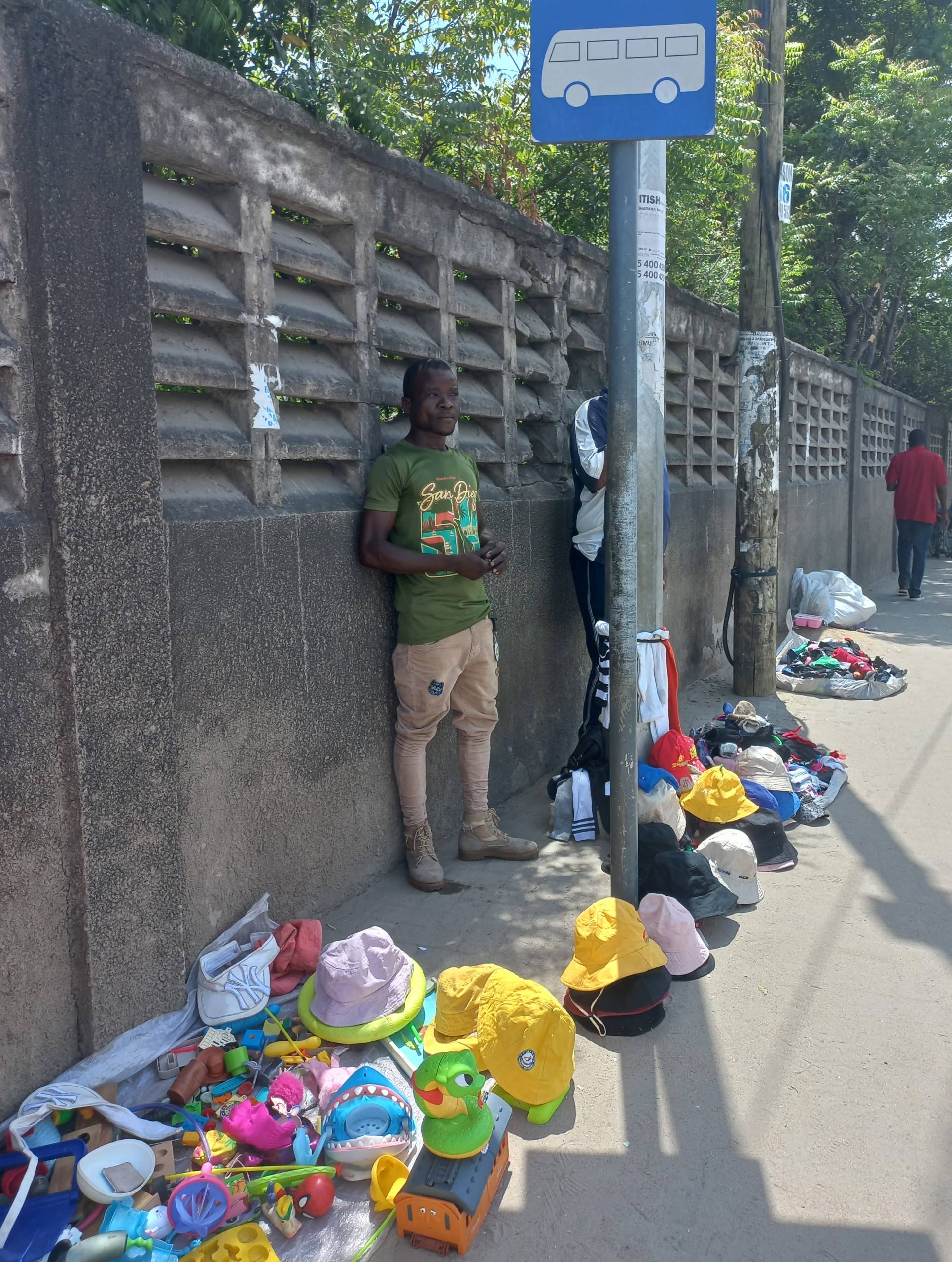
Many others, however, could not afford to own digital devices. Of those who owned a smartphone, one male vendor who specialized in collecting, fixing and reselling second-hand shoes listed the problems he faced when trying to use online platforms: his smartphone was old and the camera produced only blurry pictures; the costs of mobile internet significantly reduced the profit margin he made from sales; keeping his online account updated took too much time; and he could not afford to leave his stall unattended or add the costs of delivery to the price of the shoes. Another male vendor, selling second-hand clothes and soaps, explained that online customers were looking for something special. His small inventory, by contrast, consisted of ordinary and inexpensive items which he purchased cheaply and hoped to sell to passers-by for a profit of a few cents. This reflected the concerns of other vendors selling second-hand clothes, fruit and vegetables, as well as those of mobile hawkers who walk around peddling low-priced items for everyday use.
The work of one Mama Lishe, a food vendor who ran an unregistered street kitchen in the backyard of a low-income neighbourhood, exemplified the gap between tech optimism and precarious livelihoods: She described how she ran her business on a shoestring, planning at most a week ahead, and making do with the ingredients she could purchase daily at an informal market at the outskirts of the city. Even if she owned a smartphone, advertising her humble menu was unlikely to bring more customers, as her kitchen was placed in a remote area where people from the neighbourhood came to eat – when they had cash to spare for a warm meal. Her experience showed that digital technologies by themselves do little to redress the hardships of everyday survivalist struggle. The message was simple: platforms do not fill stomachs.

From the vendors’ stories, it appeared that digital technologies and platforms can help boost the incomes of those who already have sufficient human and financial capital, assets, and skills, and facilitate their inclusion into the formal economy. However, these tools offered little benefits to the most vulnerable and precarious groups in the urban economy. Besides their limited advantages for the poor, there is a danger that the current hype around digitalization shifts the focus to digital divides—narrowly understood as a matter of motivation, access, skill and literacy of the poor in using digital tools—and distracts from the causes of urban informality, precarity and poverty, which are rooted in structural inequality and exclusion. As the digital economy is reshuffling elements of formal and informal work not only in the Global South but also the Global North (see Bertolini et al. 2023), the lessons of this visit reach beyond Dar es Salaam.
The visit to Dar es Salaam was funded by TURNS mobility funding. Sincere thanks to Bernadetha Ngowi and Joseph Kainerugaba for their assistance, translations, and company.
Ilona Steiler is a postdoctoral research fellow at the Tampere Peace Research Institute (TAPRI). Her research looks at transformations of work in the globalized economy, with a special focus on informal, precarious, and other forms of irregular labour; digitalization and automation of work; time and temporalities in labour processes; and power asymmetries as well as social and global justice in sustainability transitions. Her recently published book “Processes of Economic Informalization” (Open Access) explores the politics of labour informality in Tanzania.
References:
Bertolini, Alessio, Mark Graham, Mounika Neerukonda, et al. 2023. ‘Platformizing Informality, One Gig at a Time’. In Platformization and Informality: Pathways of Change, Alteration, and Transformation, edited by Aditi Surie and Ursula Huws. Dynamics of Virtual Work Series. Springer International Publishing AG.
Gustale, Eduardo, and Alberto Cottica. 2023. How Is the Digital Transformation Affecting Informal Businesses in the Global South? Early Findings from a Rapid Survey in 16 Countries. UNDP Accelerator Lab. https://zenodo.org/doi/10.5281/zenodo.7896327.
International Labour Organization. 2018. Women and Men in the Informal Economy: A Statistical Picture. Third edition. International Labour Organization.
International Labour Organization. 2023. Women and Men in the Informal Economy: A Statistical Update. International Labour Office.
Steiler, Ilona, and Chediel Nyirenda. 2021. Towards Sustainable Livelihoods in the Tanzanian Informal Economy: Facilitating Inclusion, Organization and Rights for Street Vendors: UNU-WIDER Working Paper 2021/53. UNU-WIDER. https://www.wider.unu.edu/publication/towards-sustainable-livelihood-tanzanian-informal-economy.
WIEGO. n.d. What Is the Informal Economy? https://www.wiego.org/informal-economy/.