

One stop stood out to us in particular: a German food stand. We decided to try German-style food and bought Bratwurst and large Brezen, typical dishes from Bavarian cuisine. What surprised me most was how good they actually tasted. Even though we were far from Germany, the food felt authentic and familiar, especially in a winter setting like this. Eating warm Bratwurst at a Christmas market somehow fit perfectly with the season.
While eating, we started talking about food cultures in Germany and the Netherlands. We noticed several similarities: both cuisines are quite hearty, often based on meat, bread, and simple but filling dishes. In both countries, food is often practical and meant to be shared, especially at markets or social events. However, there are differences as well. German cuisine tends to be more regional, with strong local identities like Bavarian, Swabian, or Saxon dishes, while Dutch food culture is generally simpler and less regionally divided. A fun fact we talked about was that in the Netherlands, people often eat bread for both breakfast and lunch, while in Germany, warm meals and baked goods play a much bigger role throughout the day.
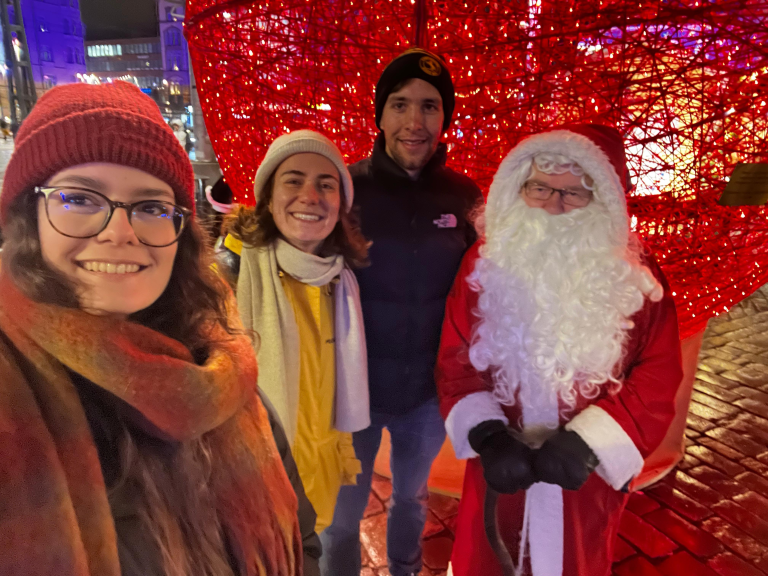
Walking through the market, we also noticed how food brings cultures together. Even though we were in Finland, eating German food while talking about Dutch habits felt completely natural. The Christmas market became a place where different traditions met, not in a formal way, but through everyday experiences like eating, chatting, and observing.
By the end of our visit, we were cold but satisfied. The evening showed how something as simple as a Christmas market can become a small cultural exchange. Without planning it, we learned more about each other’s backgrounds and habits, just by sharing food and time in a winter setting.

Comments