

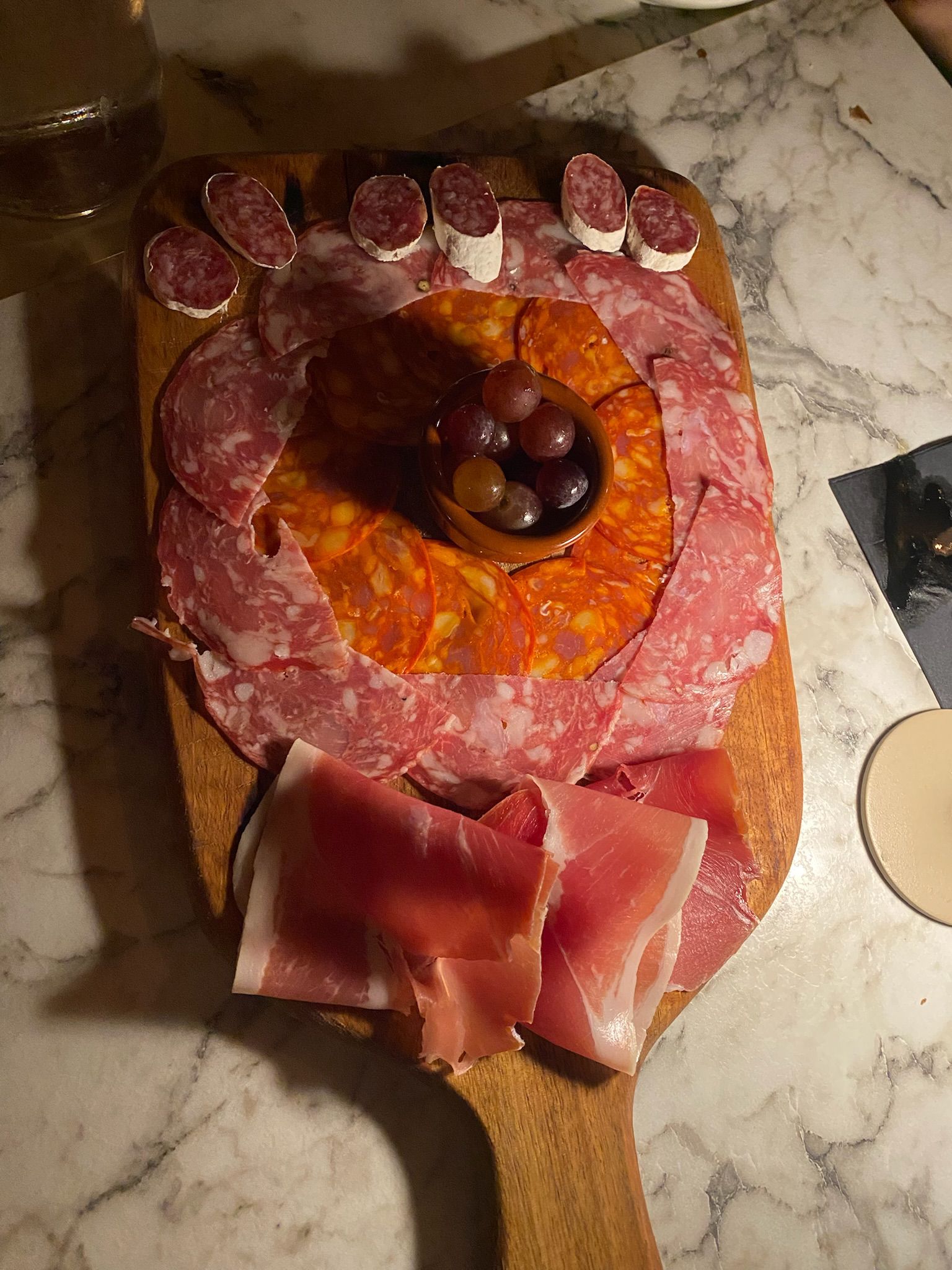
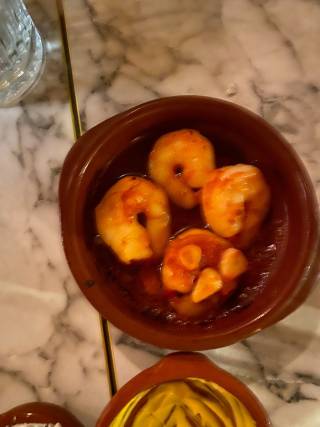
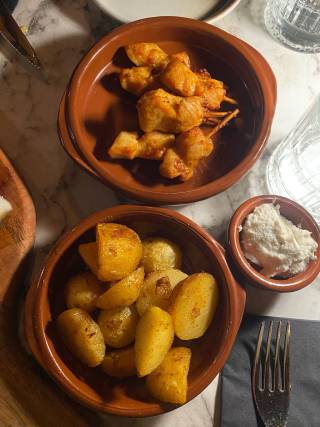
Although this meeting did not involve English or French practice, it still contributed significantly to our cultural learning. We spent the evening discussing traditional dishes from our regions (Andalucía and Aragón) and comparing them with the versions we were tasting in the restaurant. It was interesting to see how Spanish food is adapted abroad and what flavours change when ingredients or preparation styles differ.
We reflected on dishes such as tapas, tortilla, croquetas and other foods we both grew up eating. Sharing opinions about the flavours, presentation and authenticity helped us develop a deeper understanding of how cuisine forms part of cultural identity.
Discussing typical food in detail also helped us organise our thoughts about our cultural background, something that later can be useful when we return to English in future meetings.
This meeting was a strong reminder of how important food is in representing where we come from. Eating Spanish dishes in another country created a mix of nostalgia and curiosity. Some dishes tasted very familiar, while others were clearly adapted to Finnish ingredients or cooking styles, which sparked interesting conversations.
Speaking in Spanish allowed the conversation to flow naturally, especially when talking about memories connected to food-family like meals, celebrations or regional specialties. Food is a deeply emotional and cultural topic, so choosing our native language felt appropriate.
This experience also made me reflect on how cultural exchange does not always require formal explanations or structured tasks. Sometimes simply sharing a meal can open the door to meaningful reflection on identity, traditions and the connection between food and memory.
A difficulty was evaluating the food in a fair way. Since we were comparing the dishes to very authentic versions from our regions, it was sometimes hard not to be overly critical. However, this also generated interesting discussion about adaptation and authenticity.
In this meeting, the linguistic goals were not the focus, but the cultural goal was fully achieved. Talking about regional cuisine (and tasting it together) added a rich cultural layer to our learning process. The experience of eating Spanish food abroad was meaningful and helped us connect through shared identity and regional differences.


Comments