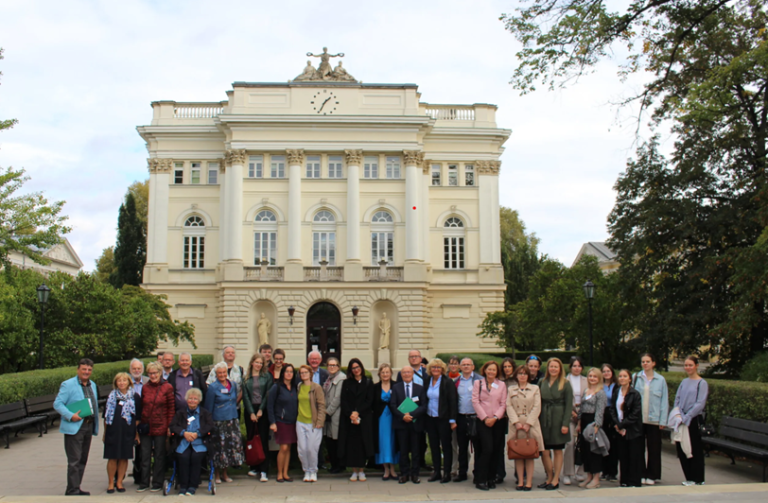
In Translation Studies we enjoy close collaboration with our translator peers here in Finland, with an active, ongoing dialogue and conferences that habitually mix academia and industry. However, last fall I noticed it had been quite some time since I had last participated in a larger international event, something I did on a regular basis in my past work in industry.
Added to that was a paper Maarit and I had recently published (Koponen and Nurminen 2024) that we felt was potentially relevant to an industry audience. In it, we introduced an idea for a risk management process and discussed research that we thought had not reached industry yet, but might be valuable to them.
But truthfully, we weren’t sure of that at all. Would we academics really have something to offer such an audience? Would others see the relevance in it? We decided to just try it and see. As a bonus, we’d get 2 days of industry information we could use in our research and teaching.
Surprise #1, the submission process: instead of an abstract or full paper, we submitted 3 or 4 sentences about our work into a web form. The next thing we knew, we were invited to (of all things) a meeting to discuss our proposal. Um…OK. They asked what we would talk about and then discussed other aspects of the conference and how our proposed talk might fit in. All in all, a very different process than in academic conferences. But the end result was positive: we would have a spot in the 2025 Nordic Translation & Interpretation Forum (www.ntif.se).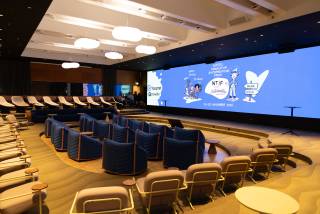
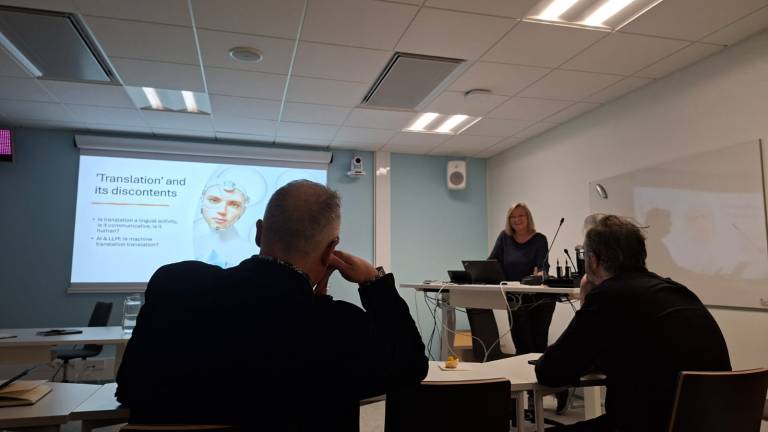
Surprise #2 came when we got to the venue (see the image above). A Ted Talk stage. Oh no.
No desk or podium to hide behind. No laptop screen to fixate on. It would be like standing full-body naked in front of a room of people. Years of teaching and speaking in front of groups and Zoom screens did not prepare me for this. Yikes!
But it was too late at that point. We had no choice but to wire up with microphones, quickly get used to looking down at the floor-level screen to see where we were in our slides (worked very well, by the way), and start talking.
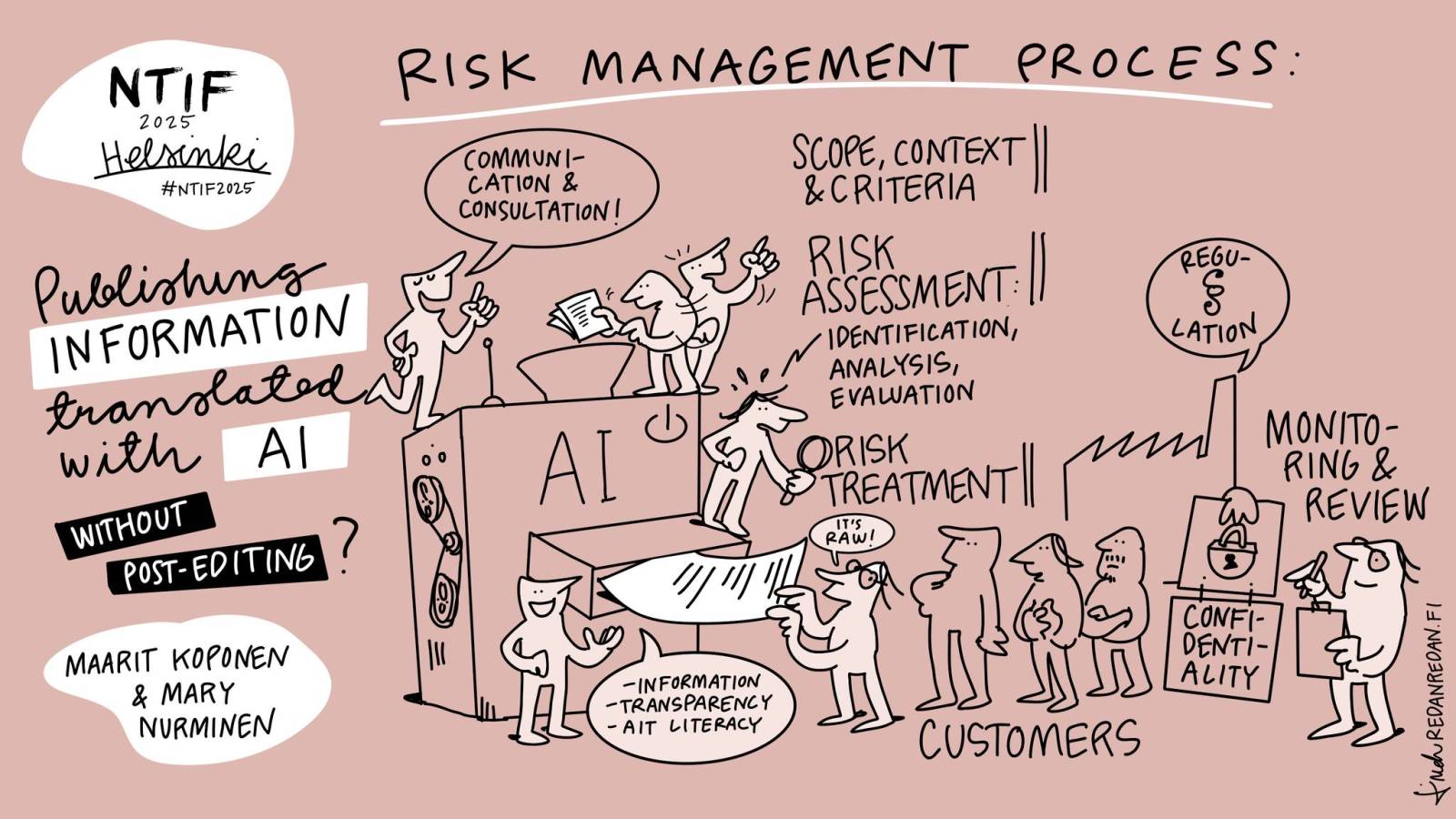
Surprise #3 was the biggest of all. The conference would have something called graphic recording (livekuvitus in Finnish) going on throughout the day. Linda Saukko-Rauta (https://redanredan.fi/fi/) listened carefully to each presentation and drew as she listened, capturing the themes of each talk in pictures, and finally into a mural-like landscape. The graphic recording of our own talk, which was about managing risk when publishing raw AI-translated information, is shown below. I have to admit, this was the coolest thing I’ve seen at a conference in a long time.
How about the results – was our study relevant to someone? Or were we brushed off as academics who have no clue about the real world? My feeling at the conference was that it was the kind of talk that was immediately relevant to some, but maybe not all, participants. Several people came up to me later to say that they have been talking about this kind of thing at work and our presentation gave them new ideas. One enthusiastic person said she has been wanting to start an initiative of this type but didn’t have the background or terminology to do it. “But now I do. We’ll start it on Monday.” Overall, I think that’s a pretty good result for any conference talk.
The final surprise came recently, when we were asked to participate in a short, recorded ‘post-conference conversation’ since our talk was one of the highest-ranked ones in participant feedback. So tomorrow I’ll wire up again and join the organizers to talk about the conference, our presentation, and predictions on the future of the languages industry.
Do you have work that you suspect might be interesting to industry? Jump in and send your suggestion to their conferences!
Reference
Koponen, Maarit and Mary Nurminen 2024. “Risk management for content delivery via raw machine translation.” In Translation, Interpreting and Technological Change: Innovations in Research, Practice and Training, edited by Marion Winters, Sharon Deane-Cox, and Ursula Böser. Bloomsbury. https://trepo.tuni.fi/handle/10024/209574