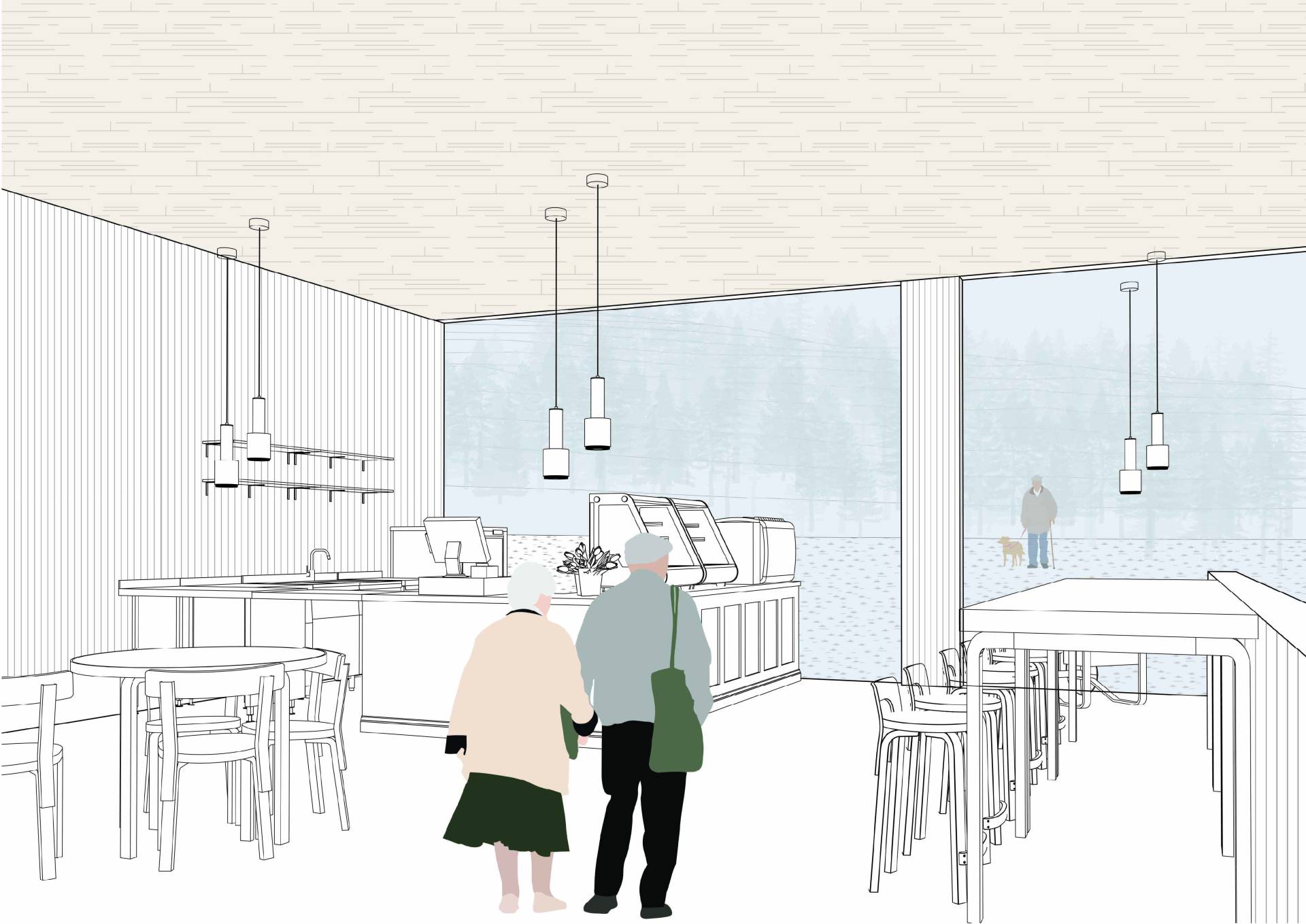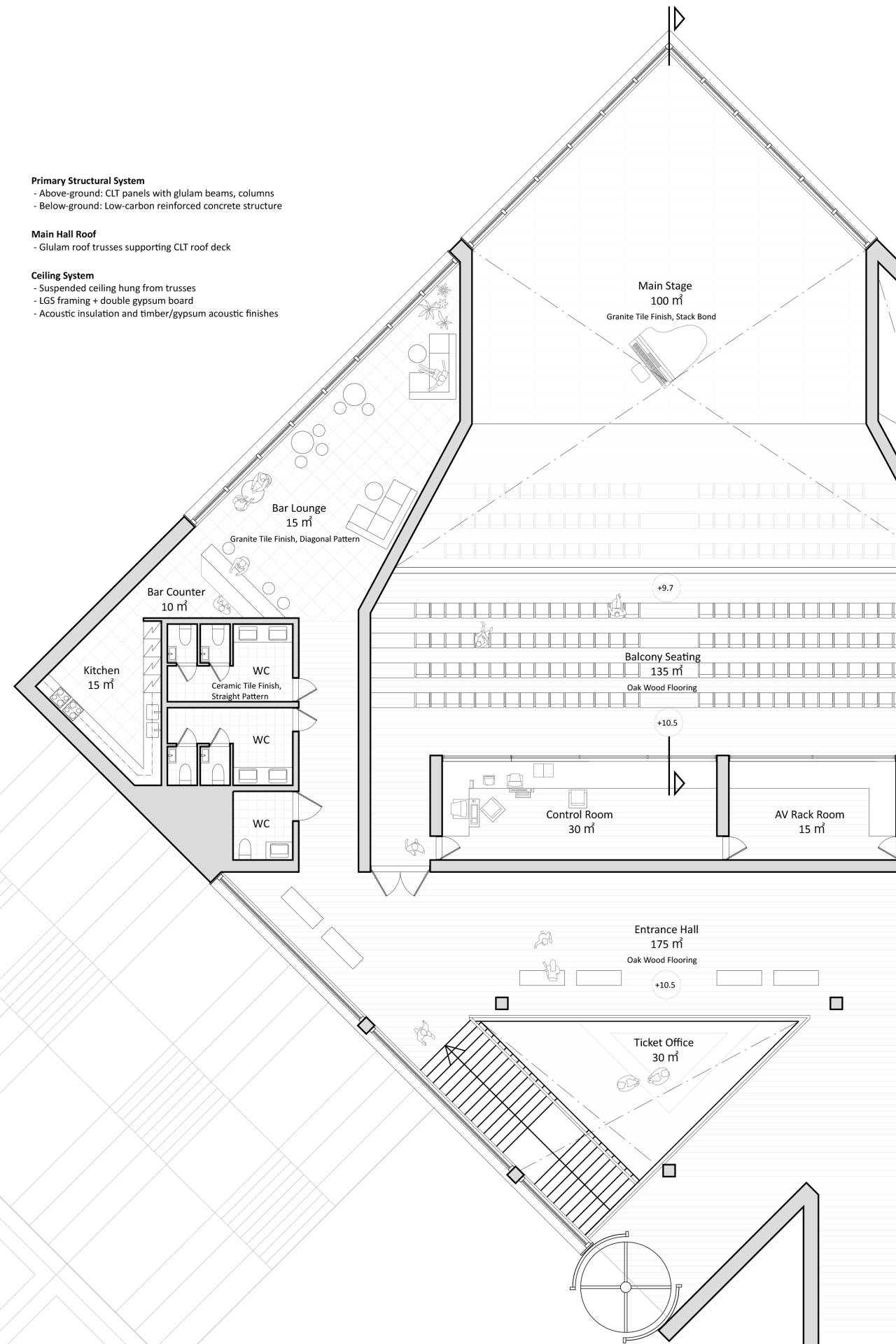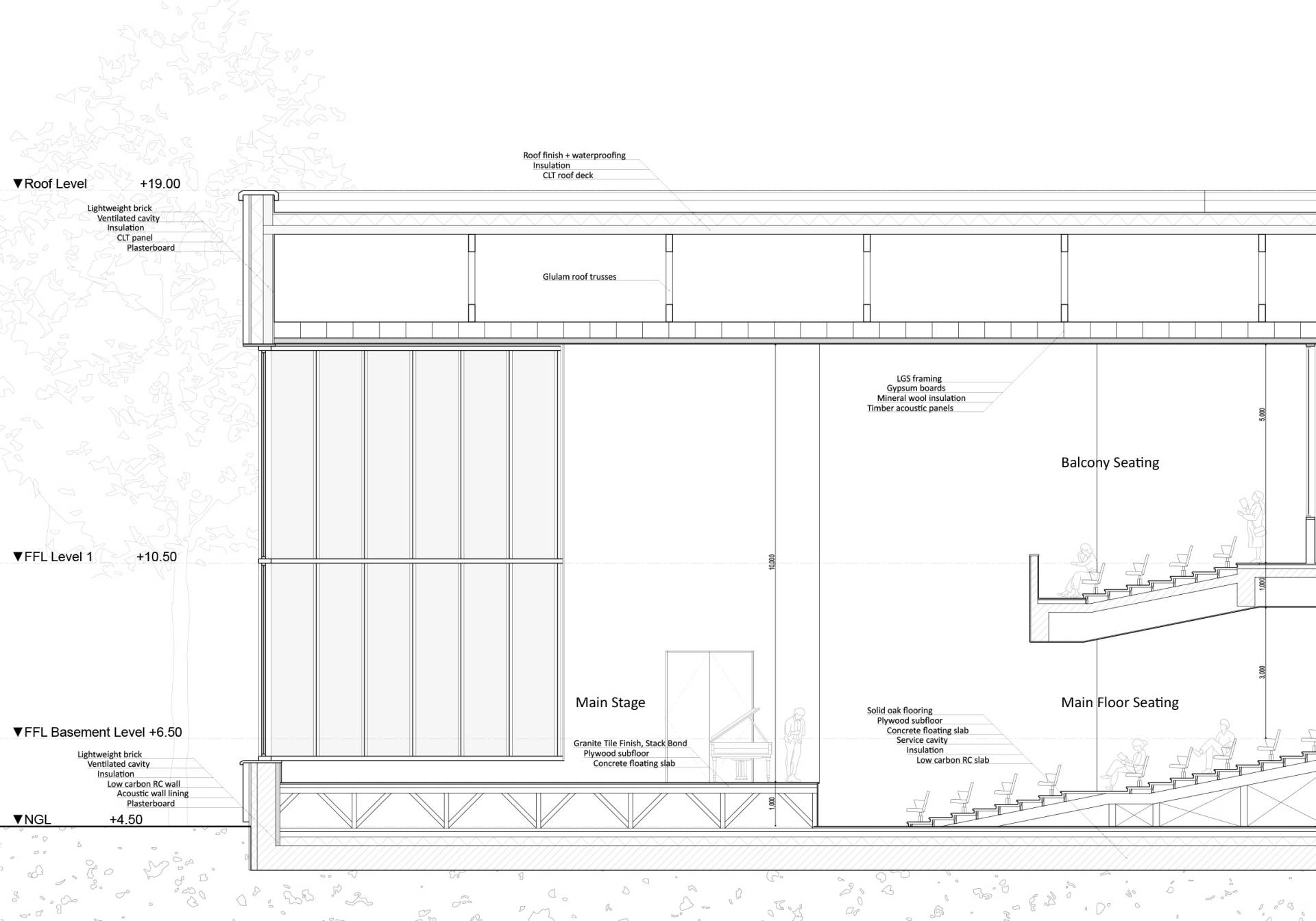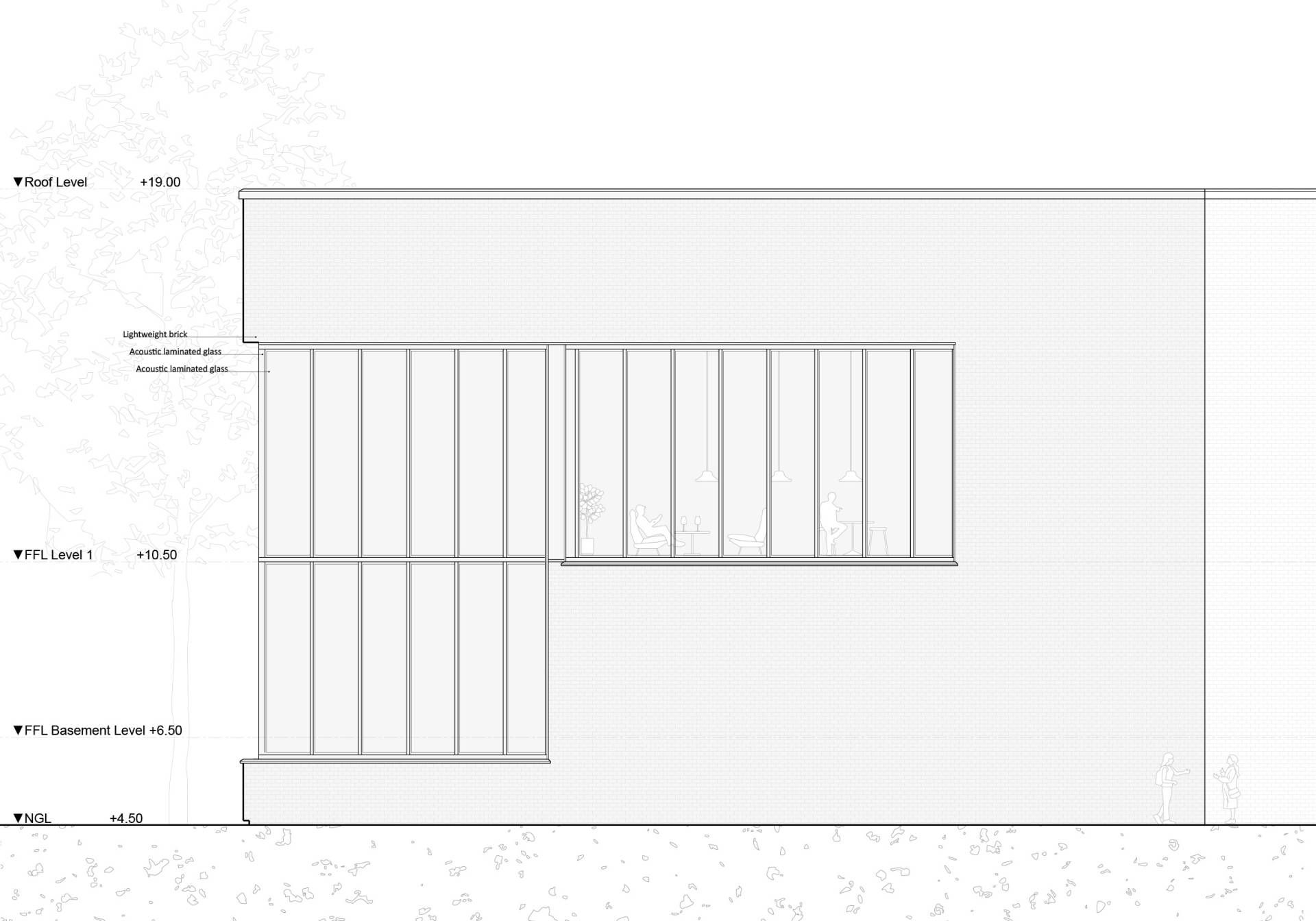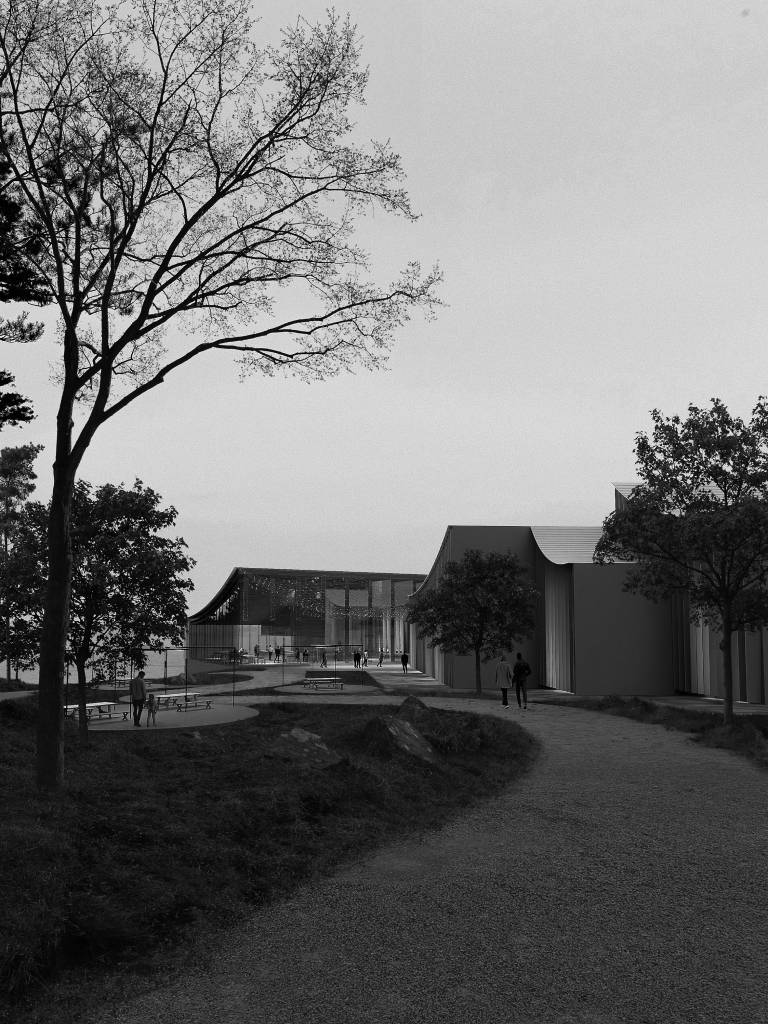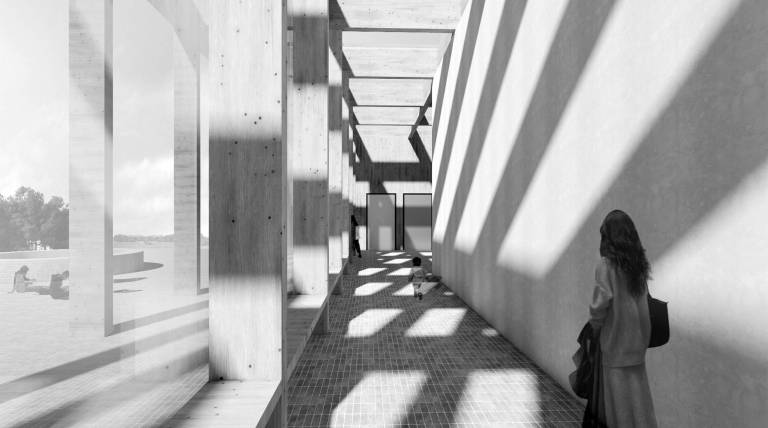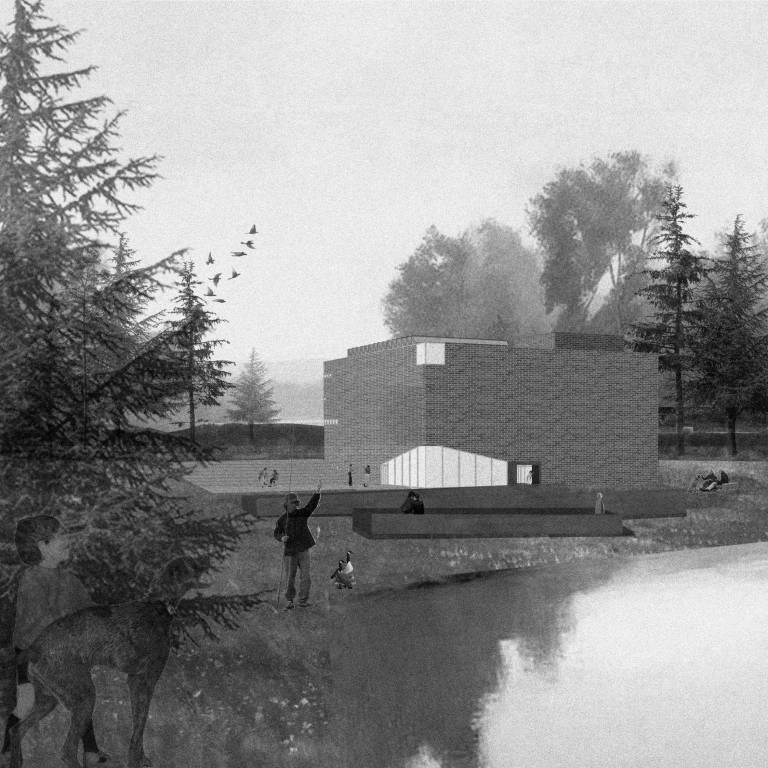

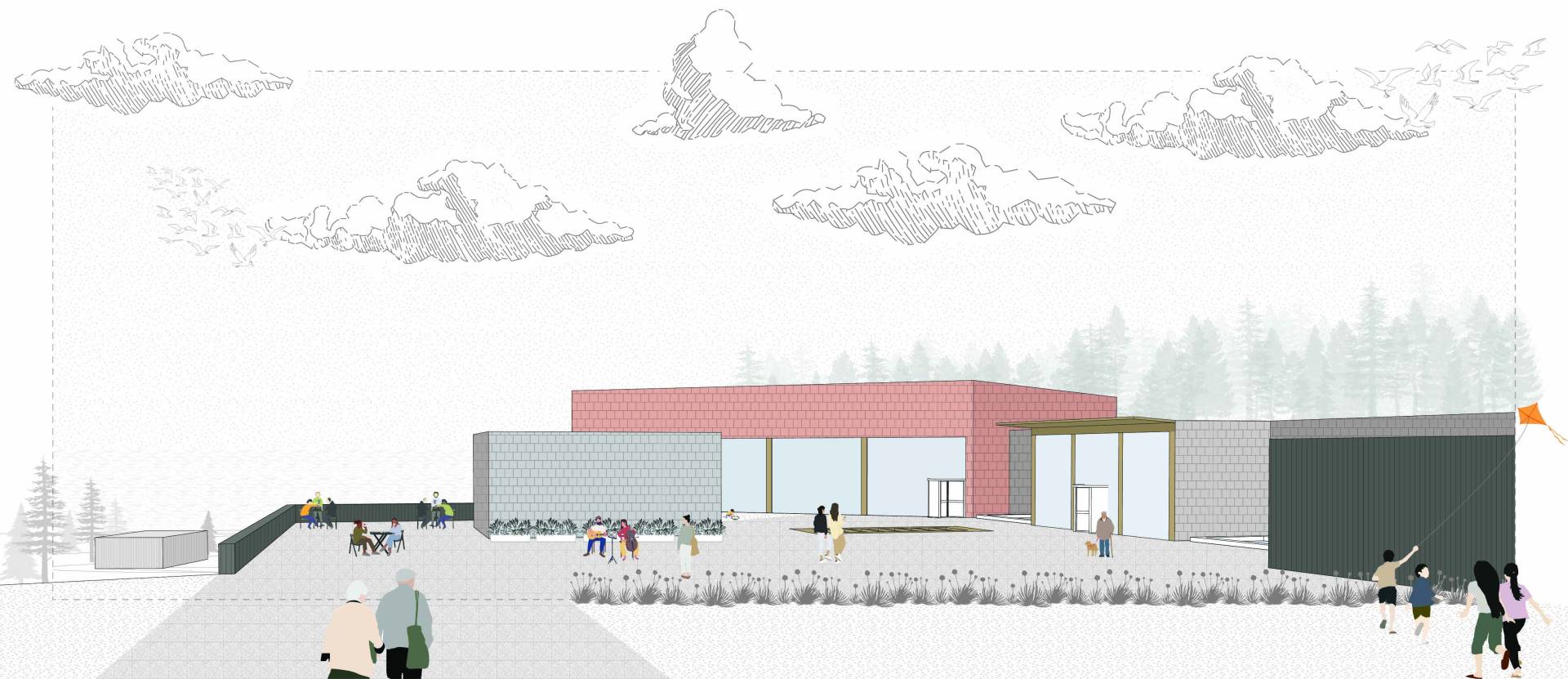
This project explores the profound synergy between human well-being and the auditory experience, establishing a Music Experience Centre that acts as a sensory bridge between the forest and the Näsijärvi lake. Situated at Kaupinpuistonkatu 2 in Tampere, the design replaces an existing water purification plant to create a “sensory resonance” where music is felt beyond sound.
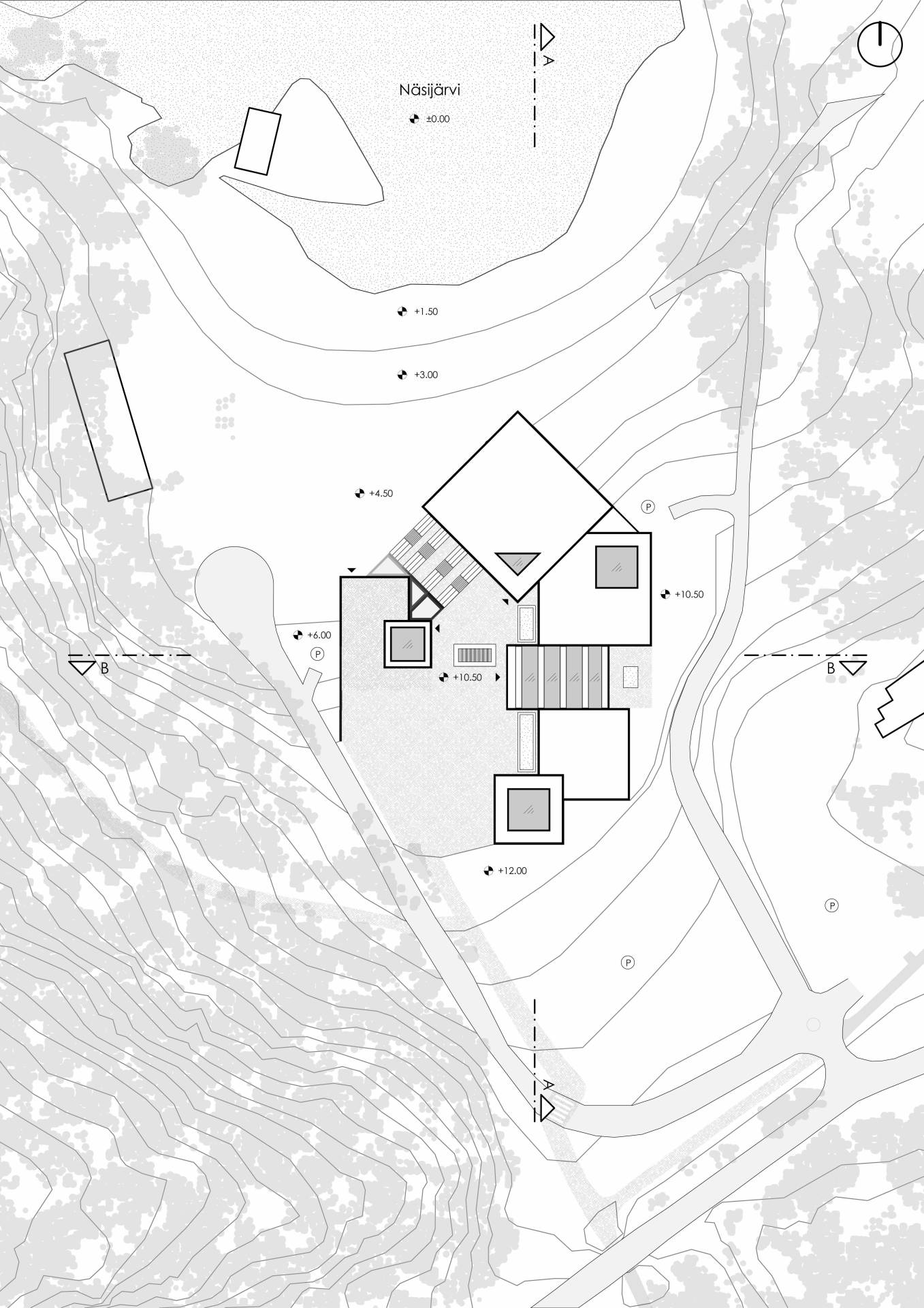
The architectural concept is rooted in the site’s unique dialogue between land and water. By aligning the building’s primary volume along the north-south axis, the design optimizes natural illumination and captures the ethereal Northern Lights, fostering a meditative environment conducive to well-being.
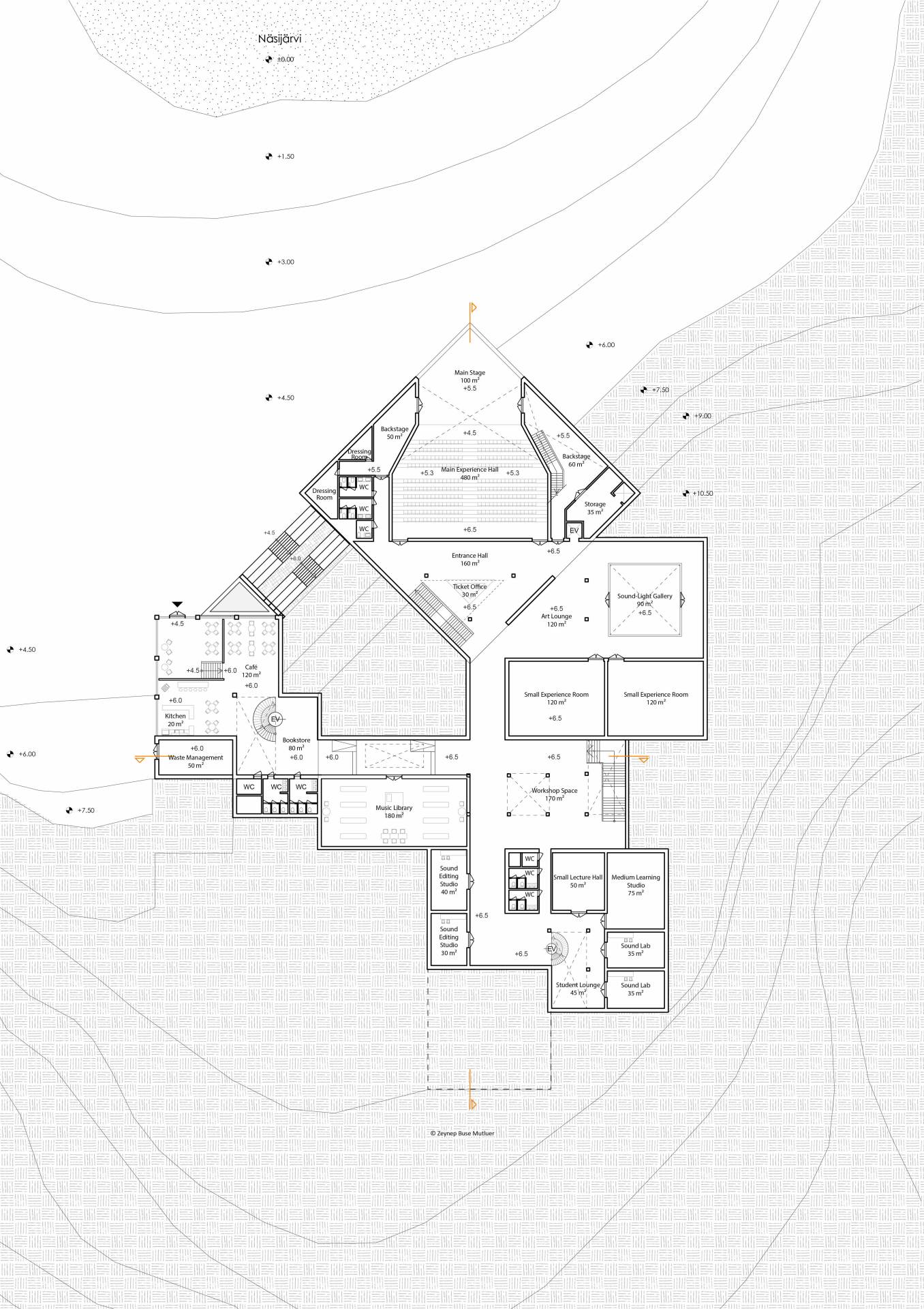
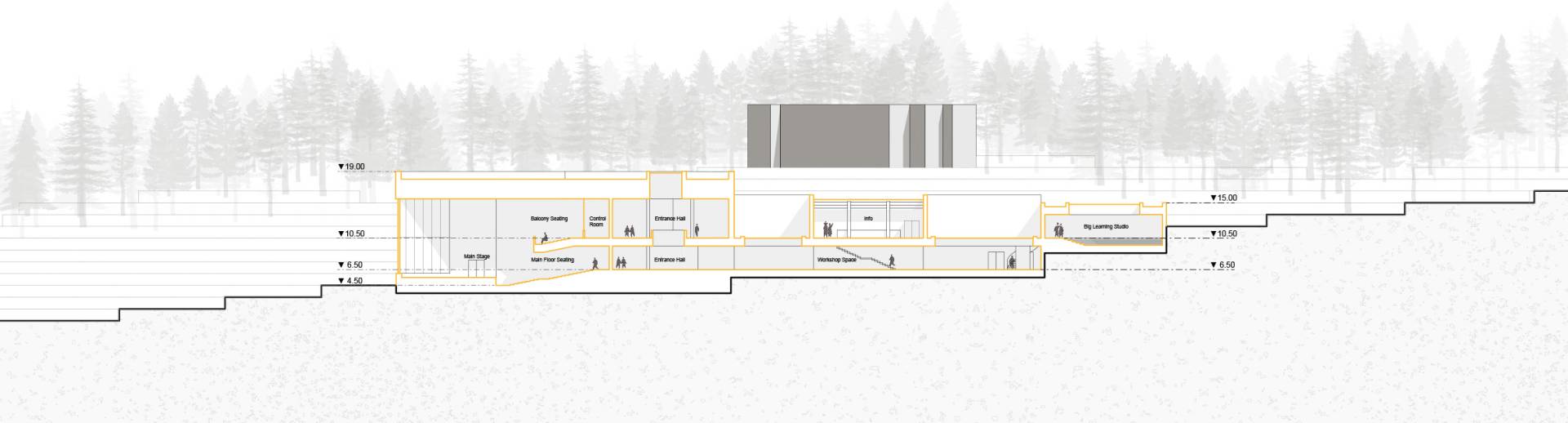
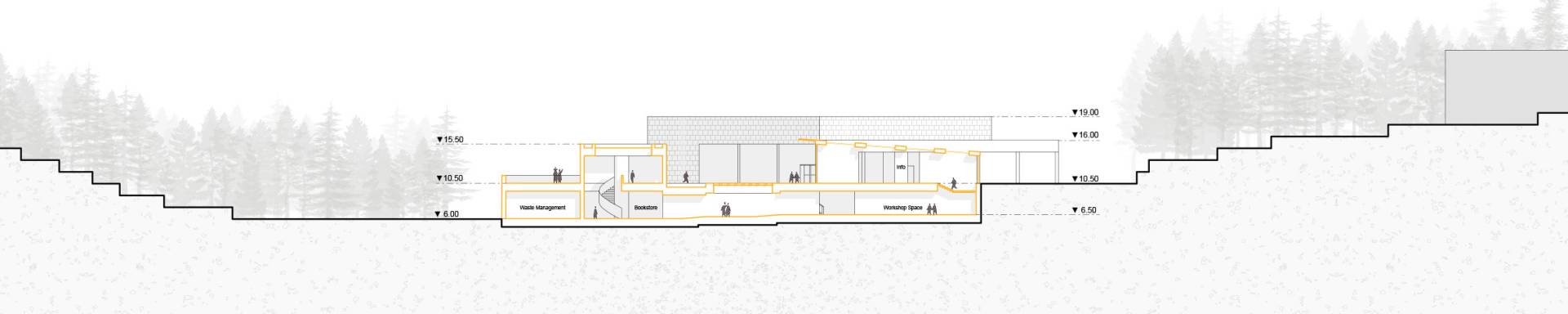
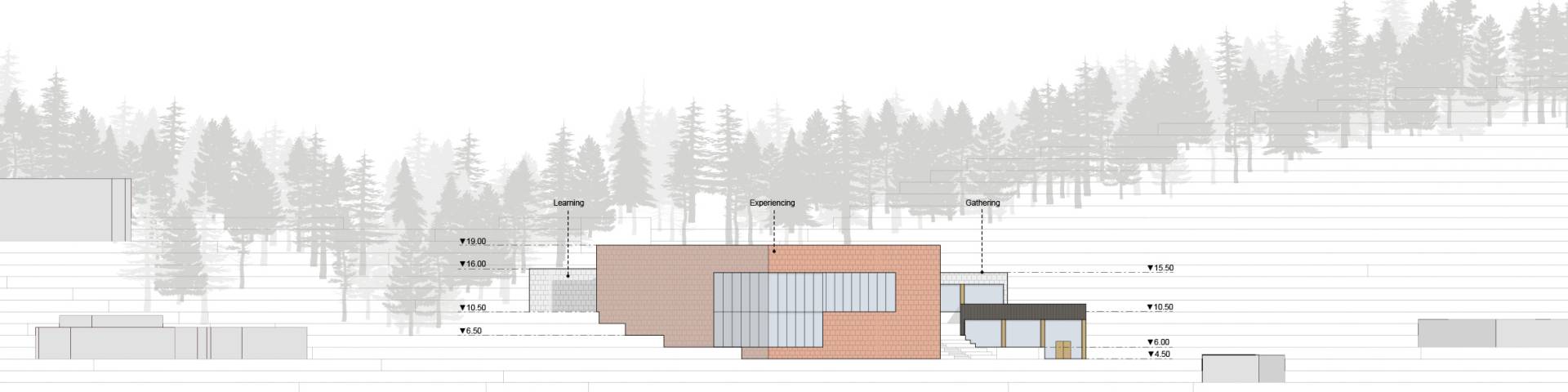
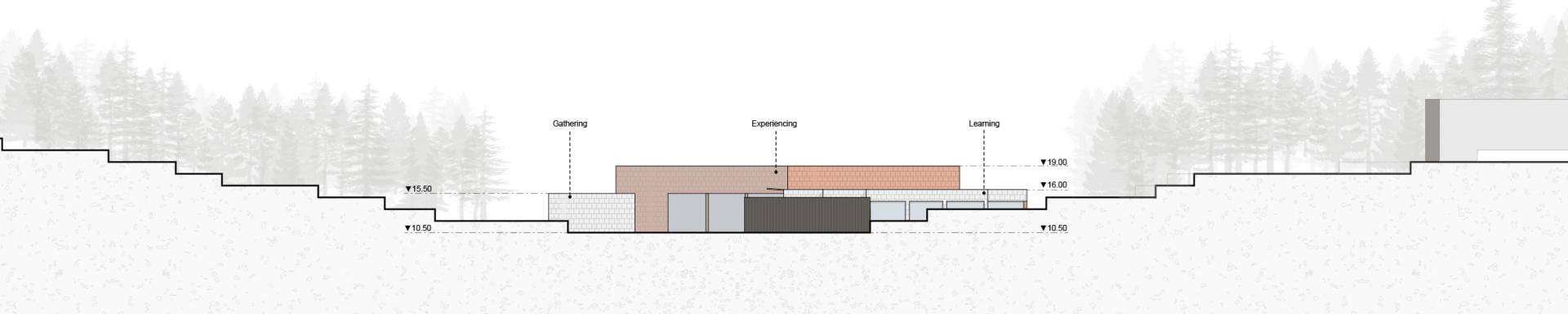
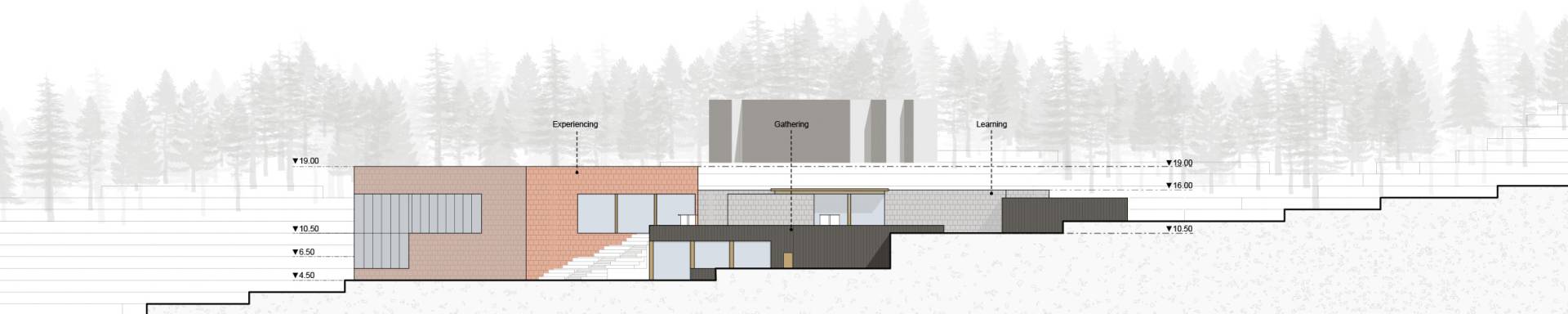
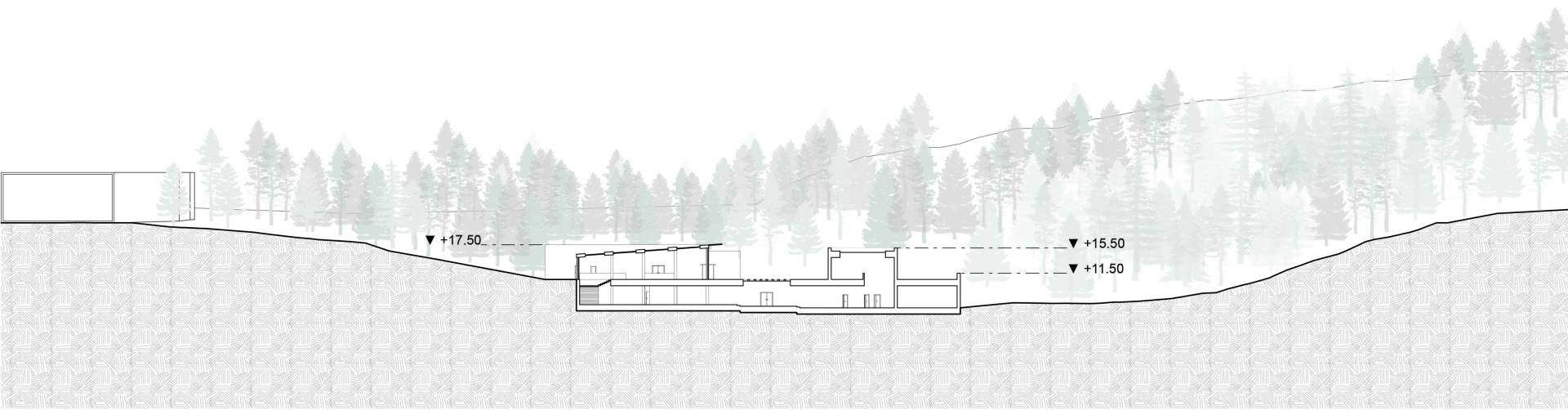
Responding to the site’s geological features, the project utilizes the natural slope to create rich internal topographies through strategic level differences. These “split levels” mirror the landscape’s rhythm, embodying the idea of architecture as “frozen music”.
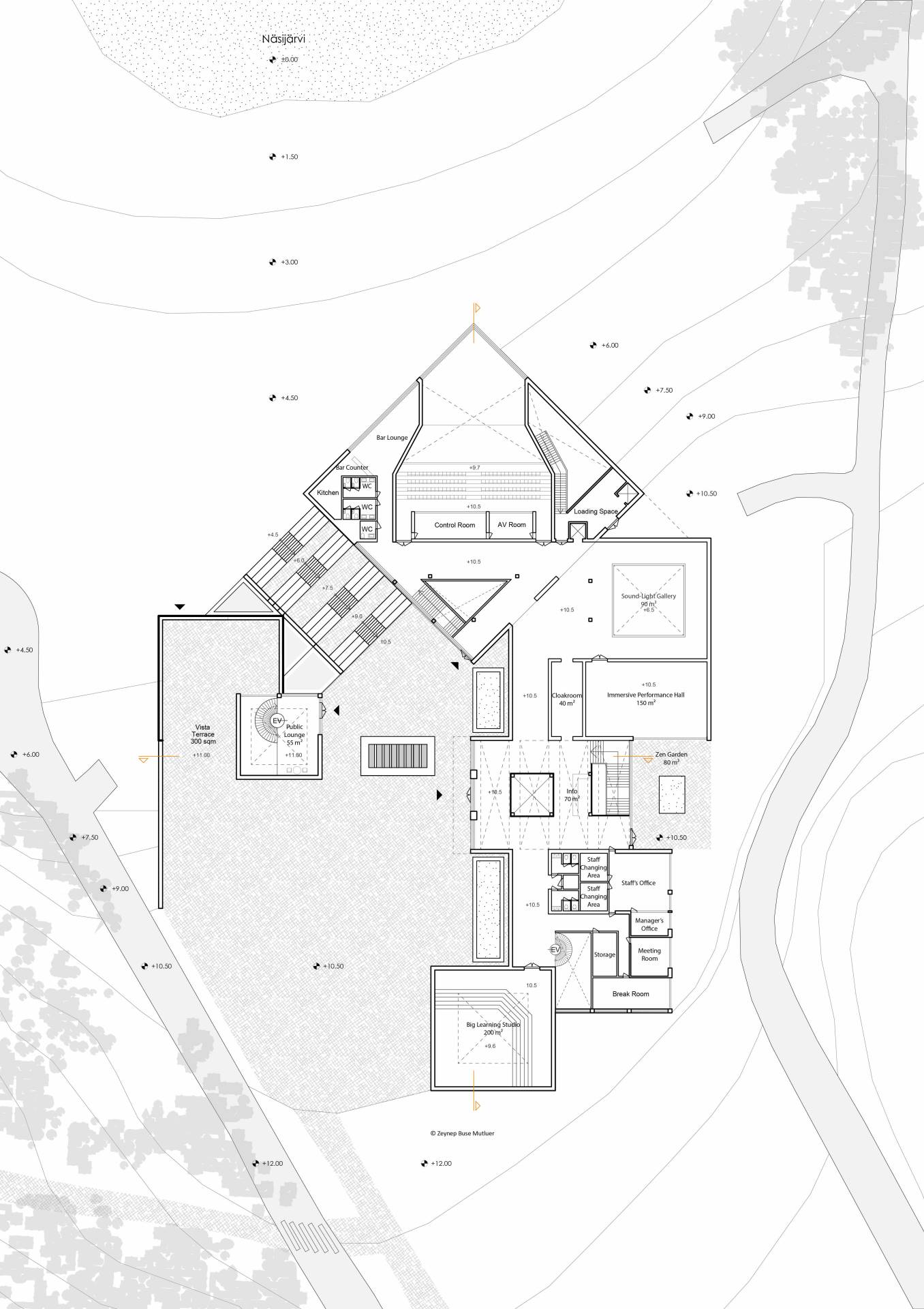
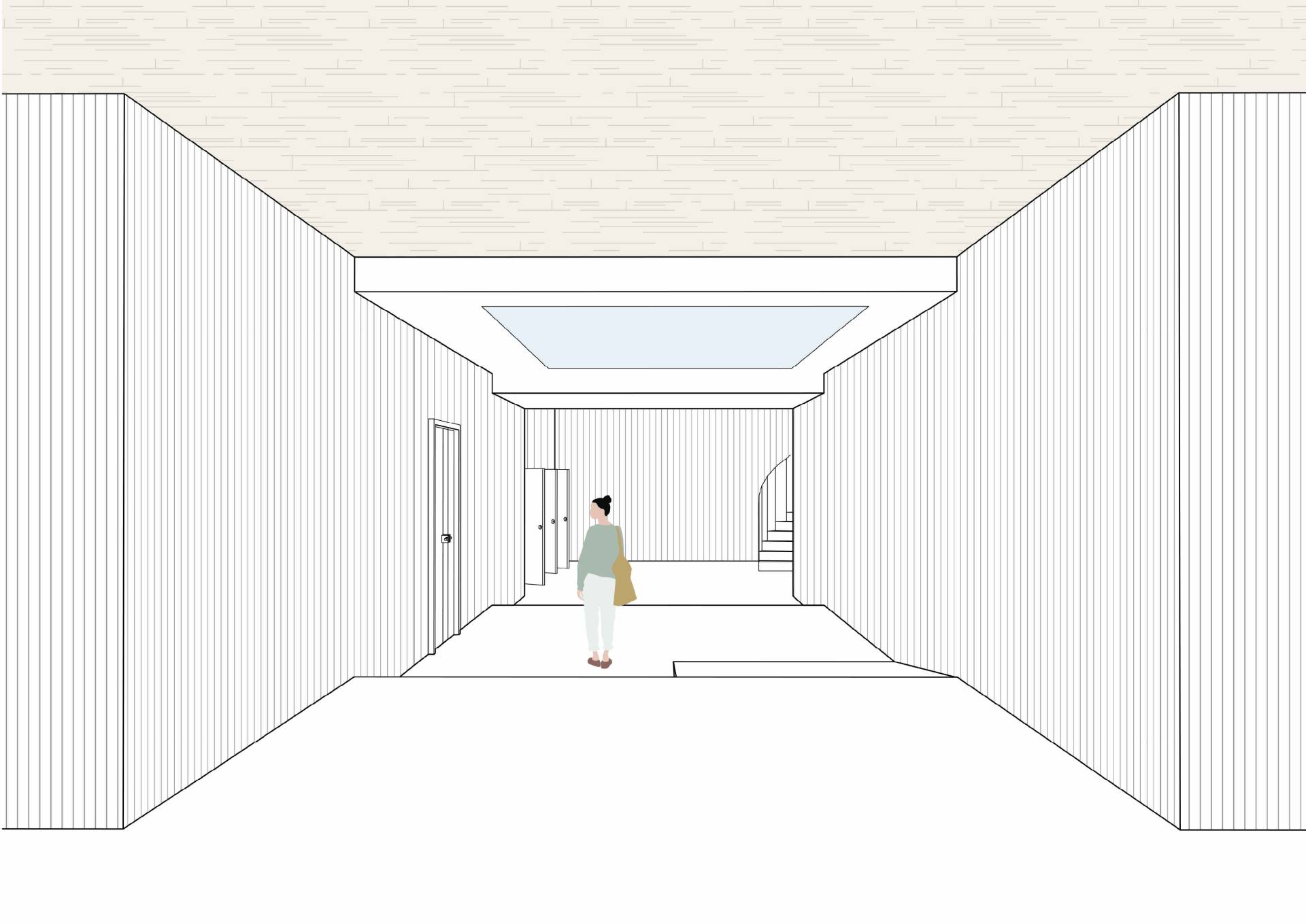
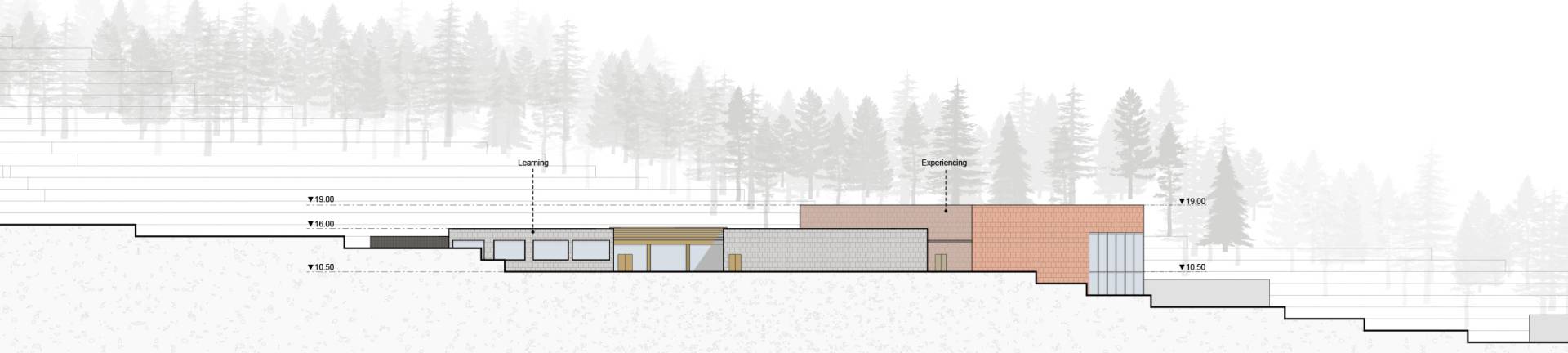
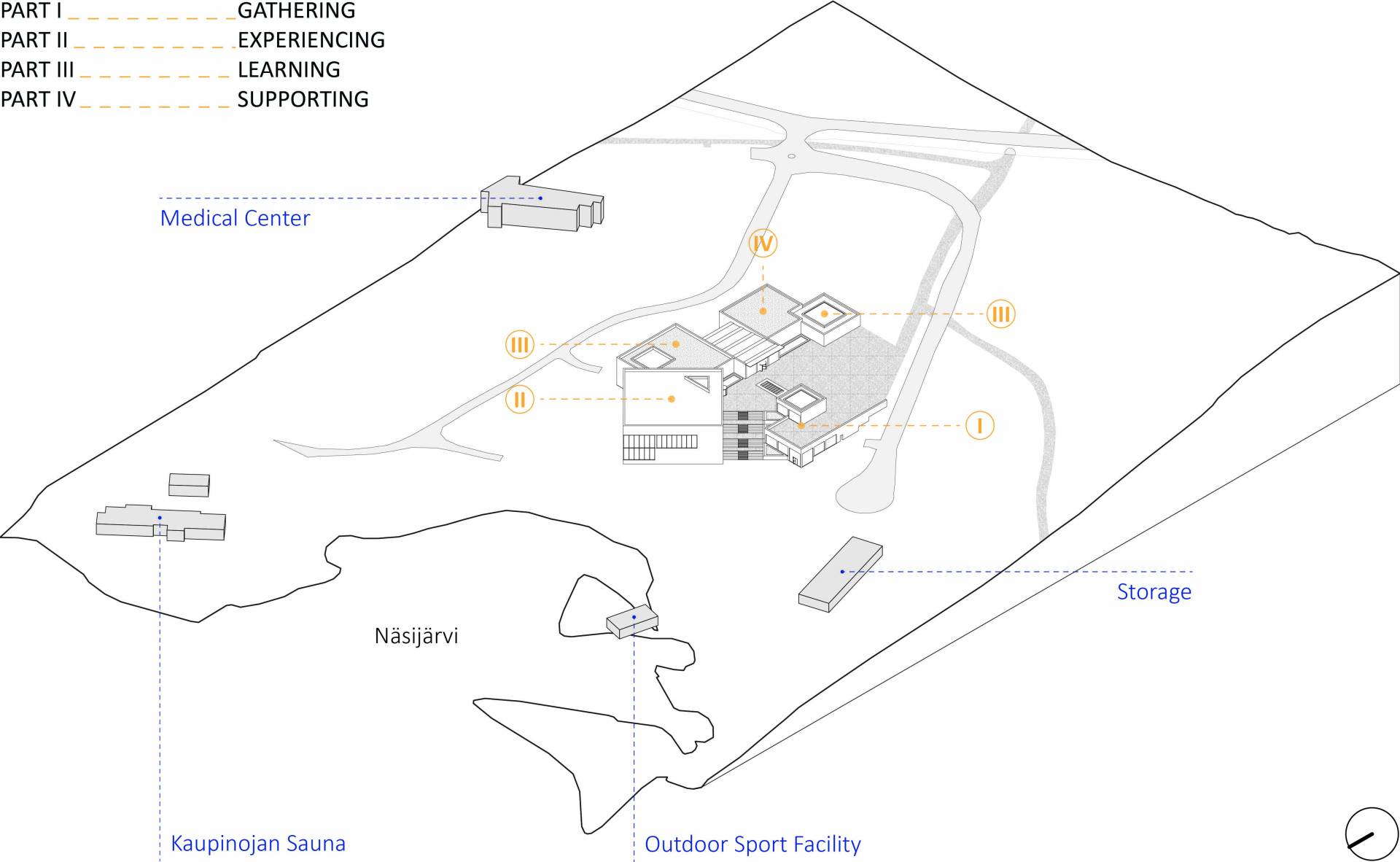
The spatial programme is organized into four distinct parts: gathering, experiencing, learning, and supporting. The internal organization emphasizes an experiential route, where users encounter music as a poetic experience of being. Following the course requirements, the project encompasses a total net area of 2,500 sqm, resulting in an estimated gross floor area of 4,000 sqm. Through the careful interplay of light, shadow and materiality, the centre transcends functional boundaries to become a place of profound resonance between nature and architecture.
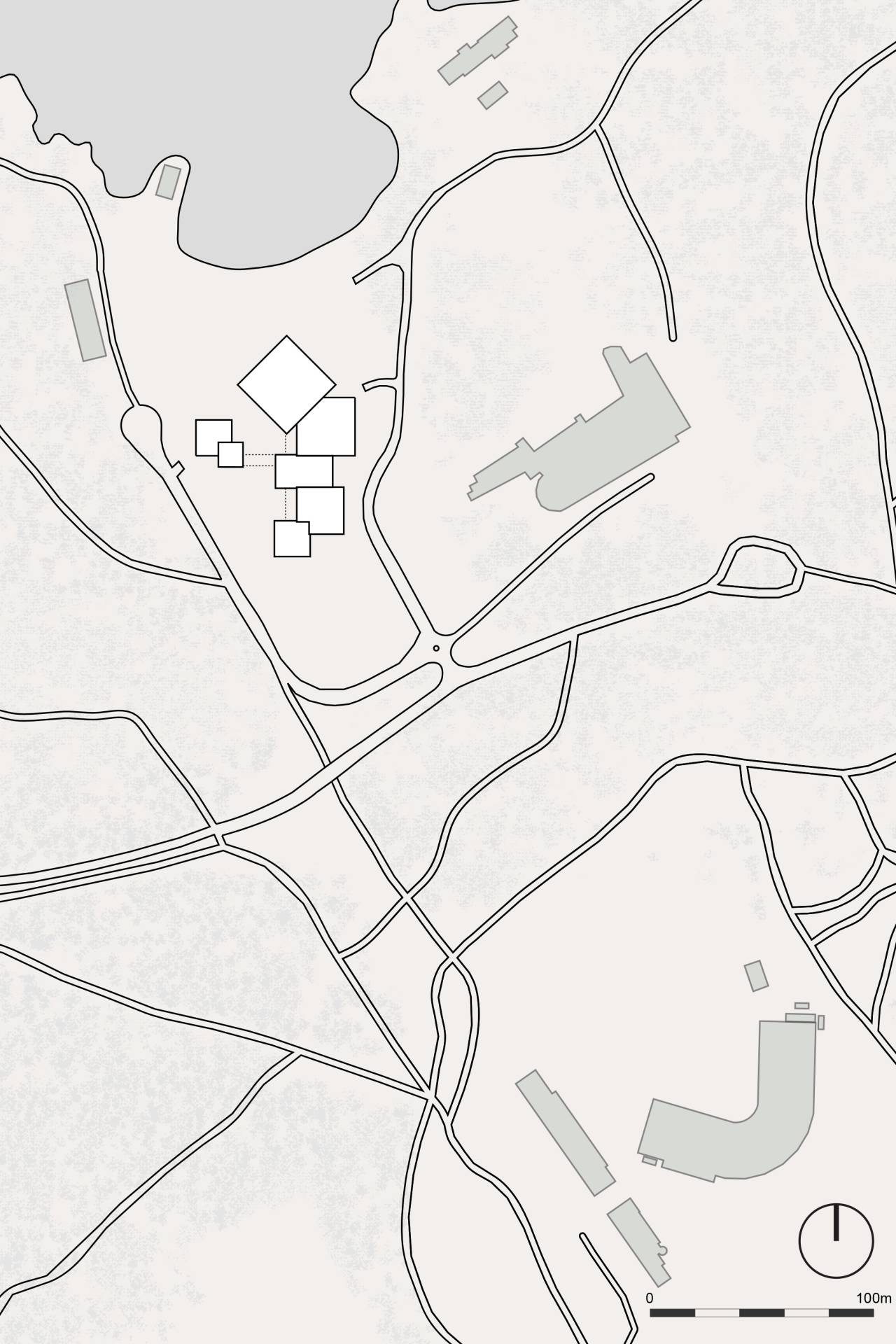
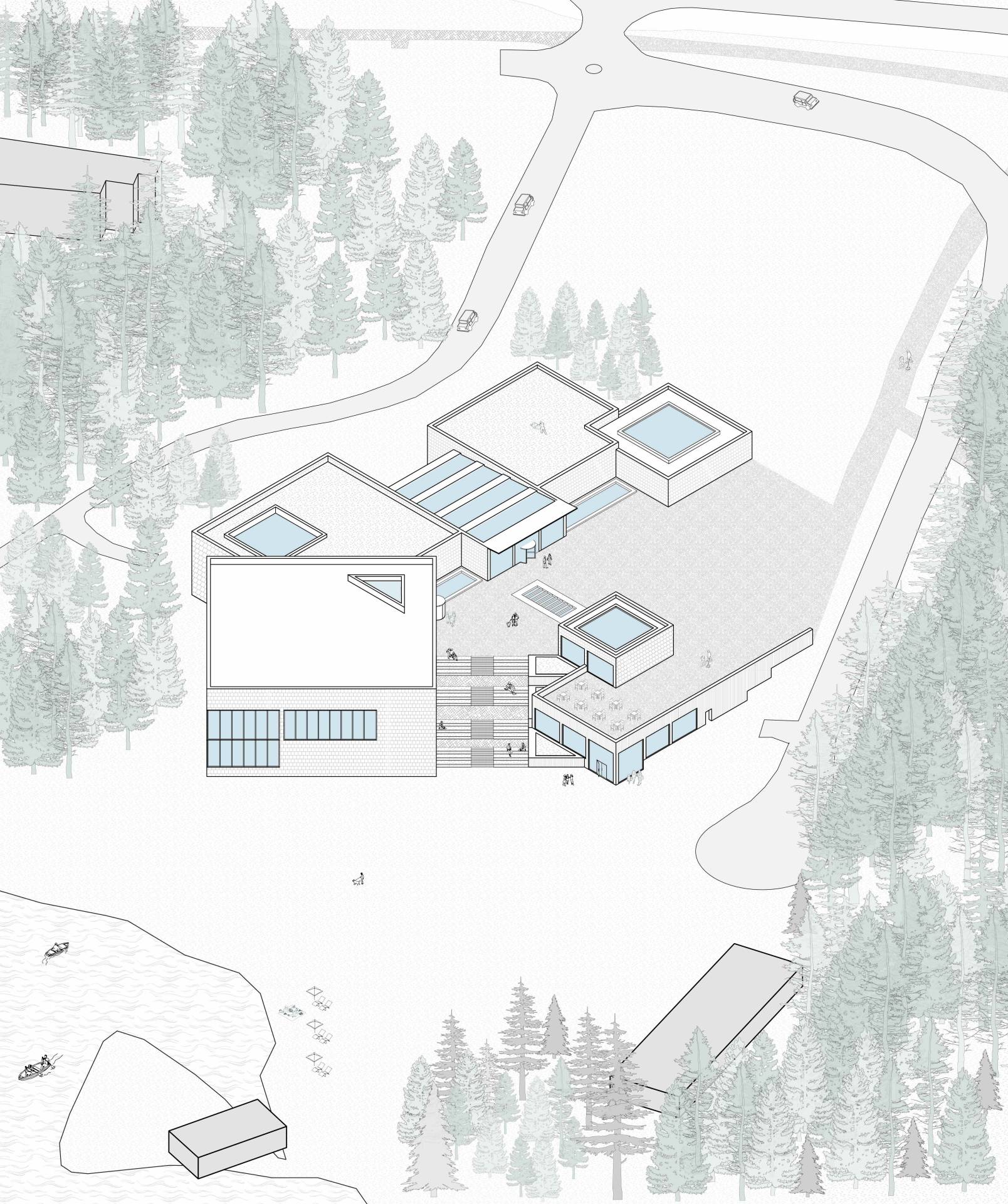

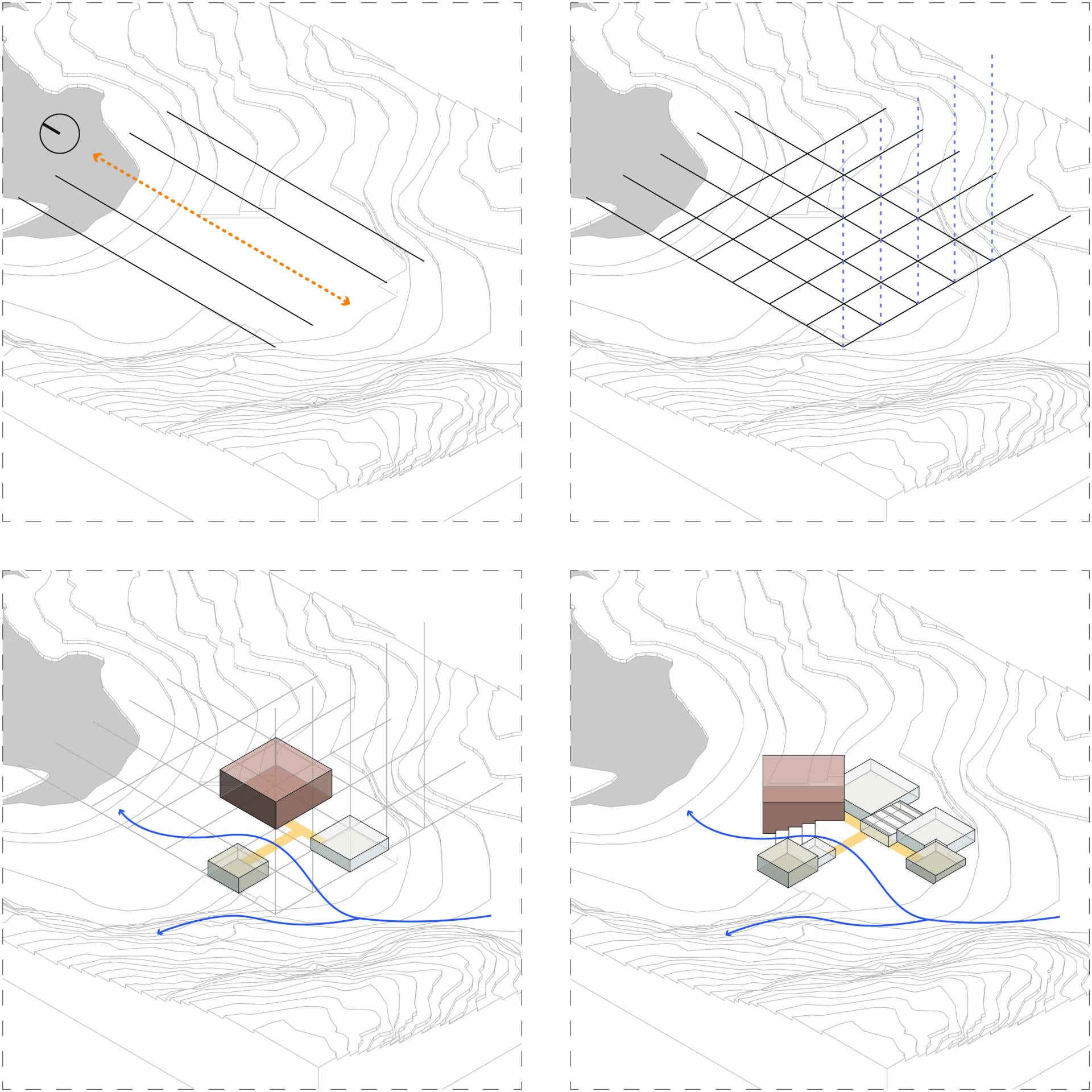
Our architectural concept unfolds along the lake, which serves as the primary axis. This axis extends outward like a musical score, establishing the foundational horizontal framework.
A second axis, derived from the site’s natural slope, intersects this primary line, and together with the added z-axis for volumetric development, the system forms a three-dimensional structural grid.
Within this grid, three functional zones are arranged, and between the volumes we introduce social paths and plazas that open toward the lake. Bridges connect zones with distinct spatial characteristics, creating a continuous network of movement and interaction.
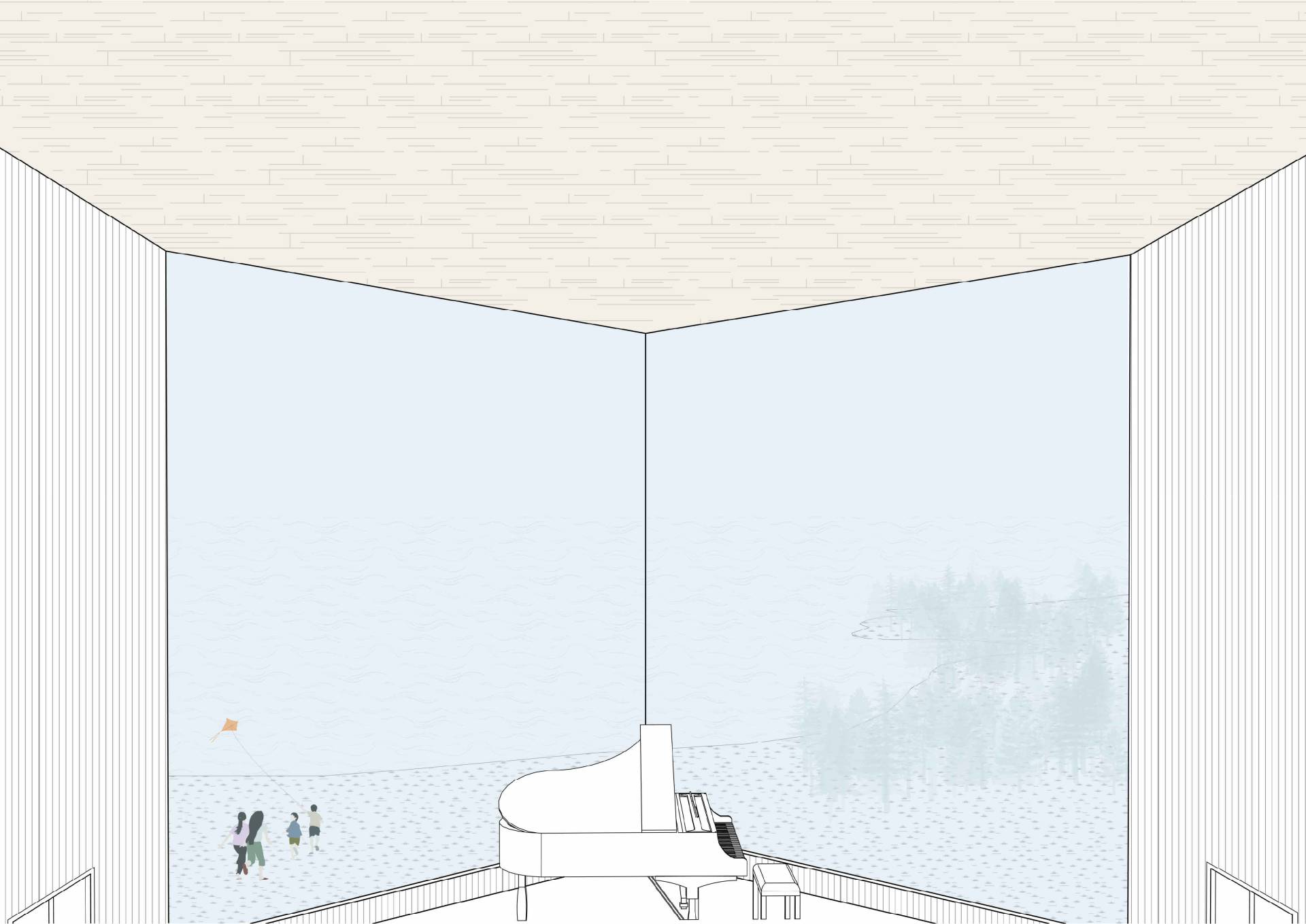
Each cluster gradually expands outward from the experimental core, forming a composition shaped by musical logic. The main experimental hall becomes the deliberate exception to this rule, projecting toward the lake to secure an unobstructed panoramic view.