
Writers:
Elina Sirén, Hamed Mazaherylaghab and Laura Uimonen
All together we highlight eight interesting perspectives for the future urban planning and the areas of professional green knowledge:
Findings from Elina:
- As both a researcher and a teacher, it was especially delightful to see how research informs planning and design practice. A good example of this was the Sitralab project presented by natural museum environmental education and insect expert Tomi Kumpulainen, where researchers took different user groups (e.g. children, nature and history enthusiasts, elderly adults, etc.) for walks in the Niemenranta urban development area at Tampere, at the time still under planning. It is not always clear how stakeholder participation informs urban planning and design, but in this case, we also got to see how the insights from the walks manifested in the design and execution of the area and acted as a true design inspiration rather than a constraint.
- Another example of the research-practice connection was Carl McClean’s presentation about the Safer Parks project from the UK, where research about women’s and girls’ perceptions of park safety was not only used to create a practical guide, but significant effort has gone into operationalising the contents of the guidance.
- Mark Rotteveel from the Dutch Ginkel Group showed examples of a holistic and long-term approach to green area design, construction and maintenance. Also in this case, collaboration with Wageningen University helped to demonstrate measurable project outcomes in terms of ecosystem services. These and many more inspiring presentations really showcase how research can – and should be – put into practice.
Findings from Hamed:
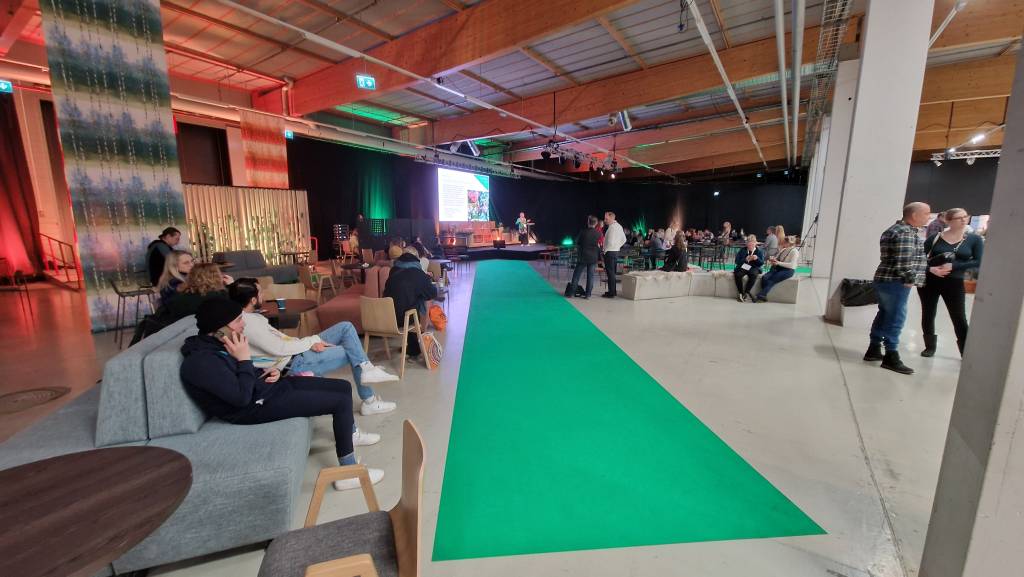
- The lecture by Maj Wiwe (Cobe Architecture Office) on the design and implementation of Cobe’s Opera Park (2019–2023) in Copenhagen. Developed on a vacant ex-industrial island, the two-hectare park illustrates feasibly and carefully planting on a concrete deck. The project integrates six thematic gardens with a diverse planting palette (628 trees, 80,000 herbaceous perennials, 40,000 bulb plants, and 223 species) alongside a central greenhouse café and a two‑storey underground car park. The design team placed strong emphasis on strategies like plant‑selection planning and the reuse of roof runoff from the opera house. Equally striking was the rigorous plant‑care process carried through to the final phase of construction. Overall, the project shows high horticultural diversity and year‑round public value. Such approaches are worth serious consideration by built‑ environment professionals.
- Another compelling contribution came from Julle Oksanen, who presented his doctoral thesis Darkness, Design and Biodiversity. His work examines the global impacts of human-caused light pollution (visible even from space) and outlines three paradigms for understanding its ecological consequences and design‑based solutions. For me, one of the most striking insights concerned how easily built environments overlook nonhuman species. Reflective façades, for example, can cause fatal bird collisions, while excessive or poorly directed park and street lighting disrupts birds’ night vision and behaviour. Oksanen’s book argues for rethinking artificial lighting through ecological, architectural, and engineering perspectives to safeguard nocturnal environments and biodiversity.
Findings from Laura:
- Principal Researcher Jenni Lehtimäki from the Finnish Environment Institute reminded us that humans, as one species among many, constantly interact with other living beings. Our bodies negotiate directly with other organisms, and at the microbial level our survival depends on the microscopic life that lives in and around us as part of our immune system. Bringing nature indoors —and expanding everyday life more outdoors, in contact with soil, vegetation and animals— is not just beneficial but essential for our wellbeing and resilience.
- Development director Kaisa Mustajärvi from the City of Tampere, Climate and Environmental Policy Unit, highlighted the crucial need to align conservation planning with urban planning to strengthen the blue-green network, with a particular focus on the regenerative memory of local ecology. She emphasized that red-listed habitats are not found only in peripheral areas but also in dense urban environments. Finnish urban forests face significant risks due to several factors: increasing recreational pressure, habitat sensitivity, and the impacts of a warming climate. Furthermore, as Mustajärvi noted, ecological change began long ago —especially in lush groves dominated by broadleaf species, many of which were historically used as pastures. To restore such landscapes, including the return of oak forests, planners must adopt a deep-time perspective, looking even seven generations ahead.
- Dimitra Theochari, Greek engineer, architect and landscape architect, based at Hamburg Germany, opened the vast field of intertwined professional skills in blue-green planning and design. She highlighted the increasing risks of urban heat and the need for heat‑reduction guidelines to avoid heat traps in building sector and to ensure adequate soil quality. She emphasised the value of ecological intelligence, illustrated through historical underground blue‑infrastructure systems in Athens.
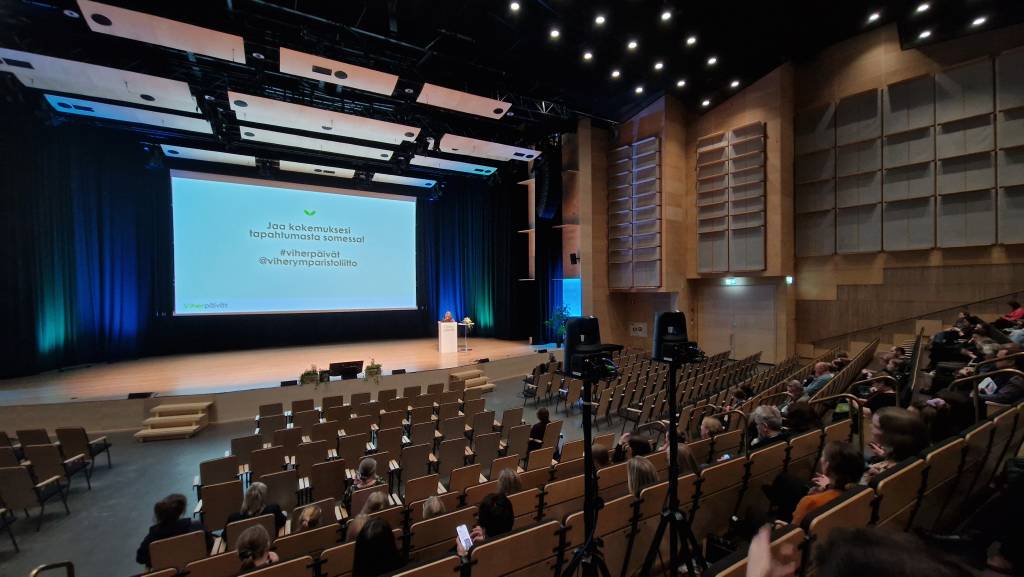
Overall, Viherpäivät offered valuable perspectives that reinforce how urgently our design disciplines must integrate biodiversity, ecological sensitivity, and multispecies considerations into everyday practice. Many themes familiar for us in the theoretical context were discussed with various lenses and with fruitful international and national examples of implemented sites.
Read more:
Kommentit