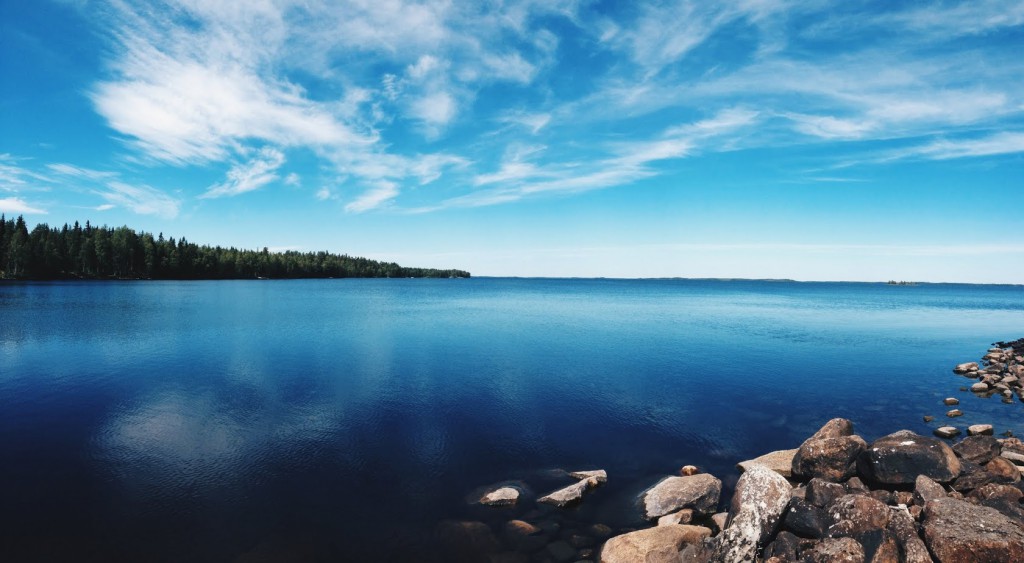
For me personally, Finnishness means safety, cleanliness, and quietness. The first two are most apparent when comparing Finland to southern countries, where you can see the opposite. I appreciate the fact that the environment is kept clean and waste is sorted. I’m disappointed to hear news from abroad about harassment of women and their experience of insecurity. I’m not saying that those things don’t happen in Finland, but when measuring equality, northern countries are on their own level.
For myself quietness is a double-edged sword. I’m socially more active, than an average Finnish male. That’s why traditional silence and withdrawal makes me confused. After all I don’t see myself as a prototype of a Finnish person. My roots are from Eastern Finland and Karelia, which is nowadays a part of Russia. I have noticed that people who grew up in those areas are often more talkative, social, and carefree than the people from Western Finland. There are many types of Finnishness. You get three totally different people when you take one from Pohjanmaa, one from Lapland, one from Savo, and bring them to the same room. Despite the differences in people’s characters, cleanliness, honesty, promptness, and individual freedom are common values for every Finn. In this context I must mention the unofficial national beverage: coffee. With coffee you can surely make a quiet Finn chat.
When comparing Finnishness to the surrounding nations, one must consider the Finland’s young age. Finns have existed for ages but most of the time under the control of other nations like Sweden and Russia. This means that decisions were made elsewhere, and Finns were forced to respond to demands from others. Although a modern Finn does not have a straight contact to those ages, their effect is still noticeable in Finnish identity. Freedom and defending it is one of the holiest values in Finland. This resulted in tragic wars in nations early years.
People are humble and honest. The importance of community is worth more than individuals. In this matter we are living in a transitional phase. In recent years, the importance and appreciation of the individual has strongly increased. Things have changed so that communality, and the good things it has brought us, are in danger to fade away.
Overall, the average Finn has lived in wellbeing for only the last fifty years. Before that, the coldness, hunger, and deceases have followed the everyday life of the Finnish people. Most of the people lived a miserable life under scary circumstances. Now when these problems don’t exist anymore, most of the people can enjoy their lives wholeheartedly and that’s the way they want to keep doing, and if possible, on the individual level, increase their standard of living. People want to make their dreams come true. Hard times can still be seen in the older citizens’ frugal and humble behaviour. In these features, there is the hidden the power that brought Finland from one of the Europe’s poorest countries to one of the wealthiest. Times will change and I think that we live in the middle of changes. I believe that after the next ten years my home country will look very different than what it is now.
(Royalty free stock photo from Dreamstime.com)
Comments