Time is money, and our attention a highly treasured asset in the era of entertainment and digital platform capitalism. In times of triple-A productions being sold for 80€, a game’s replayability, length or hyper-realism are often touted to lure players and prove its gaming value. The more expensive the title, the more content or world fidelity it is expected to deliver to keep its users engaged with the game proposal. Either for the constant stream of new features flowing from pervasive Games as a Service or the sense of discovery when exploring vast, partially empty worlds, I often might find myself craving to return per inertia and a yearning to consume experiences that consume me. The more I commit to playing a game designed to take my time and attention without a meaningful reason, the more empty and alienated I feel. Fortunately, this is not the case of Passage, a free 5-minute, low-resolution experimental video game that showed me the potential of games as a medium and why they matter.
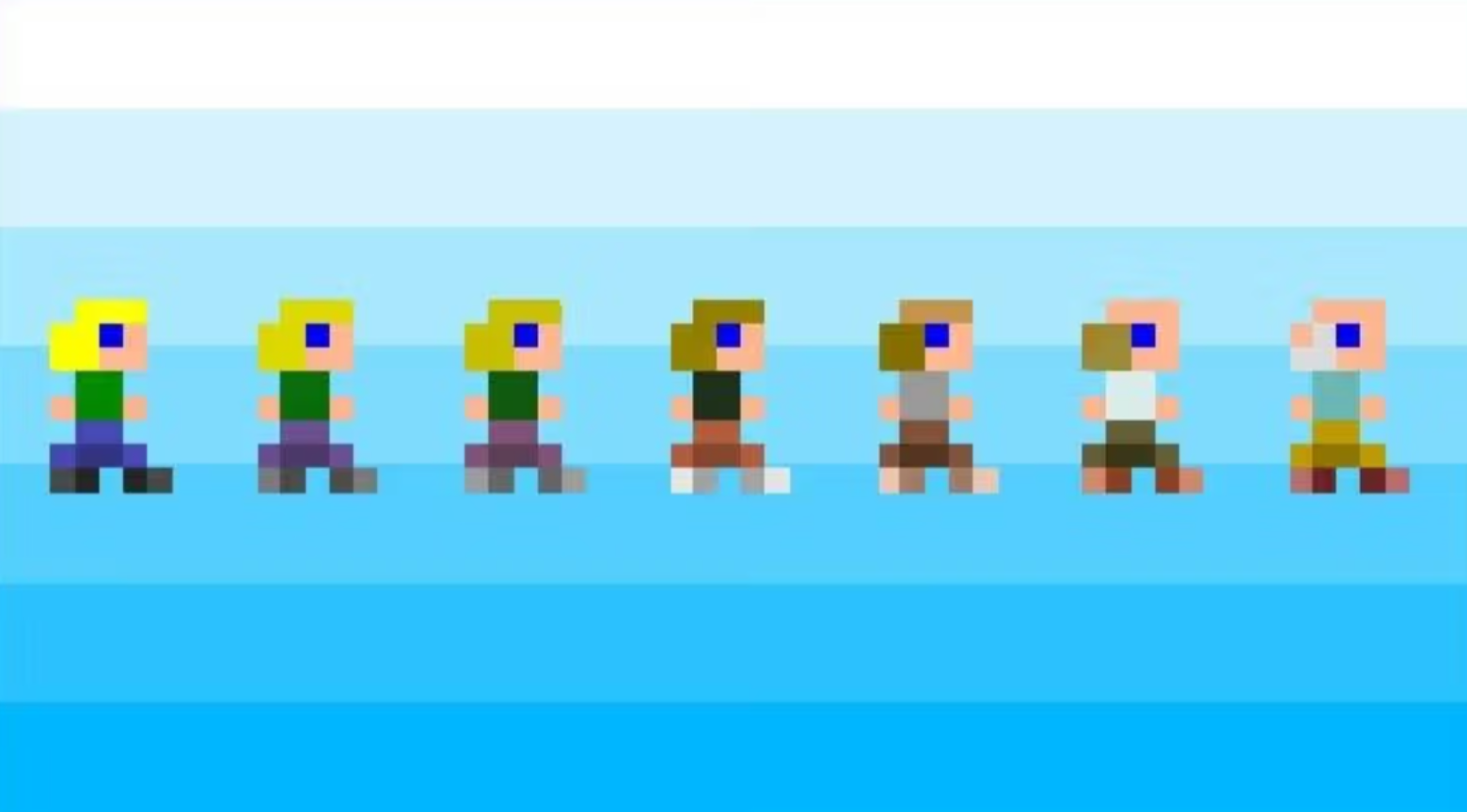
Made by Jason Rohrer in 2007, the title refers to the existential allegory of the passage of life and our navigation through it, an experience the game conveys excellently by means of environmental storytelling and meaningful mechanics. Indeed, a maze and how it is perceived represent life’s challenges and phases that unfold steadily: as the character ages in the game, it slowly moves towards the right edge of the screen. Additionally, the actions Passage allows the player to do are crucial to address the aesthetic feeling about the nature of life, depicted with obstacles, choices, ageing, death and grief.
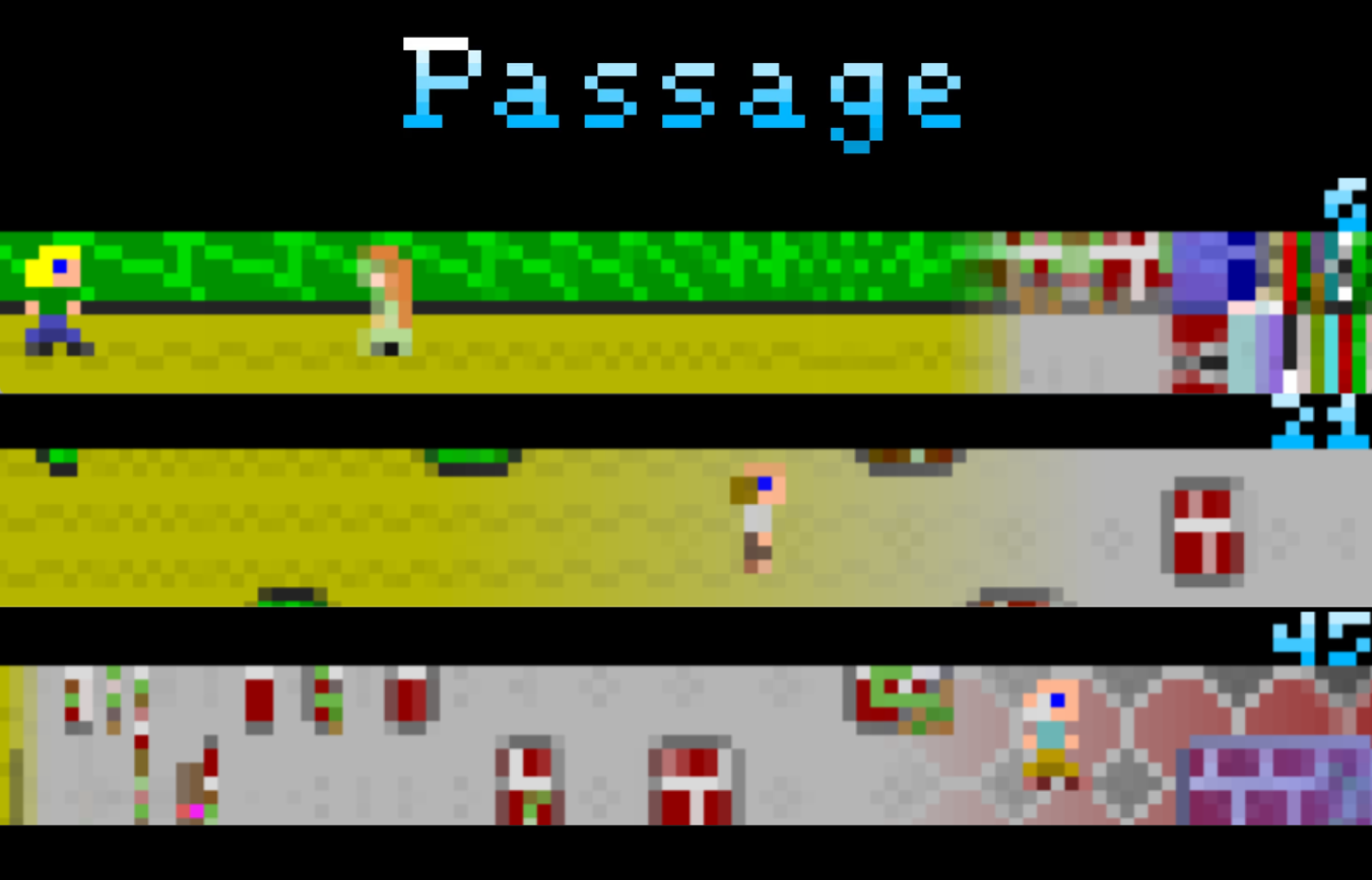 It’s noteworthy how confusion, indifference or rejection are, perhaps, immediate sensations that arise when approaching it for the first time, this being a unique workpiece that depicts the need to develop new literacies for decoding games as a medium of its own. The fact that Passage may notably differ from many titles players have ever encountered, myself included, makes it a rich and thought-provoking game experience, precisely because of the uneasy sensation of facing a game that does not match our initial expectations and previous background. Avoiding judging Passage by its cover is easier said than done, this being an example of an unconventional title that could not be compelling at first sight by current standards; hence, an additional reason and point of inquiry for those interested in widening their gaming literacy. It’s not only about how Jason Rohrer’s creation pushed the boundaries of video games in terms of storytelling but also how, by contrast with many mainstream productions, it places players in an enlightening position for considering their own relation with games and where their value lies.
 Rohrer’s is a plotless work spanning merely 5 minutes that contains an entire lifetime and autobiographical echoes, as it let the author express his thoughts and feelings about life and death after going through a vital turning point. Besides, the chiptune 8-bit-style music and pixelated art also pose the question of whether this medium requires state-of-the-art components for the games to explore complex themes and the players to access and enjoy this form of culture. Precisely, Passage is considered a landmark title in the debate over video games as an art form that brings forth the place and role of video games in contemporary society. The inclusion in 2012 of this new artwork category in MoMA’s collection set a milestone in the history of modern art. As Senior Curator of the New York museum Paola Antonelli explained, Passage was included in the initial fourteen selected works alongside classics such as Pac-Man (1980), Tetris (1984), Myst (1993) or The Sims (2000), due to their visual quality, elegance of the code and design of playing behavior. Four years later, The Game Worlds of Jason Rohrer, hosted in The Davis Museum, made the Passage creator the first video game developer to have a museum exhibition dedicated to one solo video game artist.
 Ultimately, rather than being conceived to lure and retain players, Passage offers a brief and genuine experience that allows players to explore the human condition in ways unique to the medium. By doing so, it also seems to invite its users to reflect on the societal framing of games and the personal relations players establish with this hobby. Both for a better understanding of themselves and of video games as a cherished pastime, cultural phenomenon and form of expression.
Passage
Publisher: Public domain release
Developer: Jason Rohrer
Platforms: Browser, Linux, Mac, Nintendo DS, PC
Release Date: November 1, 2007
Genres: Art game / Experimental game
PEGI: N/A