

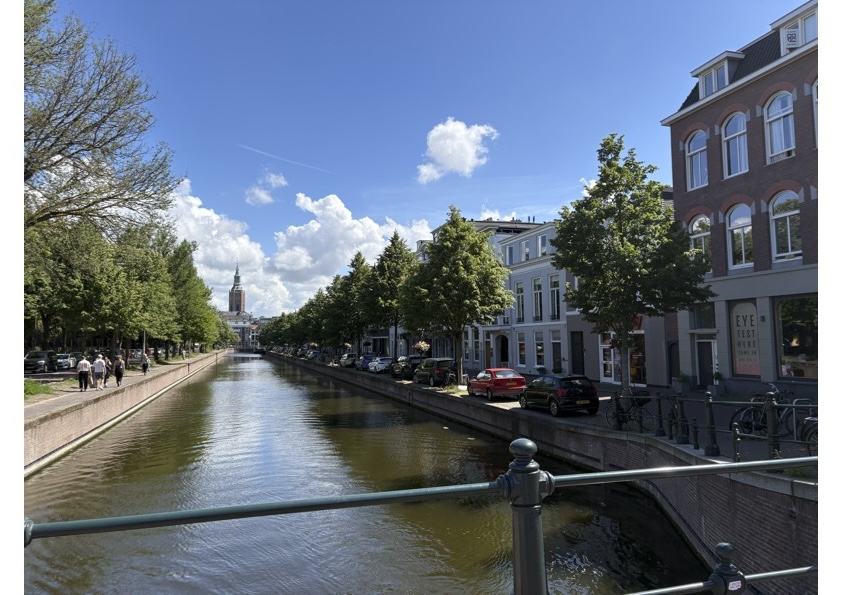
During my exchange, I have been studying UX Design in The Hague. My studies have been different from what I am used to in Finland, especially because of the international environment and the amount of group work.
A lot of the learning has been based on practical projects rather than only lectures and theoretical assignments. We have worked on projects where we have had to think about users, create ideas, develop solutions and present our work. I have enjoyed this because it feels closely connected to what UX designers actually do in working life.
Working with international students has also been an important part of my experience. Everyone has different backgrounds and ways of approaching problems, which can sometimes make group work challenging but also gives you new perspectives. I have learned that there is rarely only one correct way to solve a design problem.
Outside my studies, I have had the opportunity to explore The Hague and other parts of the Netherlands. One of my favourite places has been Scheveningen Beach. It has been a nice place to go when I want to take a break from studying and just enjoy the sea and the atmosphere.
I have also enjoyed exploring the city, trying different cafés and restaurants and spending time with other exchange students. One of the best parts of being on exchange has been meeting people from different countries. You quickly realise that everyone has their own culture, habits and experiences, and you can learn something from each other.

I have also travelled outside The Hague during my exchange, which has allowed me to see more of the Netherlands and Europe. Living in the Netherlands has made travelling to other European countries feel much easier than it does from Finland.
One of the most interesting parts of my exchange has been comparing studying in the Netherlands with studying in Finland. Both education systems have many similarities, but I have noticed some differences in the way students communicate and work.
In the Netherlands, I have experienced communication as quite direct and open. Students are generally comfortable expressing their opinions and giving feedback. At first, this felt slightly different from what I am used to in Finland. Finnish communication can sometimes be more reserved, and people may be more careful about how they express criticism or disagreement.
I have also noticed that group work and discussion are very important in my studies in the Netherlands. Students are expected to participate actively and share their ideas. This has encouraged me to speak up more and become more confident in presenting my own opinions.
At the same time, studying abroad has made me appreciate some aspects of Finnish education. I feel that Finnish students are also given quite a lot of independence and responsibility for their own studies. Both cultures value independent thinking, but the way students communicate and work together can be different.
Overall, my exchange has taught me that there is no single “right” way to study. Different approaches can work in different cultural environments. I have gained new ideas that I can take with me when I return to my studies and future working life in Finland.

Comments