
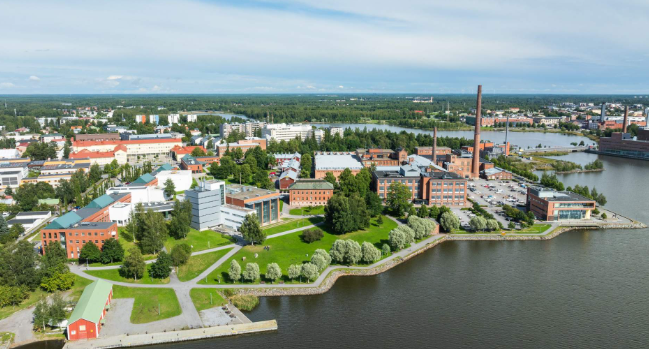
The theme of the XLVI International VAKKI Symposium was “Human(e) Communication”, and the event was held at the University of Vaasa on February 12–13. Many of the presentations focused on AI as a participant in communication. Can interaction with a machine be called “communication”? Does it matter whether we communicate with another human being or with a machine? What are the consequences of the extraordinarily rapid development and increasing ubiquity of AI?
At the same time, traditional human communication was not forgotten. The programme included many presentations on specialist discourse, political discourse, terminology, and usability.
A large proportion of the symposium participants came from Finnish universities, including the University of Vaasa, the University of Helsinki, the University of Oulu, and Tampere University. However, there were also international participants from Sweden, Poland, Norway, Turkey, and even India. The conference was multidisciplinary, bringing together researchers from language studies, translation studies, journalism, information studies and terminology studies. About half of the presentations were delivered in Finnish, while English was the other main conference language. In addition, there was a Swedish-language section with three presentations.
The Tampere University Languages Unit was represented with two presentations. Professor Mikhail Mikhailov together with Julia Souma, Satu Valkiainen, and Albina Rolli gave a presentation entitled “Lenin, idiootit ja lurjukset: ironiaa vai vihapuhetta?” (Lenin, idiots and scamps: irony or hate speech?”. Docent Marja Kivilehto participated in the Swedish-language section with the presentation “Lätt språk i den finlandssvenska kontexten” (Easy language in the Finland-Swedish context). Sadly, this was the final conference presentation by our colleague Marja Kivilehto, who passed away two weeks later.
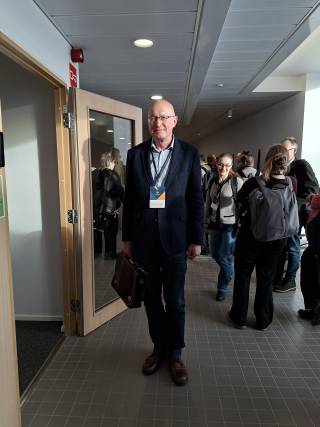
Photo by: Marja Kivilehto