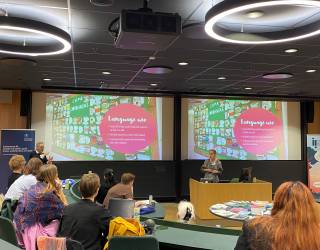

On 15-16 October 2026, I had the pleasure of attending the conference Perspectives on the Revitalization of Minority Languages IV / Perspektiv på revitalisering av minoritetsspråk 2026 at Stockholm University, which is nationally responsible for Finnish as a minority language in Sweden. The event brought together researchers and practitioners working with minority and heritage languages in a variety of contexts, including Finnish in Sweden, Sámi and Kven in Norway, Livonian in Latvia, Gaelic in Scotland, Karelian and Sámi in Finland, and Russian-speaking communities in Finland and Sweden.
What I found particularly valuable was the opportunity to see how many of these communities are grappling with similar questions. How can a language be maintained when intergenerational transmission is weakened? Can schools compensate when the language is no longer consistently passed on in families? How can communities create environments where minority languages are not just learned, but genuinely lived?
One of the most inspiring presentations was the keynote by Ingeborg Birnie, When Education Becomes Revitalization: Lessons from Gaelic Medium Education in Scotland. Her message of moving from learning Gaelic to living Gaelic resonated strongly with me. Equally thought-provoking was the idea of creating safe spaces (“breathing” spaces) where language choice does not need to be constantly negotiated. Language revitalization is not only about teaching vocabulary and grammar; it is about creating communities and everyday situations in which people can use the language naturally and confidently.
Many presentations highlighted both the challenges and the possibilities of minority language revitalization. Among the topics discussed were language nests, language cells, bilingualism, linguistic shame, semilingualism, and the concept of ummikko. Throughout the conference, one message kept reappearing: language is deeply connected to identity, belonging, and cultural continuity. One audience member remarked that language is a window into the world of the people who speak it. I found this a powerful way of expressing what so many presentations highlighted throughout the conference: languages are not merely tools of communication. They offer a way of understanding the people who speak them, carrying cultural knowledge, memories, values, and a sense of belonging across generations.
I was pleased to contribute to these discussions with my presentation, Family Language Policies and the Intergenerational Transmission of Heritage Russian in Finland and Sweden. Drawing on ethnographic data from three families and three generations of heritage language speakers, I focused particularly on the third generation, where language maintenance is often considered most vulnerable. My findings suggest that successful language transmission depends not only on explicit language policies but also on meaningful everyday interactions, positive attitudes towards multilingualism, emotional closeness between family members, and the continued involvement of grandparents. In the families I studied, grandparents emerged as especially important actors in maintaining both the Russian language and cultural connections across generations, helping children develop not only linguistic skills but also a sense of belonging and emotional attachment to the heritage.
The conference left me with many new ideas and questions. Above all, it reinforced the importance of looking beyond formal educational settings and paying attention to the everyday relationships and practices through which languages are transmitted, maintained, and revitalized. Whether we are discussing Gaelic, Karelian, Livonian, or Sámi, the future of minority languages ultimately depends on people choosing to use them in their daily lives and finding communities where those choices are supported.