

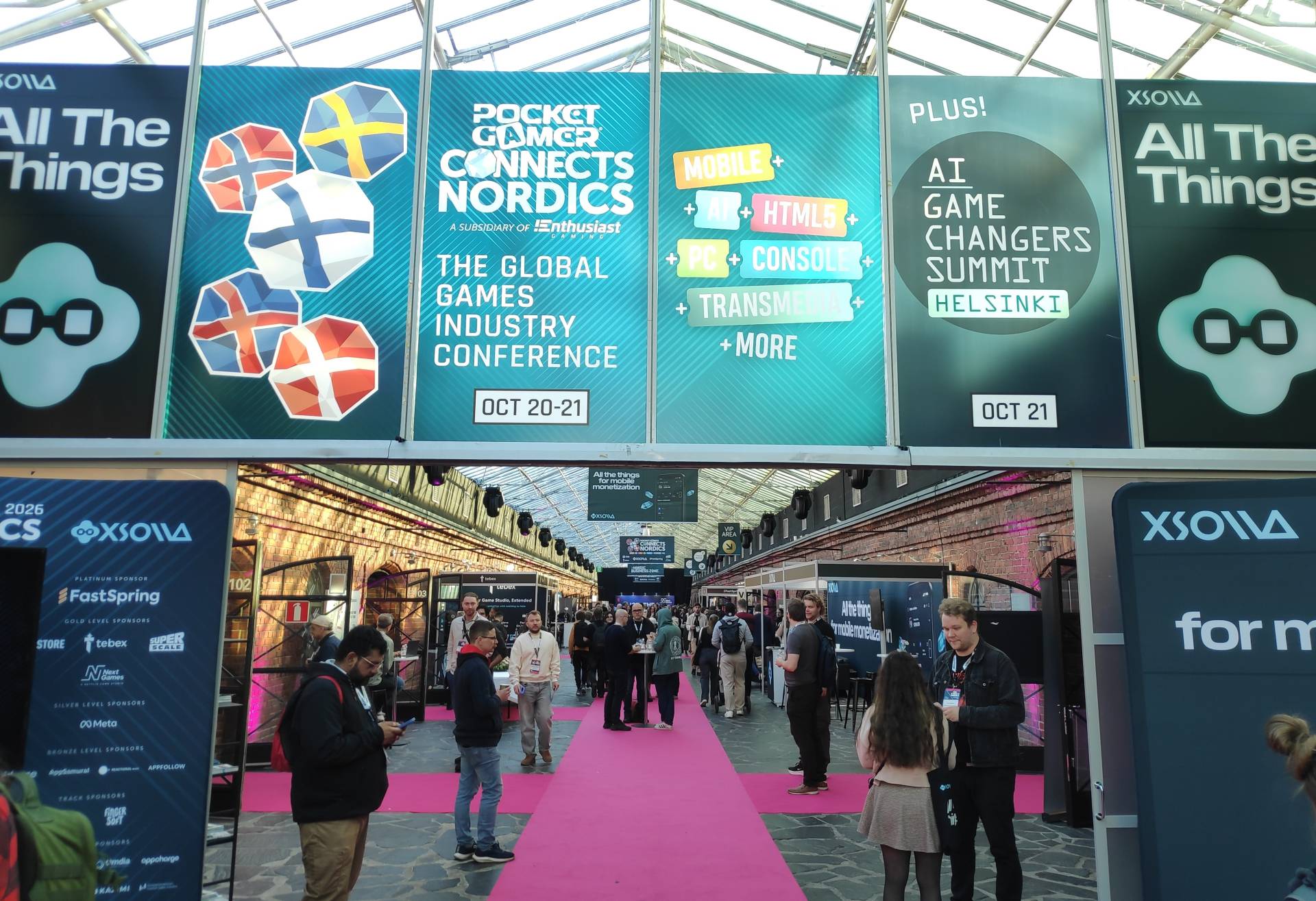
Pocket Gamer Connects the Nordics is a global games industry conference series that took place in Helsinki on the 20th and 21st of October. Hosted in Finland’s capital since 2014, PG Connects stands at the core of the Finnish Games Week, a week-long series of game industry events. According to the organisers, Pocket Gamer ‘26 brought more than 1,100 attendees from over 450 companies and 44 countries to the biggest B2B games event in the Nordics, providing a platform for networking, learning from experts’ insights and showcasing indie games in development. Wanha Satama, an atmospheric 130-year-old brick harbour warehouse located on the Katajanokka peninsula, was the venue chosen for the multiple partner conferences and the 15 PGC Nordics content tracks.
The variety of topics tackled addressed the complex and multifaceted nature of the games industry, catering to the interests of the attendees, composed of university students, indie developers, game professionals, journalists and global corporations. ‘Beyond Games’, for instance, focused on the intersection of media, whereas ‘Game Dev Stories’ and ‘Game Maker Insights’ offered personal experiences and hands-on advice from the lessons learnt during the journey of creating a game. As expected from an industry event, many of the tracks revolved around proven business models, funding, growth and monetisation, and alternative approaches revolving around user acquisition and in-game advertising and purchases.
Alongside the Finnish Games Week, the ‘Nordic Next’ track also contributed to grounding a global conference—originally national and mobile-orientated—in the Nordic context. Of special interest was the panel ‘Region Focus: Examining The Nordic Games Industry’, which discussed the state, successes, opportunities and challenges across a region that has historically played a major role in the global game-making scenario.
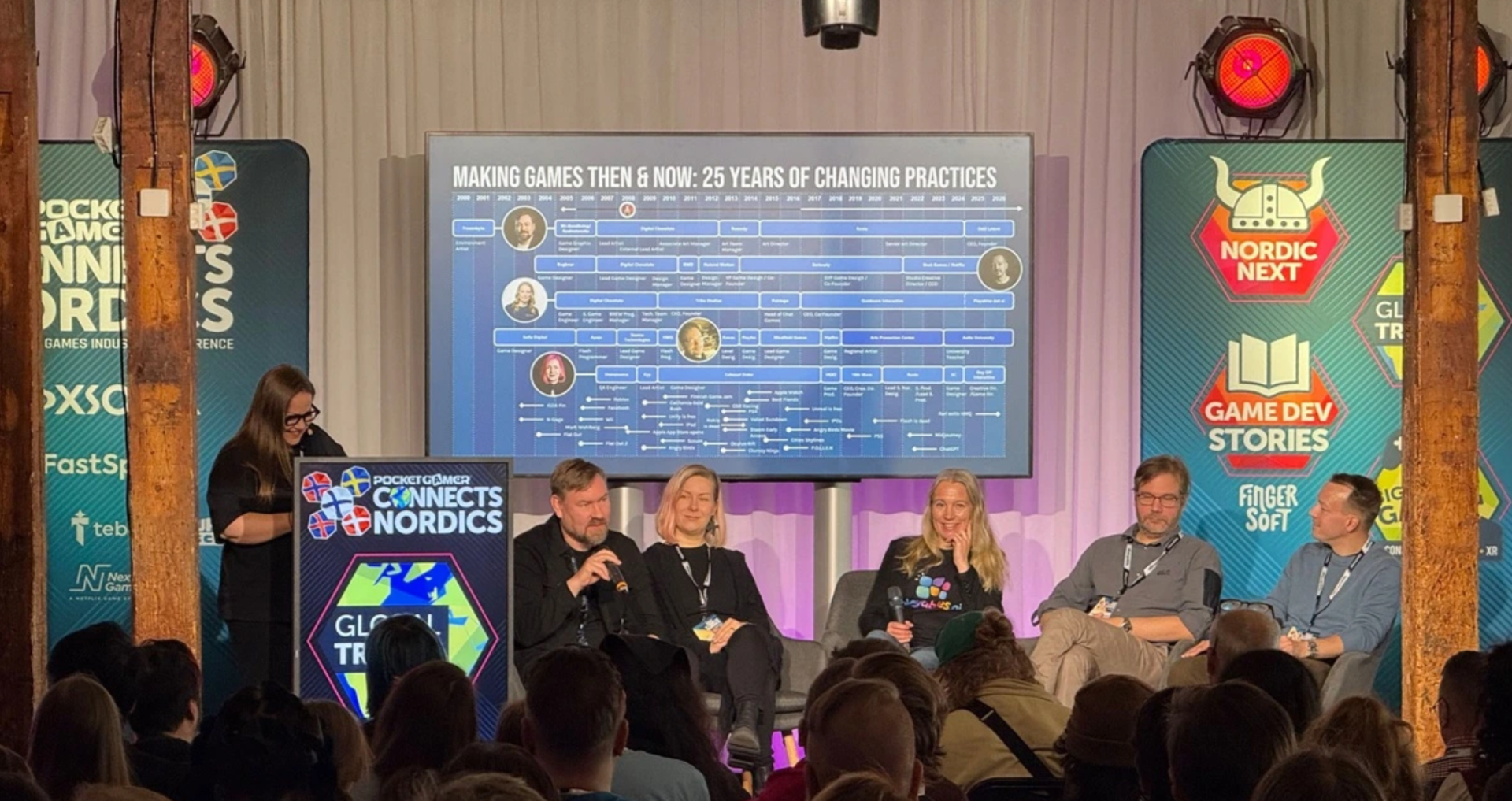
‘Global Trends’, on the other hand, put the emphasis on international tendencies and regional accounts and phenomena that are shaping the evolving global game industry. The popular panel ‘Making Games Then & Now: 25 Years Of Changing Practices’, hosted by Aalto University lecturer Annakaisa Kultima, analysed the differences and similarities of the game creation process between the early 2000s and the current time. The increasingly fast-changing ecosystem and the importance of data-based market strategies were some of the key notes, as well as the burden of bureaucratic processes in a moment in which game development is more accessible and easier than in the past.
Central in most of the event programme was the role and impact of artificial intelligence on the global industry of digital games. Indeed, the ‘AI Gamechangers Summit’ fringe event covered the multiple ways the implementation of artificial intelligence is changing how video games are made nowadays. Such was the case in the ‘Practical AI’ track, which provided development knowhow to learn to harness AI tools. ‘AI Advances’ gazed into the future by discussing the expected ways in which technologies such as machine learning will continue to shape video game creation and convey meaning in innovative forms. The time dedicated to covering the intersection of artificial intelligence and the games industry, with up to 5 sessions and 2 panels, signalled the pervasive sense that the arrival of this revolutionary technology to the games sector is a turning point in its history.
This emphasis came as no surprise to those abreast of the concerning current gaming situation. Reported by GDC’s 2025 State of the Game Industry, 1 in 10 of the developers surveyed said they had lost their jobs between 2024 and 2025. These figures add to the ASGC Games Industry Layoffs Tracker, according to which more than 57 thousand workers will have been fired globally from 2022 to 2026. Certainly, the post-pandemic games industry restructuring underpins the closing of acclaimed studios such as BioWare, among others.
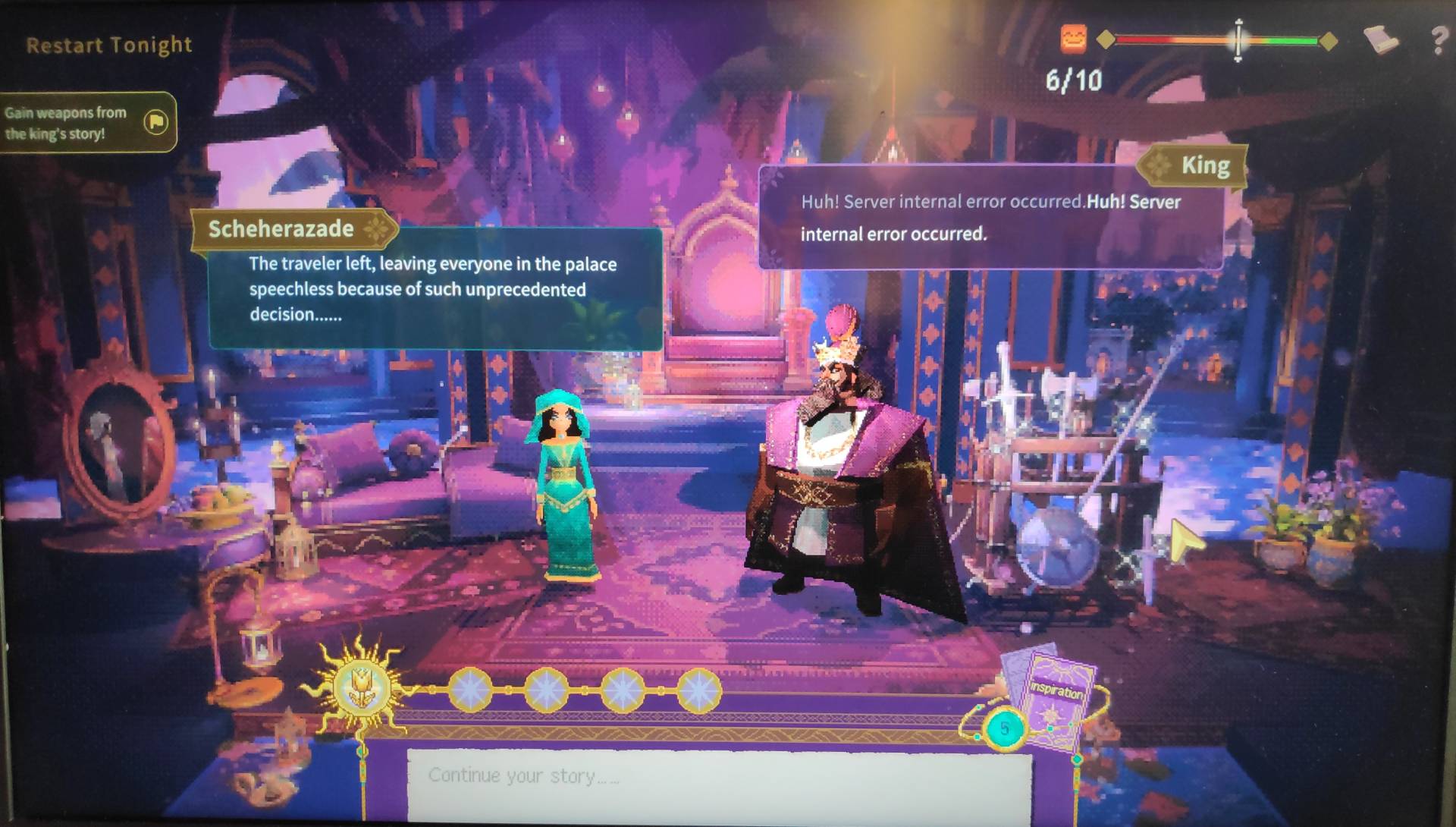
Despite the constant stream of layoffs and closures in the games industry related to profit pursuits and the subsequent generative artificial intelligence implementation in this context, the organisers’ framing of these technologies set the general celebratory tone of the conference around them. As Wille Miljas from Rovio put it, “It is normal to use the best possible tools at our disposal.” Indeed, on rare occasions a panellist critically spoke out on such a controversial topic with regard to, for example, the ethical considerations of AI usage in creative works or its environmental costs.
Unfortunately, the effort dedicated to offering expert knowledge and a context for discussing trending topics peer-to-peer resulted in a packed, fast-paced schedule that left little to no time for the audience to process the information provided and engage with the panellists. Most of the 20-minute-long sessions followed one another without a break and were unable to tackle interesting themes beyond scratching the surface. The new round table programme, however, featured an open space for anyone interested to dialogue with like-minded people about themes such as leadership in games, IP ownership or the end of physical distribution.
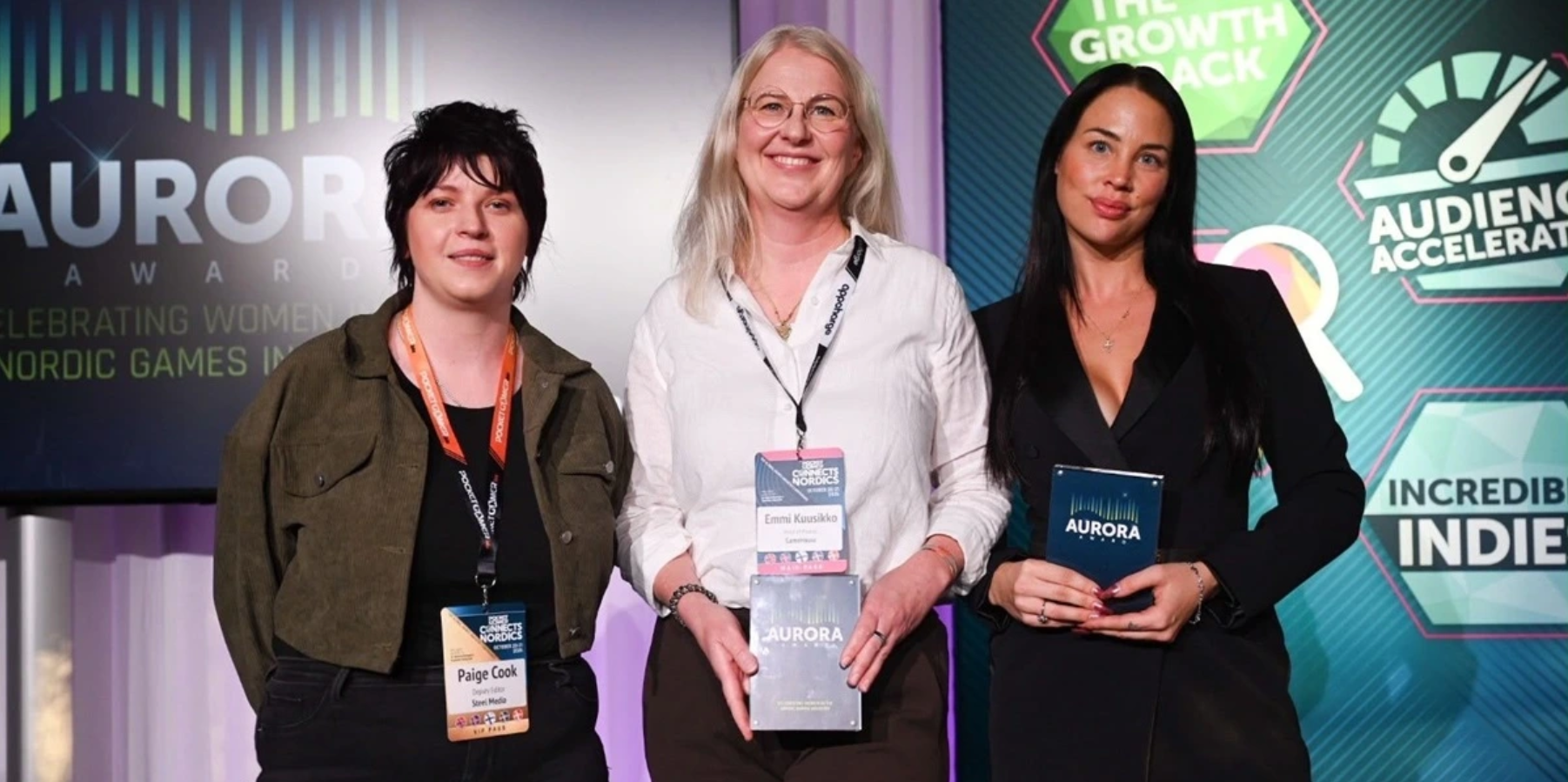
Last but not least, PG Connects also failed to truthfully celebrate industry-leading women in the Nordics. Merely 5 minutes were allocated to the anticipated Aurora Awards Showcase, which did not even allow the winners to express themselves and share their thoughts on stage about the current state of a male-dominated industry. It is a stark depiction of the gender inequality defining a sector in which women make up about 20% of the workforce, despite accounting for approximately 50% of global players. Hopefully Pocket Gamer Connects Jordan amends the blunder this month.