
Text and images by: Heini Kallio
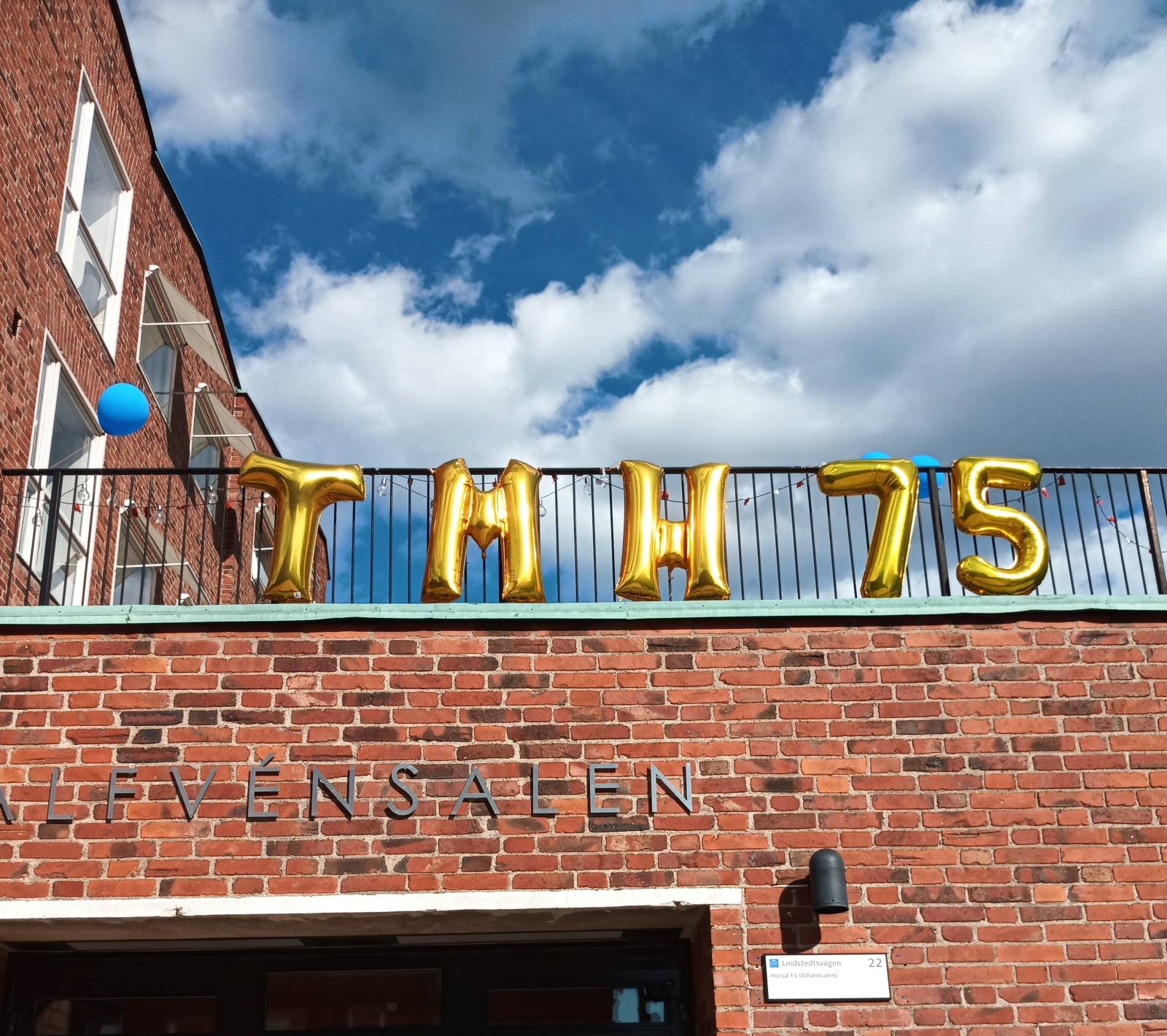
The week in Stockholm started, however, with extraordinary festivities, celebrating the 75th anniversary of TMH (the Department of Speech, Music and Hearing at KTH). The day was full of exciting talks by invited speakers, excursions around the department, and demos of current and historic research projects and tools. I got to try out what it feels like to lead the Swedish Radio Symphony Orchestra with Dome Conductor, a system that uses motion-controlled technology and machine learning. I also met my old friend Furhat from the Furhat Robotics – this time as a character creator. My attempt to train Furhat to play Kermit the Frog left room for improvement, which, I guess, is good news to all voice actors. Nevertheless, the range of projects was astonishing and left no doubt that TMH is one of the leading departments in speech and music technology research.
The jubilee day ended with an evening party on the roof of the department. Since music is a prominent part of the department – and since we were in Sweden – there was a lot of singing, from an operetta to singalongs. Many former members of the department were also present, and the warm atmosphere of the reunion was the perfect start for the conference week. The musical theme continued throughout the week, with local students celebrating the beginning of the academic year with round-a-clock festivities on campus.
The common nominator in the presentations of Nordic Prosody was, of course, prosody: the organization of speech through patterns of intonation, stress, and rhythm. The conference program reflected the broad field of prosody research today. The topics varied from dialect and speaker variation to multimodality, models, second language (L2), and deviant speech.
The first conference day included presentations related to voice quality (that is often considered as part of prosody) as well as L2 prosody. I was pleased to contribute to the latter session with a pilot study comparing L1 and L2 pitch contours in Finland Swedish. The preliminary results show that the first language of the L2 learner may influence the production on intonation patterns in various ways depending on the sentence type, and especially interrogatives can be tricky. The main motivation for the study was to learn and test a new analysis method for pitch contours, but the preliminary results and useful comments from other conference participants inspired me and postdoc Henna Heinonen to collect more data and expand the analysis.
Having presented my study already on the first day, I was free of performance stress to enjoy two full days of interesting presentations and inspiring discussions. I particularly enjoyed the sessions of multimodality and deviant speech. Multimodality studies is not a brand new branch in speech research, but as it is very challenging to analyze and combine simultaneous signals such as speech, gestures, and eye movements, research in multimodality has remained quite marginal until recent years. Thanks to the development of measurement and analysis methods the research is now more feasible. Nevertheless, data preparation remains laborious and time-consuming, as manual annotation or annotation checking is still necessary.
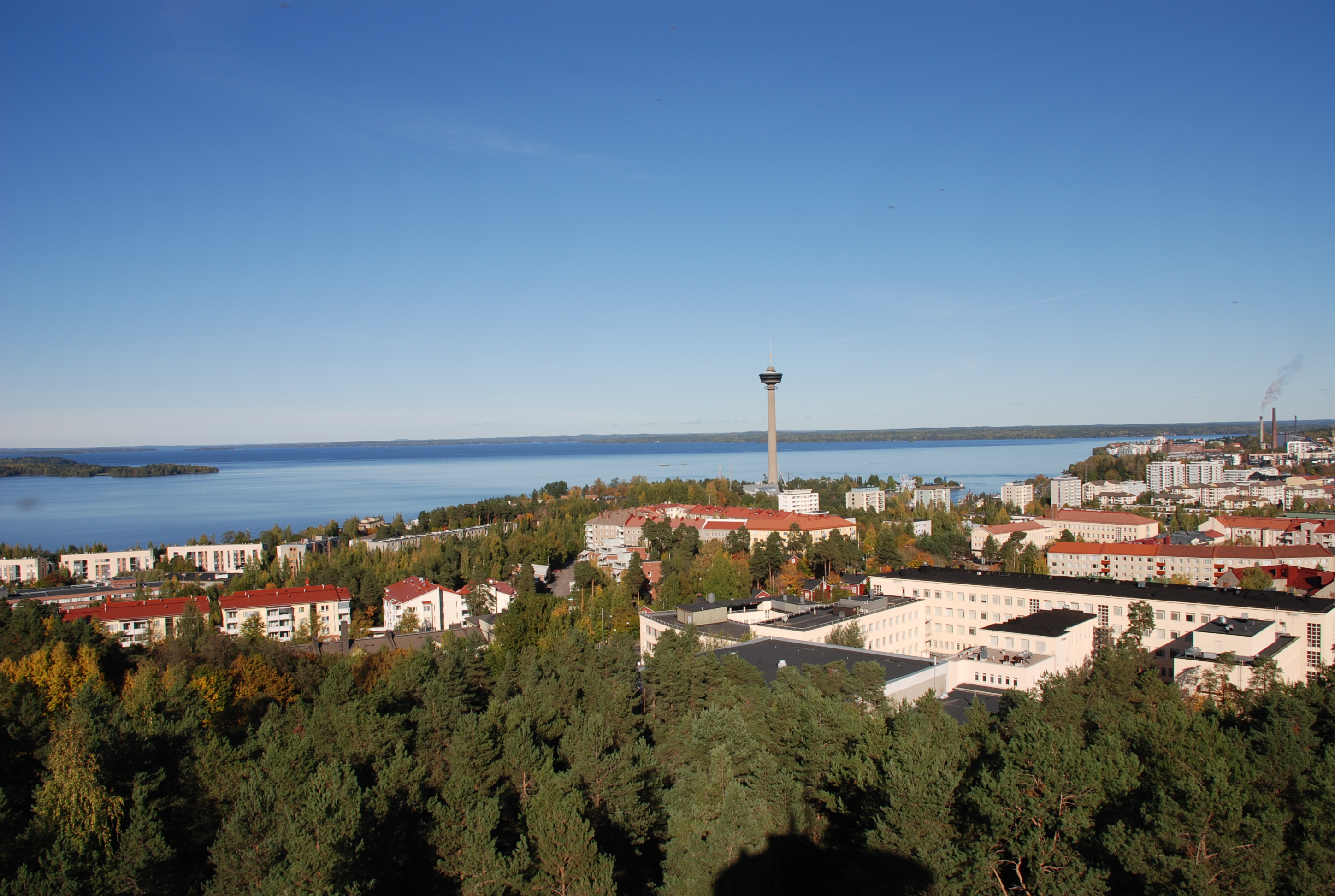
Nordic Prosody has been organized four times in Sweden, three times in Finland, three times in Norway, twice in Denmark, and once in Estonia. As losing to our western neighbors is simply not an option, not even when it comes to organizing conferences, I found myself volunteering to host the next one. With that, my sincere thanks to this year’s organizers for a successful event! The cinnamon bun commitment has been officially logged. See you at Tampere University in 2030!
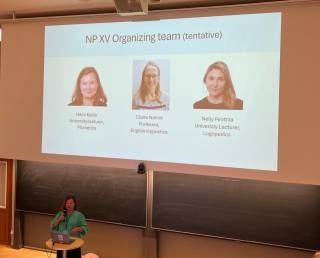
Luckily, my wonderful colleagues Claire Nance and Nelly Penttilä agreed to join the organizing team of Nordic Prosody XV at short notice.