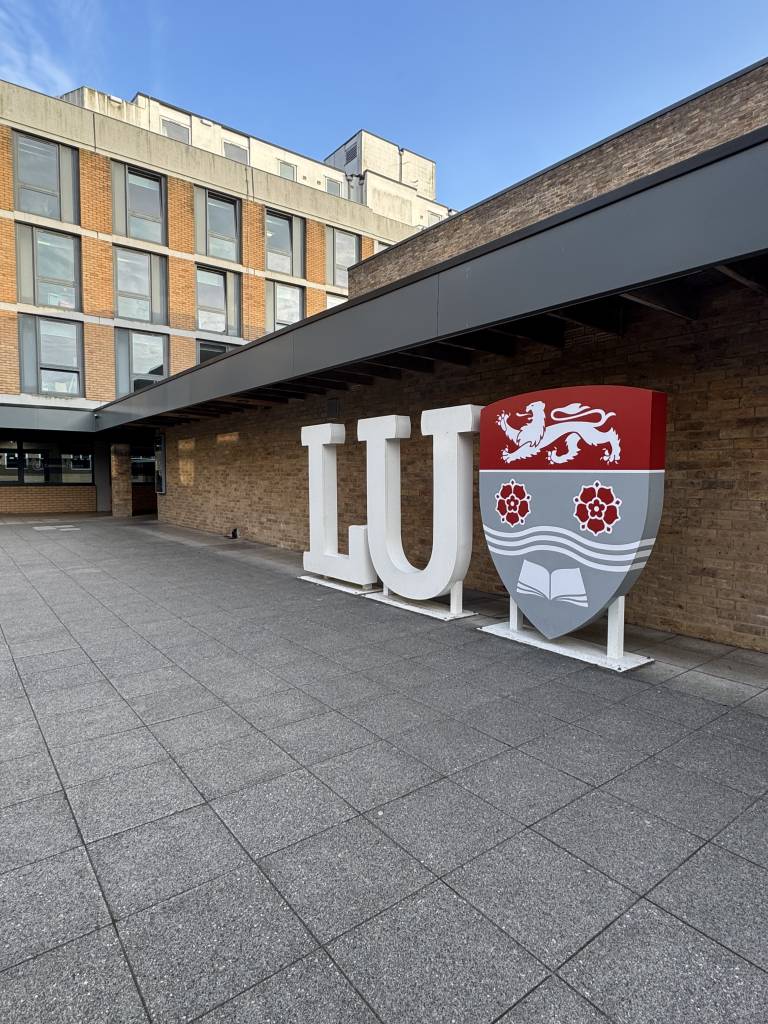

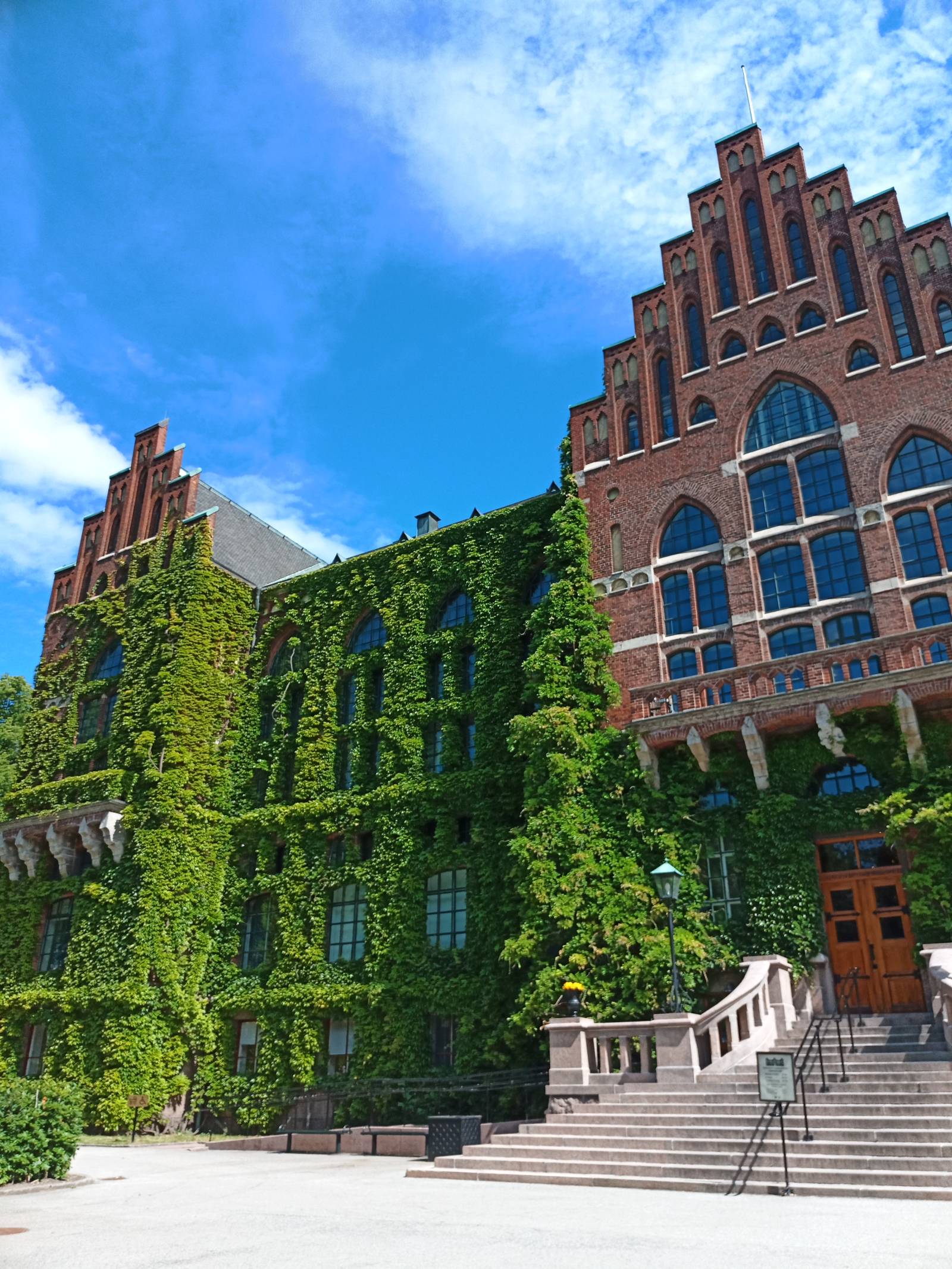
In June 2026, I attended Fonetik 2026, the 26th annual meeting of phoneticians in and around Sweden. The conference took place at Lund University, the second oldest university in Sweden (founded in 1666) with one of the most beautiful campus areas I’ve visited so far.
Luckily the busiest conference days were rather rainy so attendees were not tempted to sneak out to admire the flourishing parks and fantastic architecture. Instead, we got to hear really thought-provoking, high-quality scientific presentations and have inspiring academic discussions throughout this three-day lunch-to-lunch event.
Phonetics research in Sweden is very diverse and the conference program included presentations related to dialectal variation, phonetics of conversation, speech synthesis, voice quality and production, second language acquisition, sound-imitative words, as well as brain research. During breaks I got to hear about other intriguing projects, such as one at Stockholm University where research subjects are tied to an inversion table. The purpose is to study how their speech production mechanism adapts to different body positions. This study is not for the ones who talk with their hands!
I had the honour to present studies from my Svenska Kulturfonden-funded project as well as act as a session chair. Within the generous 40-minute slot I was able to present two of our latest studies about how non-native Finland Swedish speech is perceived and how listeners’ and speakers’ first languages affect the perceptions.
My chairing session consisted of presentations about learning Danish – a language whose pronunciation I knew very little about. So the day before, during a coffee break with delicious Swedish cinnamon buns, I inquired how to pronounce the name of a presenter from Copenhagen. After some listen-and-repeat-practice we agreed that I leave out the middle name as it was the first presentation of the day and my articulation muscles might still be sleeping.
To add more suspension to this session, the second presentation was about the production of the mysterious Danish stød. Stød is a distinctive feature in Danish phonology and can take many forms, such as creaky voice, glottal stop, or something vaguely similar to the Swedish tonal word accents. Apparently Danish children learn to distinguish words with and without stød by the age of two. For language learners, in turn, it can be a persistent nuisance to perceive, let alone produce. It is wonderful that this topic is researched, so it is possible to develop explicit pronunciation instructions for Danish learners.
The language of the conference was English, but I got to practice my rusty Moomin Swedish in unofficial discussions as well as in interactions with locals. It was my second time in Scania and I was aware that the local dialect is quite different from what one generally hears in other areas of Sweden or in Finland. Despite my awareness and previous experience, I found myself baffled at a take-away salad bar when the employee asked me ”Vill du köpa en påse?”. The diphtongization of long vowels together with a fast speaking rate left me no option but to ask them kindly to repeat – and repeat again. Finally, the slightly frustrated cashier pointed at the paper bag, and we both could happily move on with our day.
For a reason unknown, Finnish phoneticians have rarely visited Fonetik. I was the only Finn at this conference, as I was at my first on-site attendance last year in Växjö. Both times I’ve felt warmly welcomed as part of the research community. I hope other Finnish phoneticians will join me next year!
I enjoyed my time in Sweden to the extent that I will return already in August – this time to attend Nordic Prosody XIV at KTH Royal Institute of Technology in Stockholm. Thus, there’s more on phonetic research in the Nordic countries to come this year.
Heini Kallio