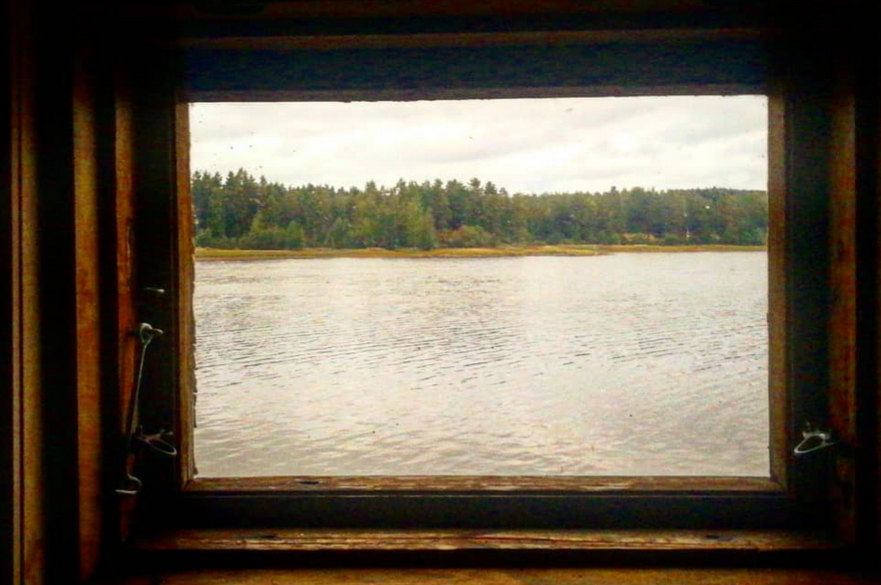

Those who know only one thing about Finnish culture might know that in Finland, sauna is a big deal. Access to sauna, time spent in sauna, the feeling of sauna, sauna design, sauna technologies, sauna companions, are all concepts that matter in everyday Finnish life.
There are said to be 3.2 million saunas in Finland, a nation of 5 million people (Elävä perintö, 2024). It is technically possible for all Finnish people to be in the sauna at the same time. Every Finnish embassy around the world has a Finnish sauna (Lähteenmäki et al., 2017) and in Finland, saunas can be found not only in the summer cottages, but also at homes, from detached houses to small studios, blocks of flats, and official buildings such as the Finnish parliament. Long-term president Urho Kekkonen negotiated day-to-day politics and its crises in a sauna – after all, he was born there.
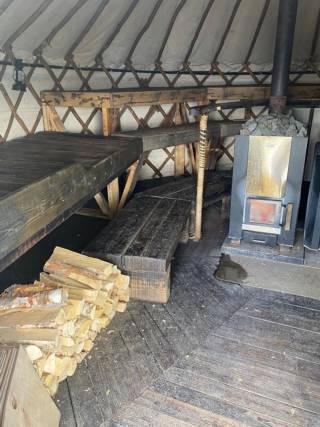
Sauna culture is familiar to each and every Finn, whether or not they go to sauna (Elävä perintö, 2024), and the sauna culture is the first Finnish element on UNESCO’s Representative List of the Intangible Cultural Heritage of Humanity (Finnish Heritage Agency, 2020).
An intriguing example of the richness of sauna culture is the sauna vocabulary unique to the Finnish language. Sauna tradition has existed for about 10 000 years, and sauna-related expressions, such as löyly, a term used to refer to the water for the sauna, can be found already in Mikael Agricola’s writings, the first texts written in Finnish (Elävä perintö, 2024).
In the past, sauna has been a primary form of healthcare and habit for curing diseases. Its importance in healthcare is not forgotten today; medical research has shown that regular sauna bathing has many population health benefits, such as reduced risk of heart disease and dementia (Laukkanen, 2020). A movement exists to recognize sauna prescriptions from the doctor to cure a variety of ailments (Hulth, 2020). Finnish national parks usually have a sauna for all their visitors to enjoy. All in all, sauna has a place in all aspects of Finnish life.
The rise of urban sauna culture
The past decade has seen a rise in attention to the role of saunas in cities. Mention of sauna invokes idealized memories of remote lakeside landscapes unburdened by the noise, divided attention and competing demands of urban life. But these associations are metamorphizing as they are transported into urban Finnish settings. Finland is not alone in riding this new urban wave of getting wet at the waterfront, with baths, pools, and saunas also springing up across the Nordics, including in Copenhagen and Aarhus in Denmark, Oslo in Norway, and Stockholm in Sweden. Sauna has entered the ethos of the New Nordic City, with notes of warmth, wood, well-being, close companions, equality, simplicity, quiet connectedness to nature and to the changing seasons. Urban public saunas are popular among locals as well as visitors.
Public saunas like Helsinki’s stylish Löyly and community-run Sompasauna have caught the attention and imagination of international media. Löyly ended up in the Time Magazine list of World’s Greatest Places 2018, and the Guardian explained Finland’s success in happiness rankings in terms of “the sauna secret.” But the history of waterfront saunas is foundational to urbanization in Finland. This urbanization took place in a post-war context of scarcity, and many apartment buildings were built without private bathrooms or hot water. Access to a shared sauna in the building offered hygiene, public health and a better quality of life to those living in frugal and deprived circumstances (see apartment building common sauna pictured here).
Tampere, Finland’s third-largest city, declared itself the sauna capital of the world in 2018. There was no competition to determine this status. But the sense that something about city and sauna gels, in the Finnish way of thinking, is worth examining. Given the sheer number of saunas in Finland and the amount of time people spend there, the idea of making sauna a city-branding tool has a certain Nordic efficiency about it. As Turo Leppänen at Visit Tampere explained, the word “capital” creates a big city feeling, whereas “sauna” conveys a sense of small scale, genuine authenticity, close to nature. The metaphor works in Finnish culture. Urban saunas fit well into the narrative of the Nordic sustainable city.
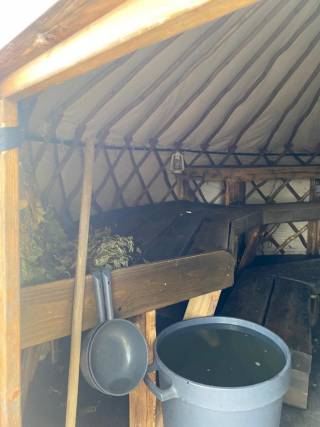
These same cultural connotations mean that there is more to urban sauna than city branding, though. Further investigation of the meaning of sauna in the Finnish city reveals some aspects that have potential to do more than put an export stamp on the city form, but also to advance the prospect of urban sustainability transformation in a distinctively Finnish way.
Relaxation and letting go of rules
Sauna, in the Finnish conception, is a place of freedom from rules. Sauna is an invitation to let go of the rules and responsibilities of daily life.
The urban sauna can be an oasis for relaxation and well-being, setting aside everyday tasks and worries to make room for your sense of embodiment. This Finnish specific connotation of sauna translates readily into urban sauna settings. It is not common to all sauna cultures. Public saunas in other countries come with specific rules and roles: in Germany, only a sauna master pours löyly, for example, and many countries have sauna rules about the timing of sauna sessions and how to cycle these with cold water dips for best effect.
While Finnish people carry cultural pride in the growing body of research on the health benefits of sauna, rules have relatively less space in the sauna than in other parts of Finnish life, or in other sauna cultures.
Elsewhere, these rules add to the sense of seriousness and scientific basis of sauna as a prescription for health and well-being. While Finnish people carry cultural pride in the growing body of research on the health benefits of sauna, rules have relatively less space in the sauna than in other parts of Finnish life, or in other sauna cultures. Anyone who chooses can pour löyly to steam the sauna, for example, and the amount of time one spends in the sauna is a matter of personal preference. There is no single sauna technology or design that is considered better than another, universally, although the differences among them are much discussed. Each sauna is thought to have its own, unique löyly, depending on the heating method and design of a sauna.
These differences change the sauna experience as the löyly – the soul of the sauna –can feel soft or sharp, dry or moist, and gentle or harsh. Everyone is entitled to their own personal preference when it comes to löyly, as these feelings are linked to imagination and memories. Those who discover they like the same löyly can find a special connection with one another.
Comfortable companionship
Finnish sauna is a site of sharing –at the national scale, but also in a variety of traditions and rituals that are held dear within particular families and sets of friends, passed down through generations. For many Finns, midsummer or Christmas does not come without sauna, for example.
In the city, sauna offers a unique place of social connection. Some saunas are built and run entirely by volunteers and open for the free use of the community, although this effort of maintenance and care is considerable – in UNESCO’s listing, sauna societies are mentioned for their importance in maintaining the vitality of the sauna culture (Finnish Heritage Agency, 2020).
In UNESCO’s listing, sauna societies are mentioned for their importance in maintaining the vitality of the sauna culture.
Other public saunas are places to socialize with friends, family, acquaintances, and strangers; to find companionship, “even if it means being by yourself” (Ilmari Lyymä, manager at Rajaportti sauna). Alexander Lembke at Rajaportti compared the social experience of a sauna to what happens around a fireplace – depending on the design of the sauna, people may even sit in a circle, as they do around a fire.
In sauna, people shed formalities and fade hierarchical differences. The equal atmosphere becomes a place for unpretentious socialization and relaxation, gathered together with an easy sense of belonging. This opportunity cuts against the pervasive urban experience of social isolation and alienation. In a very pragmatic way, sauna is one of the rare places in today’s city where you never see a smartphone or other screen.
Sauna and sustainability as a “nostalgic interjunction”
Alexander Lembke, an artist and sauna expert who has devoted his career to understanding Finnish sauna culture, offered a different reflection on what sauna culture offers to the possibilities of the sustainable city, in Finland: “Sauna is an interjunction between nature and modern society.”
He is referring to the borderline state one enters into when in the sauna: between life stages, between seasons, between past and future, between daily routine and letting go, between states of consciousness. Indeed, the interjunction and connection that sauna offers, in contrast with the voices, bodies and institutions of people that one faces outside the sauna in daily urban life, is a powerful draw. Sauna has the power to transport a person to an almost imaginary place of nostalgia, that may never have existed yet somehow feels like it has existed for an eternity, in spite of the maelstrom of change.
Saunas in cities sustain the old, folk knowledge of the culture, community and self, and lifeways that offer continued wisdom and relevance in spite of modernization and change. There is a sense of significance and certainty to this wisdom, a begging to be shared and to contribute to an evolving greater consciousness. A sense of this significance exists both within and beyond contemporary Finnish language and culture, as sauna is experienced by locals and visitors, together.
When asked why urbanize sauna culture, interviewees were likely to reference the centrality of sauna within culture, traditions and important transitions and markers of seasons and in life. To be able to carry these traditions with them to the city made the prospect of durable urbanization more palatable, like something that could fit within a generational plan for Finnish households.
Moreover, sauna is a way to experience the changing seasons. For example, at Rajaportti sauna, stepping onto the terrace to cool down is a different experience in the snow and ice of winter compared to the feeling on a warm summer day.
Moreover, sauna is a way to experience the changing seasons. For example, at Rajaportti sauna, stepping onto the terrace to cool down is a different experience in the snow and ice of winter compared to the feeling on a warm summer day. In spite of the way urban life can seem to level out and make seasonal changes less relevant, urban sauna offers such ways to observe nature and its changes during the sauna practice.
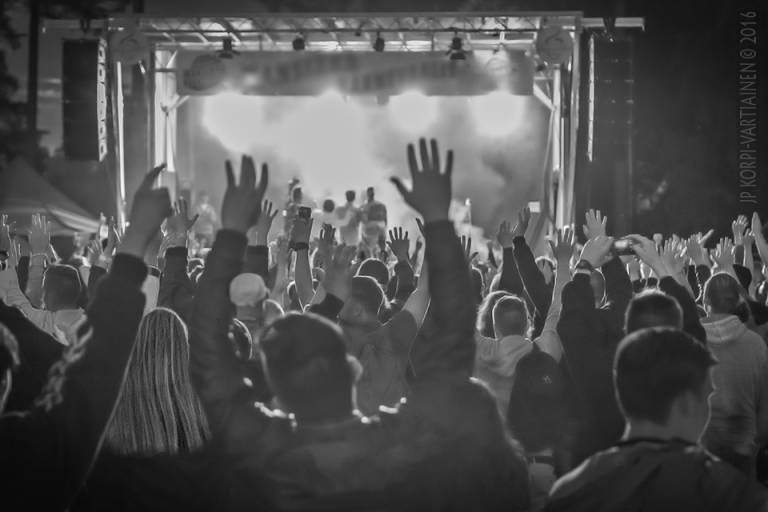
As much as sauna transports the sauna-goer to a place of limbo between reality and dreamworld, the sacred and the profane, the experience is not one of individual isolation or suspension, either. Urban sauna in particular offers people connections with one another as well as with nature. In the Finnish context, sauna offers several opportunities to participate, experiment and create lively urban environments. Finland’s numerous saunaseurat or sauna associations, people who organize and offer their time and dedication to the safeguarding and promotion of active practice of sauna traditions is one case in point. Urban public saunas are also used as venues to organize events – Hiedanranta’s sauna in Tampere is one example with its live music and other events in the summer.
Operating and maintaining a sauna in the city is a tangible manifestation of the collaborative and shared experience of the sauna. For example, Sompasauna in Helsinki is entirely (and proudly) run by volunteers, who constructed the sauna and grounds and who take care of chopping the firewood, keeping the area clean, lighting the fire and recycling, and welcoming the visitors they receive daily, among other things.
Although the connections are tenuous at first blush, upon closer look, the cultural referents that attach Finnish sauna to deep-seated values of nature, relaxation and equality, socialising and connecting, and volunteer effort, all translate into aspirations for a sustainable city, in the Finnish ideal.
From the vantage of the SAGA research team’s interest in translanguaging to find pathways to urban sustainability rooted in language and culture, we find the meaning in this relationship for the prospect of sustainability of Finnish cities to be worth more attention.
From the vantage of the SAGA research team’s interest in translanguaging to find pathways to urban sustainability rooted in language and culture, we find the meaning in this relationship for the prospect of sustainability of Finnish cities to be worth more attention. The further these themes are followed, the more connections can be made between sauna and sustainability in Finnish language and culture.

Note on the research for this case
The research for this case study was conducted by Veera Uusitalo as part of her thesis research for a BA in sustainable urban development entitled “Sauna in a Contemporary City – Urban Sauna as a Boundary Object in Tampere.” During Jan-May 2024, Veera assembled a corpus of 239 newspaper articles on local media and interviewed sauna managers, Visit Tampere staff member and other experts in the field of sauna and urban development. Veera’s research was complemented by references added by members of the SAGA team, in particular links to media and archival documents from the Finna archival database. The research sought to understand the phenomenon of urban saunas in Finland and how Tampere’s saunas function in shared visioning for urban development and planning.
The writer reflcts: During my bachelor’s studies in sustainable urban development, I have read and learned a lot about urban nature and its importance, but I don’t remember sauna ever being mentioned in this context. Using a certain language creates its cultural context, even when it comes to academic texts and discussions. Most of the articles I have read on the topic have been written in English and therefore it is not surprising that they do not mention saunas. It requires some out-of-the-box thinking and culture-specific knowledge, and utilizing other languages, to even become aware of this connection between sauna and nature in present-day cities. Appreciating every language as a unique source of ideas, that can advance the thinking about sustainability, is one of the most important takeaways that I learned from my bachelor’s thesis project.
References
Elävä perintö. (2024, May 13). Saunominen. https://wiki.aineetonkulttuuriperinto.fi/wiki/Saunominen
Finnish Heritage Agency. (2020, December 17). The sauna culture in Finland has been inscribed on UNESCO’s List of Intangible Cultural Heritage. https://www.museovirasto.fi/en/articles/sauna-culture-intangible-cultural-heritage
Hulth, A. (2020, October 9). Numerous health benefits to sauna bathing. Uppsala University. https://www.uu.se/en/news/2020/2020-10-09-numerous-health-benefits-to-sauna-bathing
Helsinki. (2023, April 19). The awesome history of sauna in Helsinki. https://www.myhelsinki.fi/see-and-do/activities/the-awesome-history-of-the-sauna-in-helsinki
Laukkanen, T., & Laukkanen, J. (2020). Sauna, keho & mieli. Docendo.
Lähteenmäki, M,, et al. (2017). Jälkiä Lumessa: Arktisen Suomen Pitkä Historia. Helsinki: Valtioneuvoston kanslia.