Do Finns Really Love Nature?
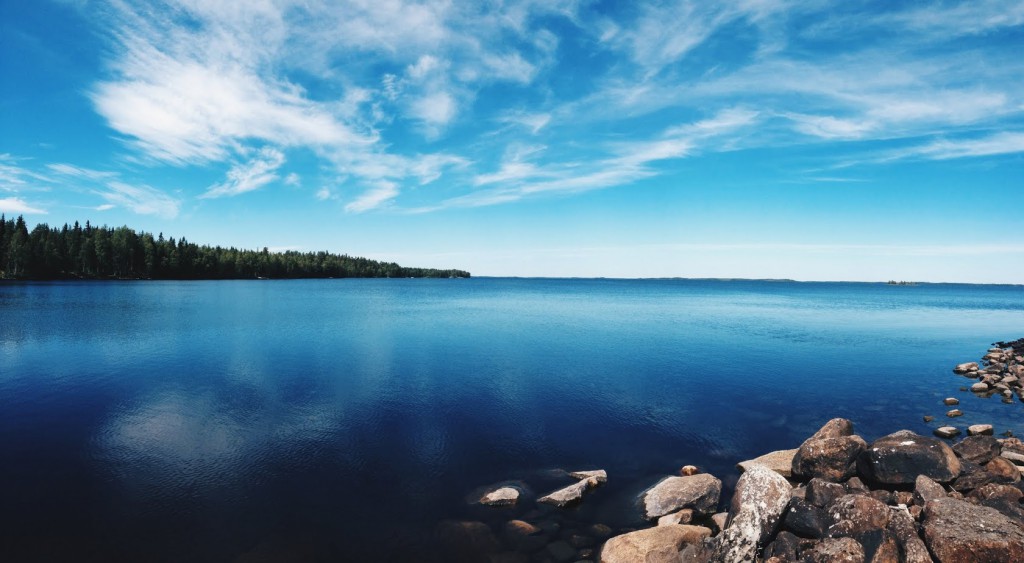
Nature is a huge part of Finnish identity. We often describe ourselves as people who love and respect nature. We are proud of our forests and lakes. We enjoy spending time at summer cottages, hiking, berry picking and simply being in the forest. In fact, these are things that many Finns associate strongly with being Finnish. We like to think that our close relationship with nature also makes us environmentally conscious.
But there is a certain hypocrisy in this image. We may love Finnish nature, but our consumption habits suggest that we do not always extend the same respect to nature outside our own surroundings. I recently became much more aware of this contradiction through my own consumption habits. Moving abroad for my exchange forced me to go through everything I owned and decide what I actually needed to take with me. I was surprised by the amount of clothes, household items and other things I had collected over the years, many of which I rarely used or had almost forgotten about. Having to pack my life into a limited number of bags made me realize how easy it is to accumulate things when you have the money, space and opportunity to do so. Many individual purchases had felt small and harmless at the time but seeing all of them together was eye-opening. It made me question how often I buy something because I genuinely need it and how often I buy simply because I can.
It is easy to appreciate a clean lake or an untouched forest when we can see it in front of us. The environmental consequences of the clothes, electronics and other products we buy are much easier to ignore when the raw materials are extracted and the products are manufactured somewhere far away from Finland.
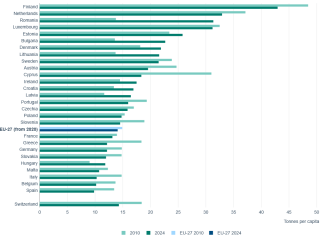
The contradiction becomes especially clear when looking at Finland’s material footprint. According to the European Environment Agency (2025), Finland had the highest material footprint in the EU in 2024, at 42.9 tonnes per capita. As the graph shows, Finland’s material footprint per person is significantly higher than the EU average. This includes not only the materials used directly in Finland, but also the resources required elsewhere in the world to produce the goods and services we consume. Perhaps our love for nature is easier to maintain when the environmental destruction caused by our consumption happens thousands of kilometres away, often in poorer countries.
Of course, there are also aspects of Finnish culture that challenge materialism. Second-hand shops and flea markets are popular, recycling is common, and many Finns value practical and long-lasting products. But this can only take us so far if the overall amount we consume remains extremely high. We cannot consume our way into sustainability.
For me, moving abroad made this contradiction much more personal. Loving nature is easy to say, but perhaps real respect for nature should also mean being willing to consume less. If respect for nature is truly an important part of Finnishness, our consumption habits should reflect that too.
European Environment Agency. (2025). Europe’s material footprint. https://www.eea.europa.eu/en/analysis/indicators/europes-material-footprint?
Comments