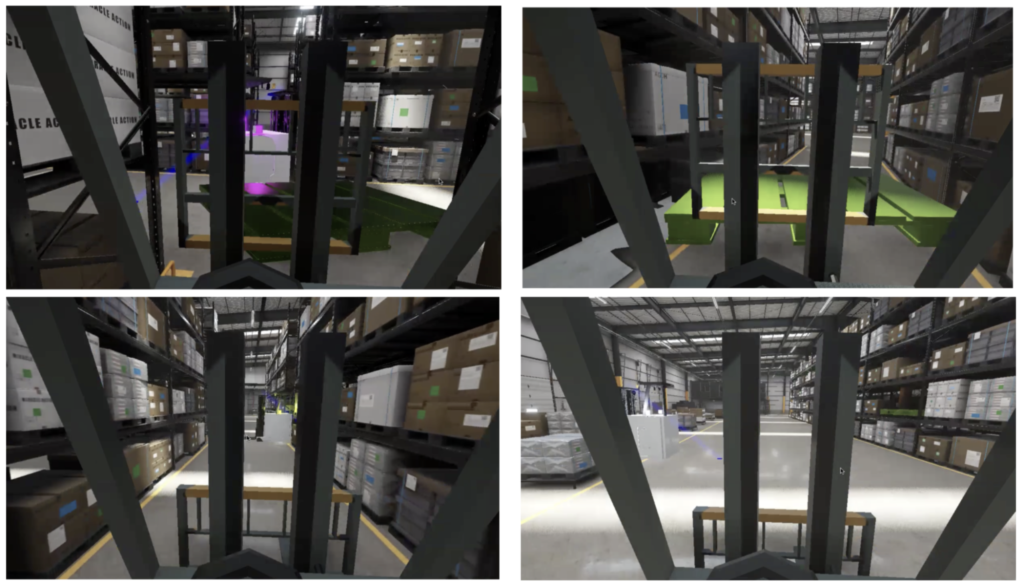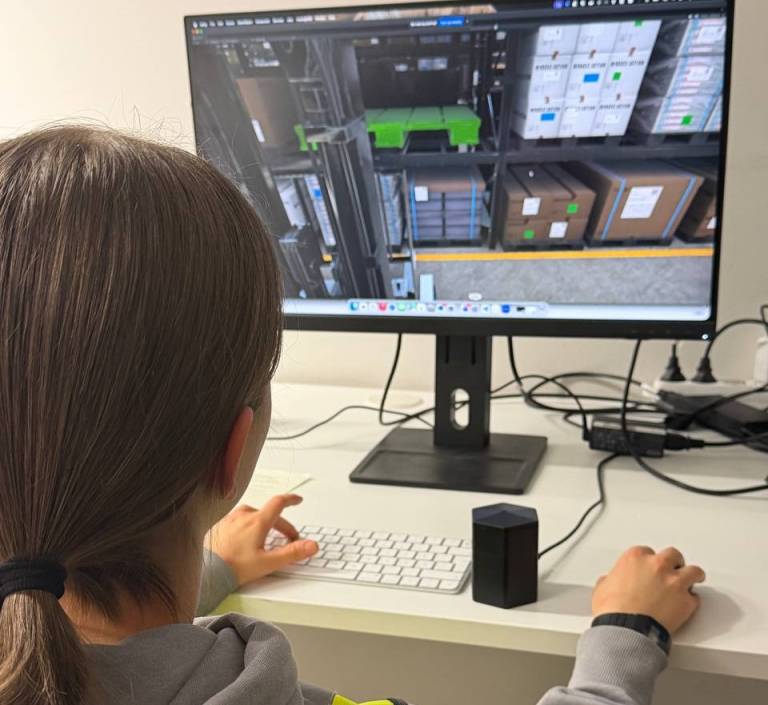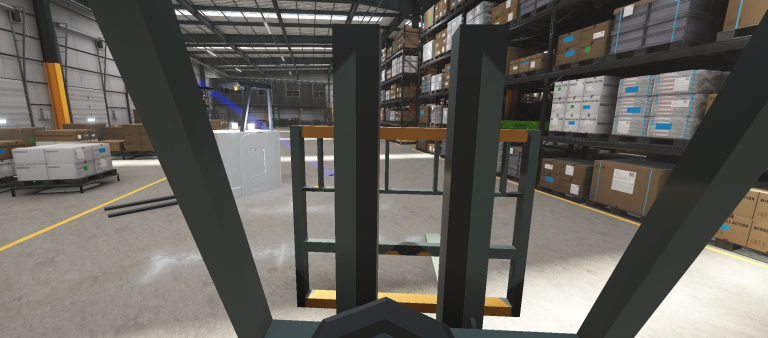
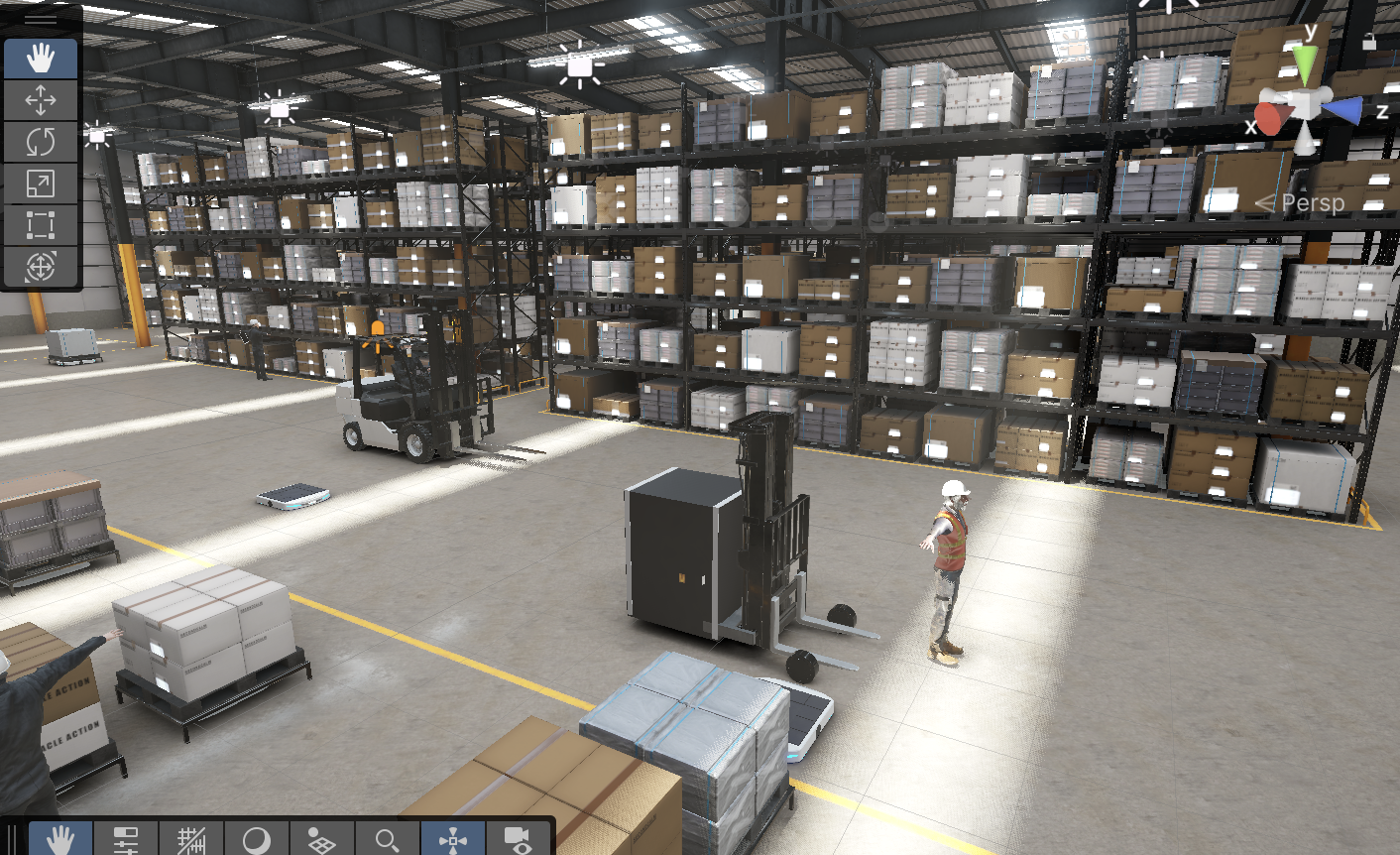
Basically, it was a sneak peek into what warehouses might look like in the near future, where humans and automation work side by side in so-called Mixed Fleet environments. The students really enjoyed the simulation. Many of them told us they could see it being a valuable training tool, something that could prepare future logistics workers for the kinds of changes coming into the industry. It wasn’t just about “playing” in a virtual warehouse; it was about experiencing what it actually feels like when a robot co-worker rolls into your work zone.
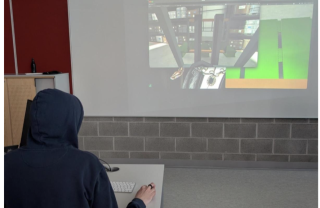
One of the things we were exploring was how this new generation perceives and trusts these automated machines. Interestingly, the students appreciated the way current AGVs communicate, but they also pointed out some limitations. For example, they thought it would be great if AGVs had clearer communication, maybe even verbal interactions or built-in screens to show intentions more directly. (Imagine a forklift driver glancing over at a robot and the robot literally saying, “Hey, I’m going left, you go right.” Pretty neat, right?)
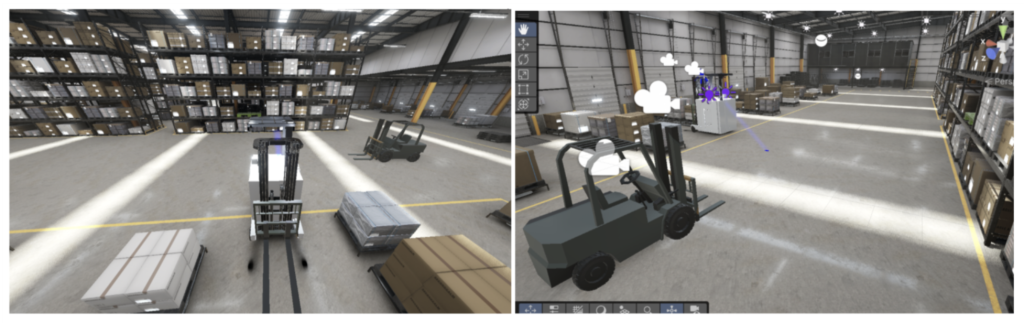
From our side, we collected a really nice set of data for the Mixed Fleet project, and now we’re in the middle of analyzing it all. Every small insight helps us understand what works, what doesn’t, and what might be needed to make human-robot teamwork feel natural and safe in warehouses. And we’re not done yet! We’re already planning our next TREDU visit, where we’ll dive deeper and gather even more valuable data. More students, more simulations, more chances to explore the future of logistics, together with the people who will actually be living it.
Written by: Veronika Žigraiová