Over the past two months (April + May 2026), I had the opportunity to spend a research exchange at Bristol Robotics Laboratory (BRL) in the UK. As a doctoral researcher from Tampere University and part of the Mixed Fleet project, the visit gave me a chance to expand my research, learn new skills, meet new people, and experience a completely different research environment.
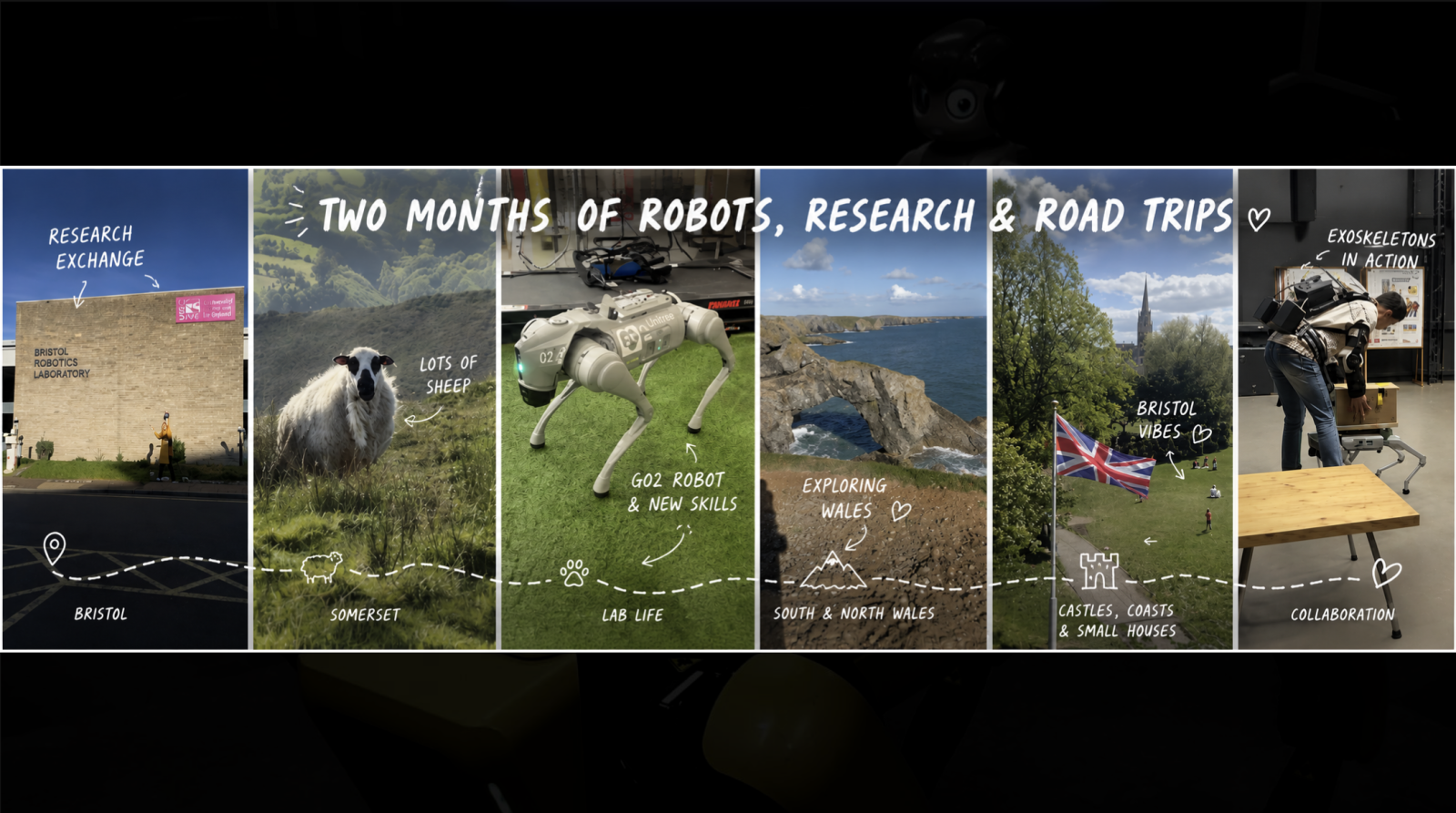
The main focus of my visit was a study exploring exoskeleton-mobile robot-human interaction. In simple terms, we wanted to better understand how wearable robotic support influences collaboration between humans and mobile robots. The study involved participants working together with a Unitree GO2 robot while performing collaborative tasks, both with and without an upper-body exoskeleton.
While the data has not yet been fully analysed, and a scientific publication is still in progress, we successfully completed data collection with 20 participants. One interesting early observation was that participants generally responded positively to the exoskeleton. Several described feeling more integrated into the collaborative environment and more like an active part of the mixed fleet system rather than simply working alongside a robot. The full analysis will come later this year, and we look forward to sharing the results in a future publication and project update.
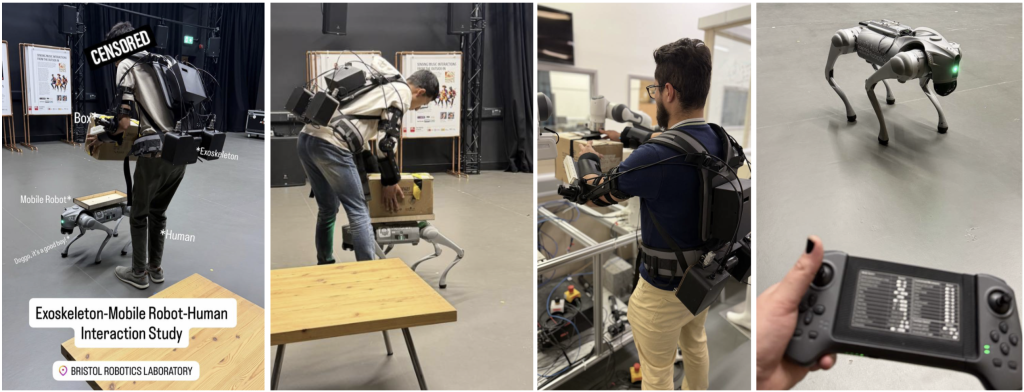
Beyond my own study, I had the chance to get hands-on experience with technologies that were completely new to me. I learned how to operate and work with upper-body exoskeletons and spent plenty of time getting familiar with the Unitree GO2 robot platform. As someone whose research usually focuses on warehouse automation and human-robot teaming, it was exciting to move into the world of wearable robotics and explore how these technologies can complement one another.
One highlight of the visit was supporting the VIVO conference, where I helped demonstrate exoskeleton technologies to researchers, industry stakeholders, and visitors. It was a great opportunity to represent both Tampere University and Bristol Robotics Laboratory, discuss our ongoing research, and showcase how wearable robotics can support future work environments. These kinds of events are always a reminder that research does not happen in isolation, it becomes much more meaningful when you can share it directly with the people who might one day use it.
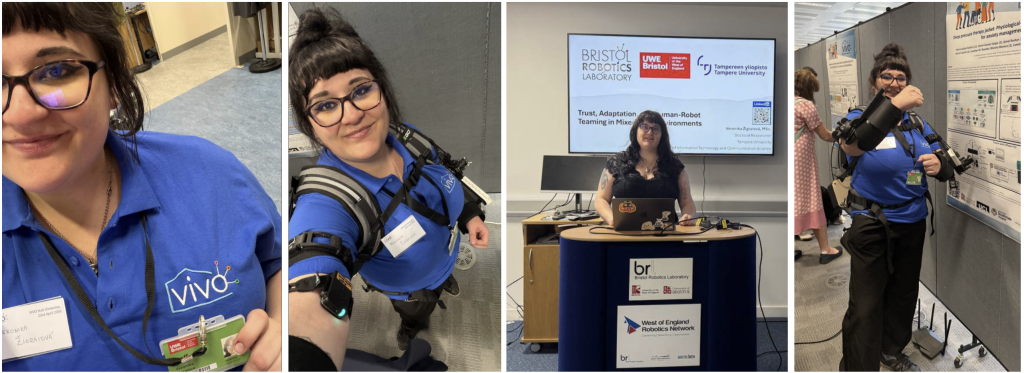
The exchange also gave me the chance to connect with many researchers, students, and visiting academics from different backgrounds. Some of the most valuable moments happened outside formal meetings, over tea, during lab tours, or while discussing completely different projects. BRL is home to an incredible variety of robotics research, and there was always something interesting happening somewhere in the building.
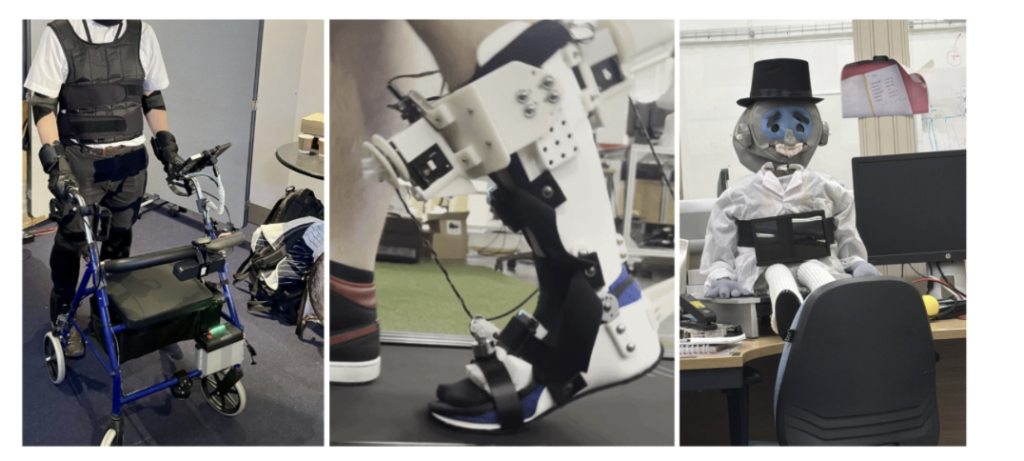
I was particularly fascinated by projects involving wearable technologies. One project explored a jacket equipped with pressure actuators designed to help reduce anxiety through calming physical feedback. I also had the opportunity to see the CASTOR educational robot and even observe parts of its construction process. Seeing a robot evolve from individual components into a functioning system was a nice reminder of how much work happens behind the scenes before a robot ever reaches a user.
The lab was also home to many other forms of assistive robotics, including ankle-support exoskeletons, robotic mobility aids, and assistive walkers. Coming from a human-robot interaction background, it was inspiring to see so many different approaches to supporting people through technology.
Of course, the experience was not limited to the laboratory.
I also had time to explore Bristol itself, which quickly became one of my favourite cities in the UK. Between research activities, I spent time discovering the city’s colourful streets, waterfront areas, independent cafés, and surprisingly steep hills.
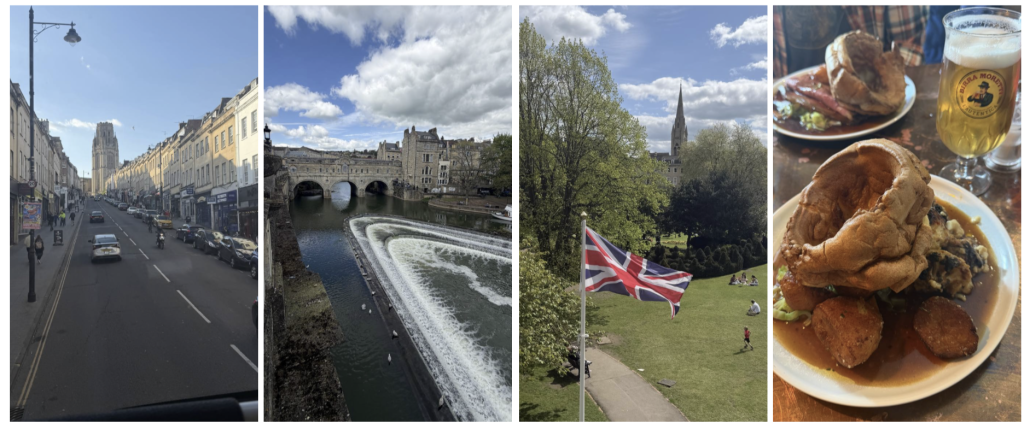
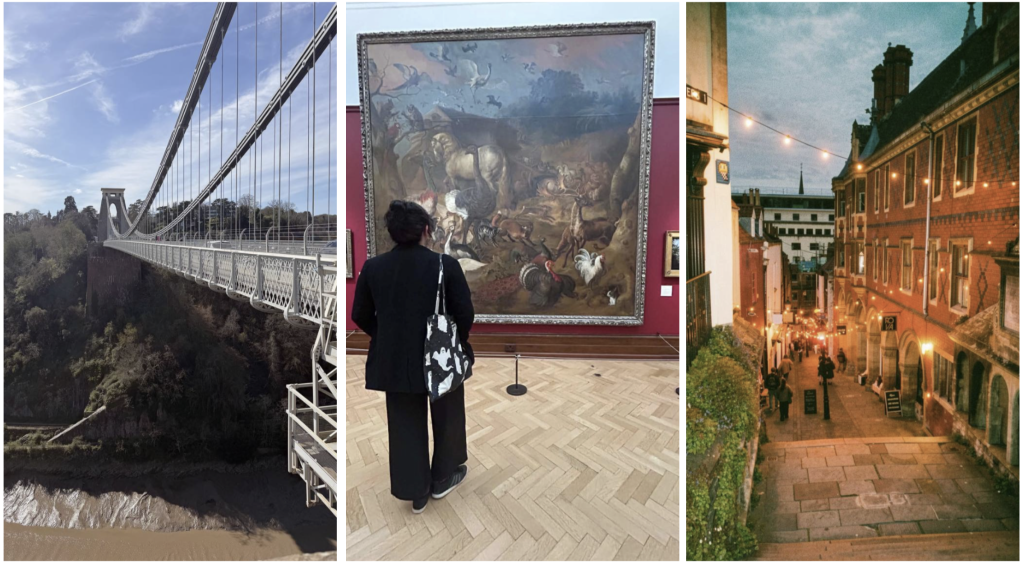
I also managed to explore Somerset and take two memorable road trips: one through South Wales and another further north into Wales. Perhaps the biggest challenge of the entire exchange was driving on the “wrong side” of the road for the first time in my life. Thankfully, neither I nor the rental car ended up in a hedge.
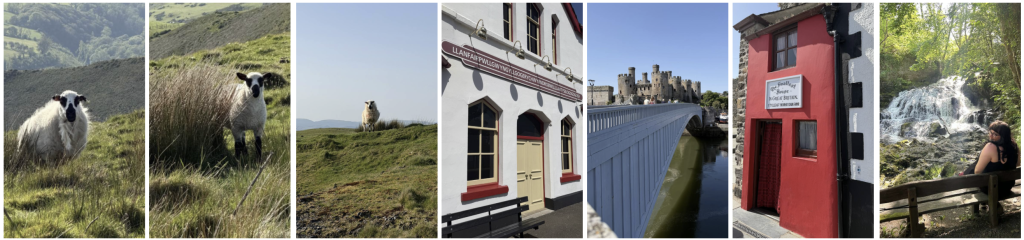
The Welsh countryside was exactly what I had remembered and somehow even more Welsh than expected. There were sheep everywhere. Hills covered in sheep. Valleys with sheep. Coastal roads with sheep watching traffic as if they owned the place. Along the way I explored dramatic coastlines, beaches, rolling green valleys, forests, and countless scenic viewpoints. It felt like every turn revealed another postcard-worthy landscape. I even made a stop in Llanfairpwllgwyngyllgogerychwyrndrobwllllantysiliogogogoch, the Welsh town famous for its ridiculously long name. Reading the road sign was one thing; attempting to pronounce it was an entirely different challenge. I’m still not convinced I got it right.
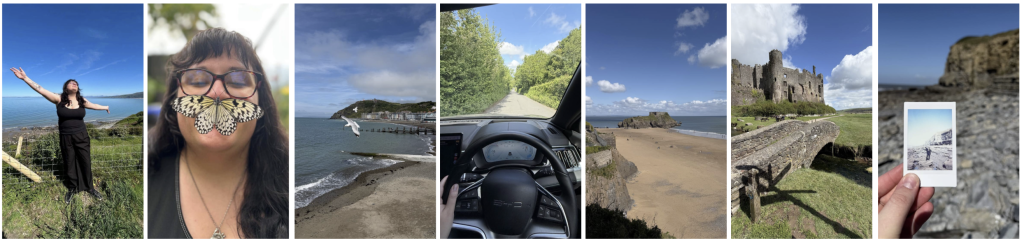
Along the journey, I also discovered just how seriously Wales takes its castles, I seemed to stumble across another one around every corner, and visited the famous Smallest House in Great Britain in Conwy, which somehow manages to be both tiny and surprisingly impressive at the same time. It felt like every turn revealed another postcard-worthy landscape.
Looking back, the exchange was an incredibly valuable experience both professionally and personally. I learned new research methods, gained practical experience with wearable robotics, expanded my professional network, and collected data for a study that I am very excited to analyse and publish.
Most importantly, I had the opportunity to work with fantastic people at BRL and build connections that I hope will continue long after the visit has ended. A huge thank you to everyone at Bristol Robotics Laboratory who welcomed me, shared their knowledge, helped with the study, and made the experience so enjoyable. I am leaving with new ideas, new collaborations, and a strong hope that this will not be my last visit to Bristol.
Written by Veronika Žigraiová