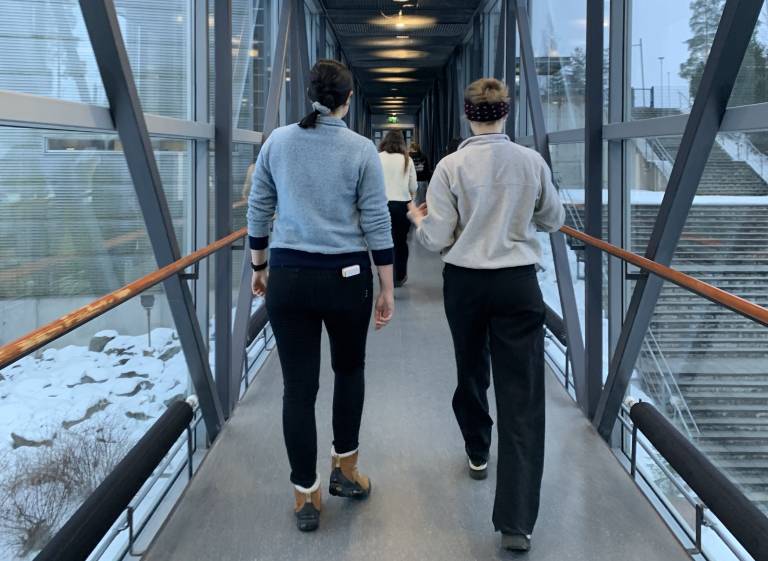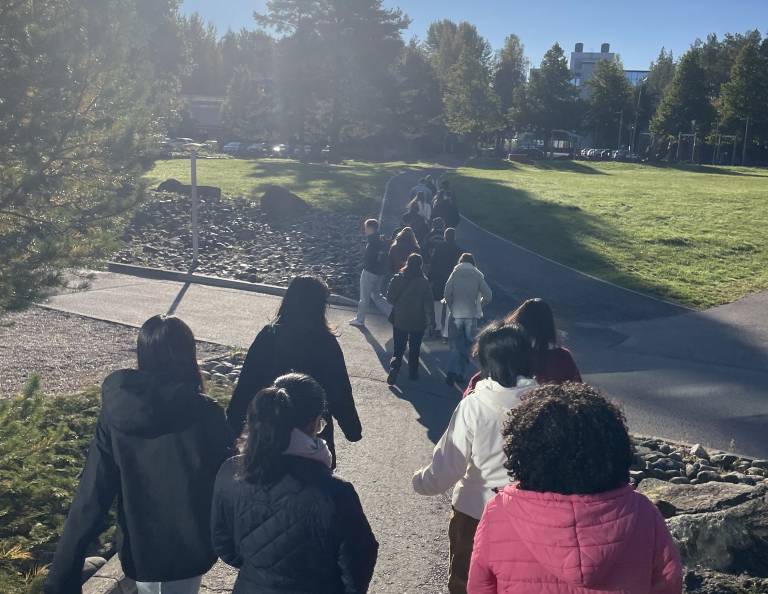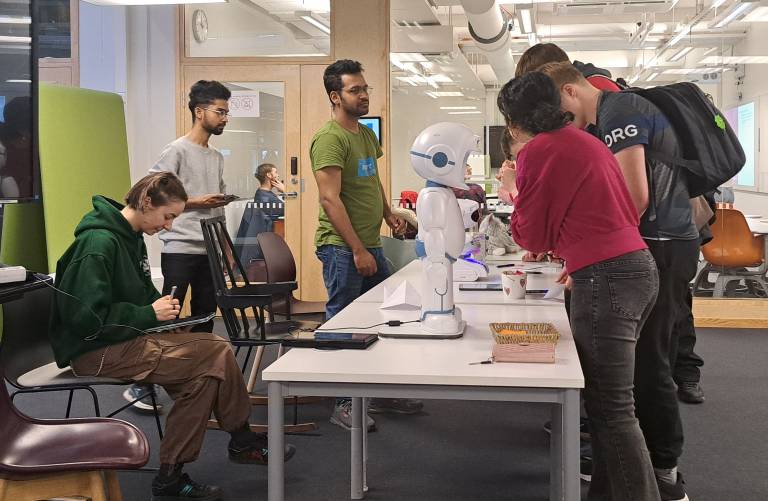

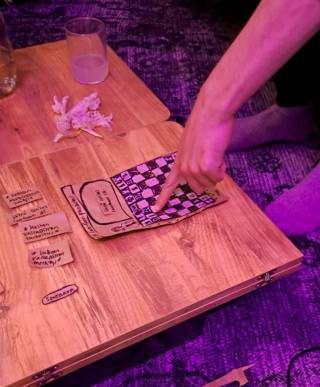
We also worked in groups during remote workshops. To make collaboration smoother, the teachers asked us to keep our cameras on. Seeing everyone’s faces helped build trust and made it easier to discuss. At the end of the course there was a joint learning event where each group ran a small activity related to a psychological topic. Our group organized a murder mystery game, where we could explore in practice how group work affects decision-making.
For me, the most meaningful part of the course was the emphasis on human contact. Many tasks required me to involve other people, for example by asking a friend to test a prototype, observe people outside, or discuss a course topic. Working together kept me motivated. Social psychology explains that belonging and relatedness are powerful motivators, and I could really feel that. Keeping cameras on during group meetings made remote work feel more personal.
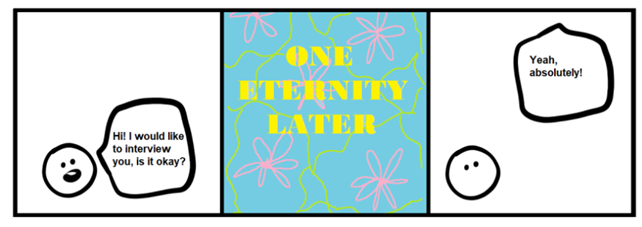
I also enjoyed the creative tasks. Being able to respond with photos, comics, or a podcast allowed me to express my ideas in different ways. Freedom made it easy to get into a flow state. At the same time, the open-ended tasks were sometimes challenging. As a student with ADHD, I noticed that my creativity could take over and the actual theory would slip into the background. And for students who need more structure, it would be important to provide additional guidance or examples or simplify the tasks.
Artificial intelligence is becoming a common tool in studies. It can be tempting to let AI generate answers, but that leads to passive learning and makes it harder for teachers to assess what students really know. On this course, the teachers addressed this by designing tasks that required us to get our hands dirty. Many tasks involved going outside, observing, drawing, or talking with people. AI was not banned on the course, instead we learned how to use as a tool to support our own ideas. In one assignment we even used AI to develop an idea and then reflect on the process, but the focus was on our own creative work. These methods are a great example of how to support active learning in a changing world.
This course showed me that designing successful technology is not just about code. It is about people. Understanding how we think, learn, communicate, and influence each other helps us create devices and services that fit human needs. Positive emotions can foster creativity, diverse groups produce better ideas, and feeling part of a group increases motivation. Active, creative learning methods, like making something with our hands or discussing with others, help the lessons stick. Finally, I learned that collaboration and empathy matter. Working together and supporting each other made this course enjoyable and meaningful.
Written by Master’s student of HTI