
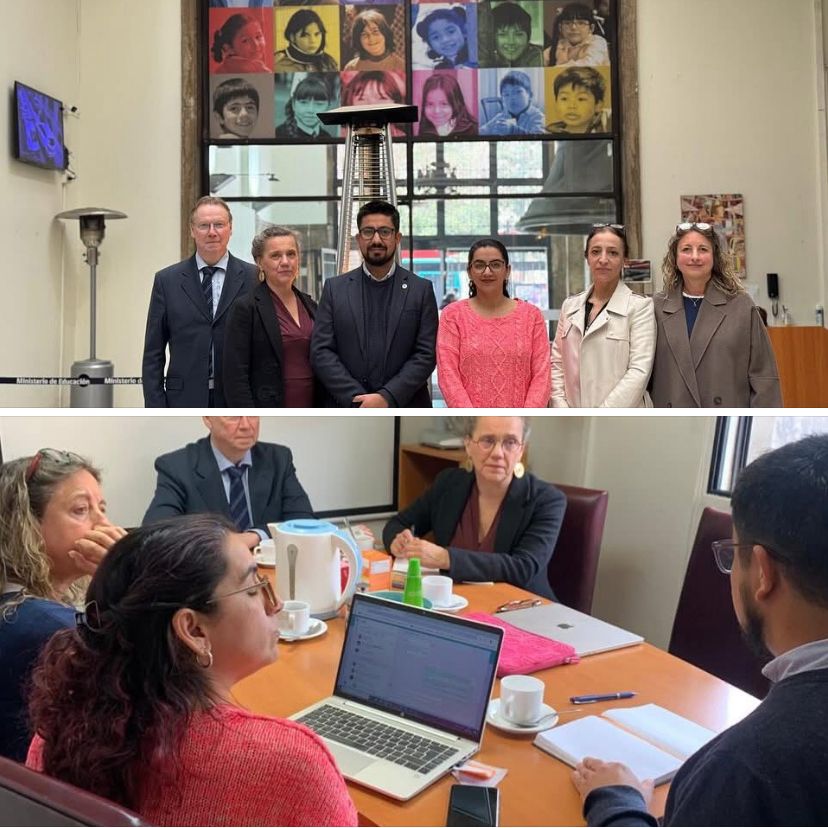
I had a unique opportunity to spend a month exploring the world of vocational education in Chile, funded by the TAMK Foundation and hosted by Chile Fundacion. The journey opened my eyes in many ways – and raised a lot of questions.
Private or Public – Who Educates, and Whom?
In Chile, private institutions dominate the education system from early childhood to university. There are also public schools, and many of them do excellent work, but for many families, a private school is the goal – and a financial burden. Private actors also play a significant role in vocational education.
For teachers, everyday life is often fragmented. Most vocational teachers are so-called “taxi teachers,” moving from one institution to another without a permanent community. There are few permanent teachers, and as a result, a sense of community and long-term development are often missing. How would it feel if your teaching location changed every day?
Vocational Education – 400 Ways to Study Tourism
In many countries, vocational education is not highly valued. The same applies to the teaching profession, and especially to vocational teaching, which is often seen as a last resort rather than a calling.
In Chile, vocational education is not a unified system as it is in Finland. There are hardly any common vocational qualification requirements; instead, each institution can develop its own curriculum. For example, tourism can be studied in up to 400 different programs! This makes it difficult – if not impossible – to compare qualifications or move from one level of education to another.
Upper secondary vocational education takes place in “technical-professional” schools, which aim for a quick transition to working life. The next levels correspond to our college and university of applied sciences. Practical teaching and teachers’ expertise vary greatly. Work-based learning is rare, and resources are often limited. Still, I met teachers who were dedicated and eager to develop their work – even though the conditions were modest.
Developing Together
In every place I visited and, in every discussion, it became clear that there is a broad consensus in Chile about the need to develop vocational education. The business sector echoes this message.
During my visit, we built a project plan together with Chile Fundacion for the training of vocational teachers. The goal is to strengthen both pedagogical and general skills and practices – and above all, to increase the appreciation of vocational education and teaching as a profession.
Let’s hope this project gains momentum! In any case, the collaboration with Chile and Fundacion Chile will continue.
Written by: Elina Harju