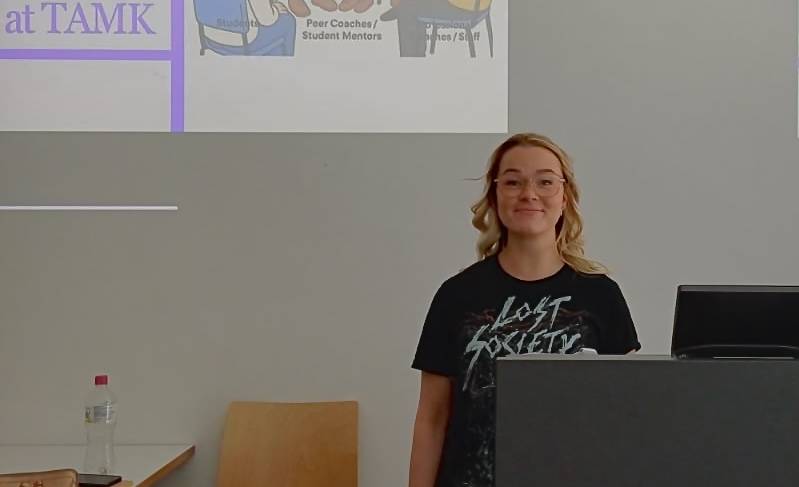
The blended intensive program (BIP) course during May was designed for students who were motivated to learn, explore new perspectives, and engage with sustainability challenges, since the overall purpose of the Personal Green Skills in Higher Education project is to develop students’ green skills.
In this blog post, one of TAMK’s students’, Vera Vuorio tell her experiences during this Personal green skills in higher eduscation-project and in the BIP. I strongly believe that after reading Vera’s thoughts, we can highly recommend similar chances to all the students in TAMK!
Vera’s Journey into the BIP in Germany
“When I first heard about the BIP project, I honestly wasn’t sure what I was signing up for. A friend had told me about their great experience in Germany the year before, and it felt like the perfect chance to try something new myself. Looking back now, I couldn’t have made a better choice. The trip gave me so much more than I expected – not just new knowledge about sustainability, but also confidence, friendships, and memories. You can learn something completely new without knowing what you could learn from such project and an international team.”
Vera’s Own Project – Peer Coaching at TAMK
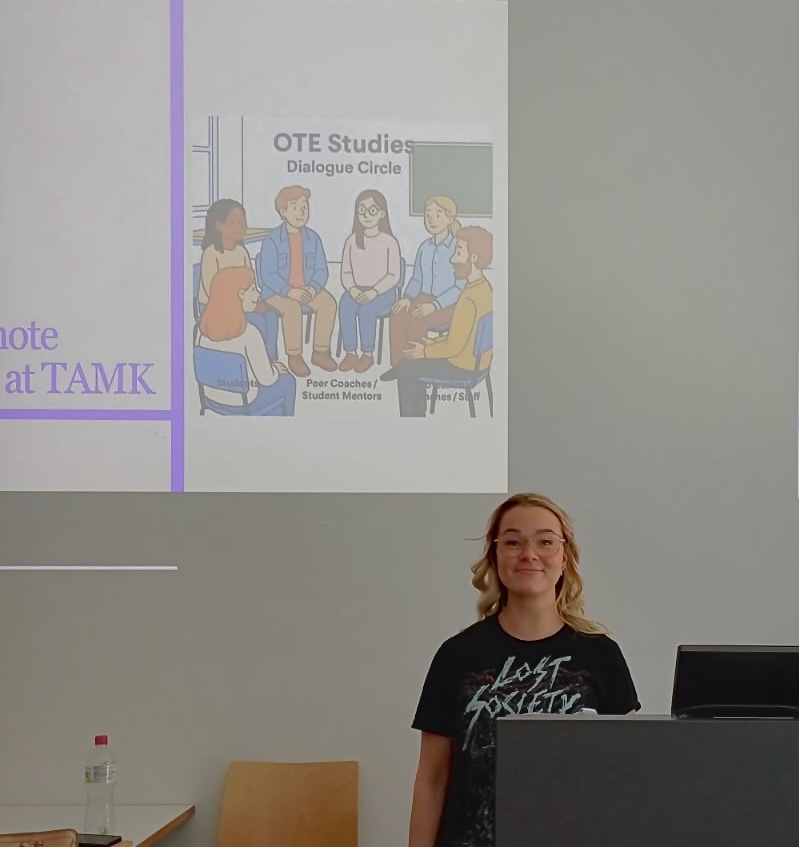
“For my project, I worked on developing a peer coaching model at TAMK (OTE–studies) as a part of the BIP. The idea is simple but important: using peer coaching to help students being heard, especially those who feel uncertain about their studies or risk dropping out. This project team involves peer-coach students and teachers. During our pilot, we saw real results. Some students decided to continue their studies after taking a part of OTE–studies. That made me realize just how meaningful this work can be. Students need support system that lasts. Sometimes just a croup that listens what you have to say and what you are really feeling. For me, understanding the meaning of peer supports power is something meaningful to keep this sustainable society going strong. This project doesn’t end here – I’ll keep developing it in my thesis. Thanks to this experiment.”
Learning Together
“One of the highlights of the whole BIP experience was the people. I strongly believe we learn the best way by searing our knowledge through conversations. My fellow Finnish students gave me so much support even before the trip. Without them, I might not have even come up with my project idea. During the week in Germany, I also got to know amazing students from many different countries. Working in international groups wasn’t always easy – sometimes we were tired, sometimes opinions clashed – but those moments taught me just as much as the smooth ones. It was remarkable to me that I could use my skills from team-learning to see what I have learned, and I could use it elsewhere. I’m also really grateful for the teachers who guided us. Our supervising teacher kept us on track with a calm and encouraging way of communicating, and even a teacher trainee coached me for my presentation. Thanks to their help, I felt more confident standing in front of others and speaking in English. My fellow students made me feel like I was always safe and seen. I have never been the best making new friends but thanks to my studies I have gotten better at networking with new people. We were a good team and now also friends. Having social network skills are very important to keep us engaged to our society. So having such skills should be for everyone to take part in. And of course, the German organizers deserve a huge thank you. They took such good care of us – from quick answers to our questions before the trip, to making sure we felt welcome once we arrived. The whole week was organized with warmth, professionalism, and a human touch. That made the experience not only educational but also really enjoyable.”
Vera’s biggest lessons and takeaways
“The biggest lesson for me was realizing that sustainability isn’t only about recycling or the environment. It’s also about how we treat each other and how we build communities that last. I now see social sustainability as something I want to bring into every project I do. I also learned a lot about communication – how much can be achieved when people listen, trust, and support one another. I noticed that in my surroundings there is not a lot of talking about the sustainability. And on a personal level, I discovered that I actually enjoy public speaking more than I thought (even if I still get nervous).
After the BIP, I want to keep looking at my choices – big and small – through the lens of sustainability. That means continuing my work with peer coaching, but also everyday things: reducing food waste, cycling or taking public transport, and choosing more plant-based meals. I really see know how important those sustainable actions are and how they affect to us. So, I want to bring sustainable actions to knowledge of my organization. Small steps matter, and they add up.
This project gave me new skills, new confidence, and new perspectives on sustainability. But even more than that, it gave me people – friends, colleagues, and mentors – who inspired me along the way. Make your uncomfort zone your new comfort zone. I would 100 % recommend an opportunity like this to any student. Go for it, even if you’re unsure in the beginning. The experience will surprise you – just like it did for me.”
The blended intensive program (BIP) was part of Erasmus+ KA2 project, Personal Green Skills in higher education. Partners of the project are Kauno Kollegija (KK), Lithuania, Tampere University of Applied Sciences (TAMK), Finland, University College for Agricultural and Environmental Education (HAUP), Austria, Universidad de Malaga (UMA), Spain and Technical University of Applied Sciences Würzburg-Schweinfurt (THWS), Germany.
Written by:
Sanna Tahlo, Coach at HUBS
Vera Vuorio, VETO student