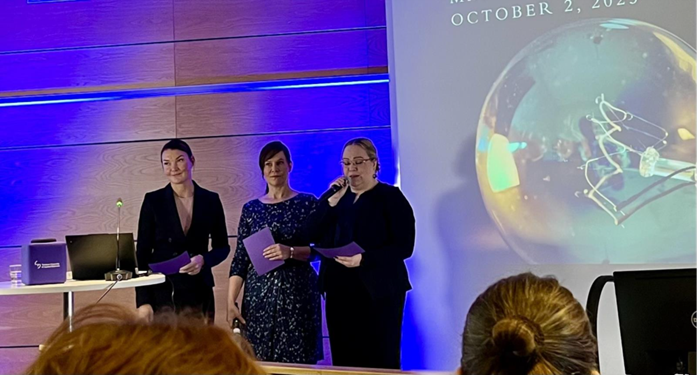

The event showed how determined Rwanda is in creating conditions that support foreign investment. Infrastructure is improving rapidly, corruption levels are low, security is strong, and there is heavy investment in youth education. Rwandan legislation is being developed to provide a clear, flexible and predictable environment for business. The financial sector is also being reformed to make moving foreign capital in and out of the country both easy and secure.
Yet despite this progress, economic cooperation between Finland and Rwanda remains modest. The Finnish Ministry for Foreign Affairs also notes that the scope of cooperation is still quite limited. This raises a natural question: why have Finnish companies been so cautious?
The forum convinced us that now is a good time to look towards Rwanda with an open mind. In fields such as education, healthcare, technology and the green transition, Finnish companies have much to offer. Our expertise is valued in Rwanda and could genuinely support the country’s development goals. At the same time, we could learn a great deal from Rwandan partners – from their agility, future-oriented mindset and ability to understand local needs.
There is clear demand in Rwanda, and interest in Nordic know-how is strong. The next step is to build connections: more dialogue, greater trust and concrete initiatives. In this, the role of the public sector, companies and educational institutions is central.
At the same time, international tensions cannot be ignored. The breakdown of diplomatic relations between Rwanda and Belgium, along with the crisis in Eastern Congo, remind us how quickly the political climate can create obstacles. When visa services are disrupted and uncertainty grows, companies and organizations hesitate to engage. For example, Rwandans wishing to travel to Finland currently have to apply for visas more than a thousand kilometers away in Nairobi. This shows how international politics can slow down cooperation in very practical ways.
Progress is also stalling at EU level, as attention is divided between many other conflicts. This raises another question: should Finland and Rwanda strengthen their bilateral relations so that cooperation is not so dependent on the priorities of others? Bilateral initiatives could allow cooperation to develop more flexibly, even when EU-level progress is slow.
The real issue is not only why Finnish companies hesitate, but how we can lower barriers and build bridges that endure even in uncertain times – and lead to shared growth in the long term. For this to happen, we need the normalisation of international relations, the restoration of visa services, and a genuine will from all stakeholders to resolve conflicts. At the same time, Finland could act as a bridge-builder and continue to promote research, education and business cooperation despite the challenges.
Writers:
Jussi Savolainen, Principal Lecturer, Applied Research Center, jussi.m.savolainen@tuni.fi
Sami Suhonen, Principal Lecturer, Applied Research Center, sami.suhonen@tuni.fi