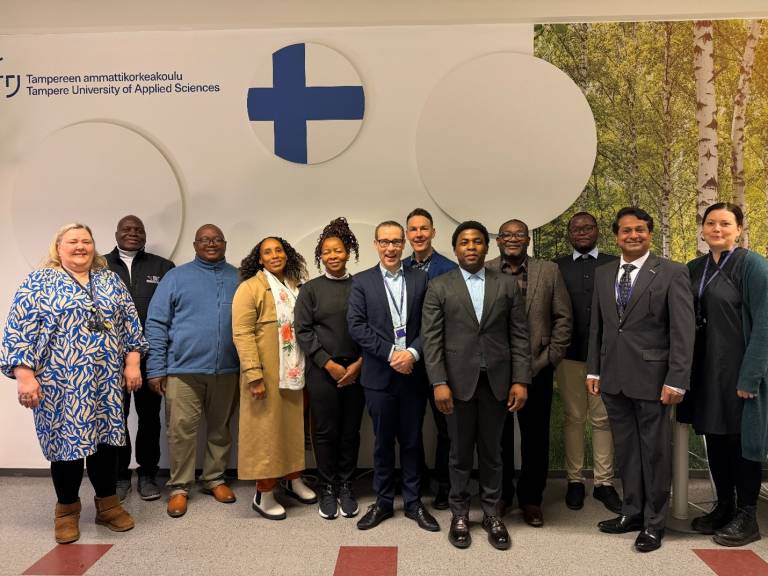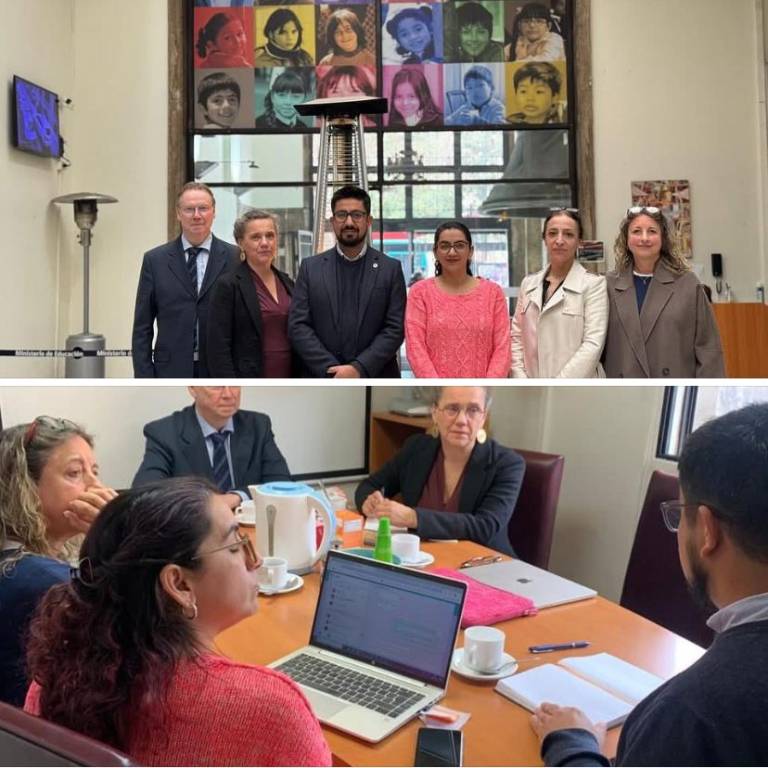


In both Finland and Germany, social work theories are complex and difficult to grasp. This is the situation in social work field internationally (Mäntysaari, Pohjola & Pösö 2009, 8). Therefore, the focus of our joint seminar is not to teach the respective national theory, but rather to strengthen the ability to deal with the demands of social practice. Our aim is to exchange “knowing how” rather than “knowing what”.
One challenge for students of the social service sector is the transfer of knowledge to practical problems. Social professions are often described as professions that ‘act under uncertainty’ (Effinger 2021). The theory-practice transfer is particularly difficult here, a phenomenon that Luhmann & Schorr (1982) described as a ‘technological deficit’. Nevertheless, this challenge can also be an opportunity to master the everyday challenges of professional action and therefore to empower future professionals in the social sector. When students learn to use theories as perspectives for situationally adapted actions, they can better cope with uncertainties.
In a rapidly changing world, theories offer innovative ideas, especially when studied in a international environment. The exchange of ideas about social work theories from different national backgrounds broadens the perspective and increases the impact of the theories. International conversation enables a perspective beyond national frameworks. This contributes to the development of professional identity at master’s level and provides the perfect opportunity to critically scrutinize one’s own knowledge.
From the first seminar, we learnt that it is not just about teaching theory, but also about everyday professional skills in the social field, such as the professional use of the English language. Networking opportunities and culturally competent ways of working integrated to courses are important elements in strengthening professionalism and expertise (Arene 2022). We found that students struggled with both the theoretical content and the skills required for international exchange. Therefore, future seminars need to find ways to better support students in these areas so that they can both master the content and further develop their theoretical and professional skills. The international theory seminar and long-term, two-way collaborations are one approach to make this part of the studies more tangible and accessible to students.
Sources:
Arene. (2022). Recommendation on the Shared Competences of Universities of Applied Sciences and Their Application. The Rectors’ Conference of Finnish Universities of Applied Sciences Arene ry. RECOMMENDATION ON THE SHARED COMPETENCES OF UNIVERSITIES OF APPLIED SCIENCES AND THEIR APPLICATION.pdf
Effinger, Herbert (2021). Soziale Arbeit im Ungewissen: Mit Selbstkompetenz aus Eindeutigkeitsfallen. Weinheim: Beltz Juventa.
Luhmann, Niklas., & Schorr, Karl Eberhard (1982). Das Technologiedefizit der Erziehung und die Pädagogik. In N. Luhmann & K. Schorr (Eds.), Zwischen Technologie und Selbstreferenz (pp. 11–40). Frankfurt: Suhrkamp.
Mäntysaari, Mikko, Pohjola, Anneli & Pösö, Tarja (2009). Johdanto. In M. Mäntysaari & A. Pohjola & T. Pösö (Eds.) Sosiaalityö ja teoria. Jyväskylä: PS-kustannus (pp. 7–14).
Payne, Malcolm (2020). How to Use Social Work Theory in Practice. An Essential Guide. Bristol: Policy Press.
**
Kemmo, Jussi Senior Lecturer, Faculty of Social Services and Health Care, TAMK
Koskela, Niina Senior Lecturer, Head of Program, Faculty of Social Services and Health Care, TAMK
Taube, Vera, Professor of Educational Science in Social Work at THWS