Mobility projects enable international collaboration
The visit was organized by two mobility projects and hosted by three Finnish higher education institutions (HEIs), Tampere University of Applied Sciences, Tampere University and University of Turku and a company, Meriaura, which is also a partner in a mobility project. The collaboration is based on previous project implemented mainly in Namibia (Kostia and Tiitola, 2025). Nine Namibian guests represented University of Namibia (UNAM) and Namibian University of Science and Technology (NUST) staff and students. Both mobility projects aim at promoting circular bioeconomy and industry academia collaboration in higher education by sharing collaborative practices between Finland and Namibia. CircBioNam (Promoting circular bioeconomy in higher education by sharing and refining best practices in Finnish-Namibian collaboration) is funded by Team Finland Knowledge (TFK) programme and ProCE (Finnish – Namibian Academy-Industry Consortium for Promoting Circular Economy) by Erasmus+ mobility programme. Both projects are implemented in Namibia and Finland 2025-2027.
Bridging the gap between academic research and practical implementation
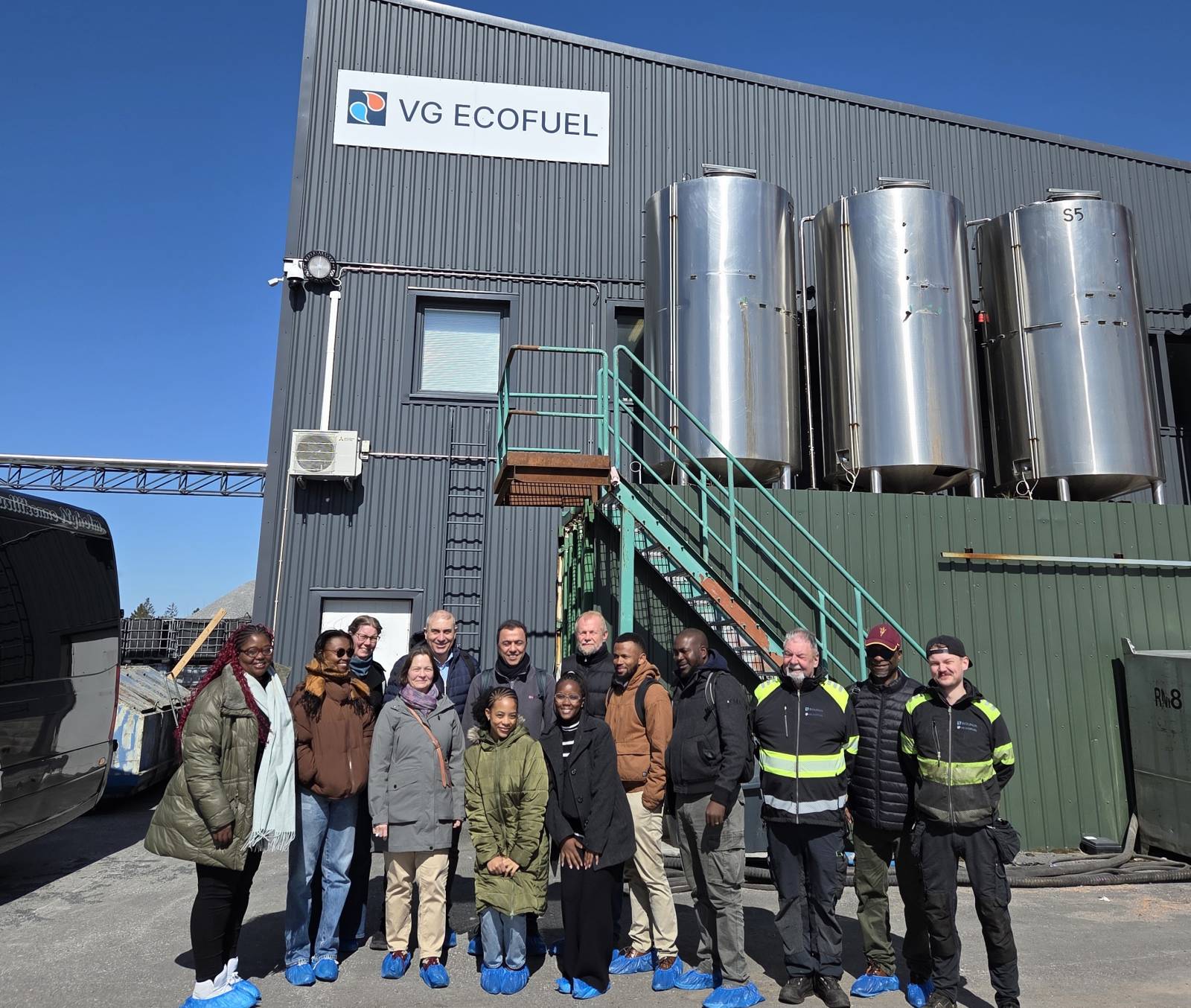
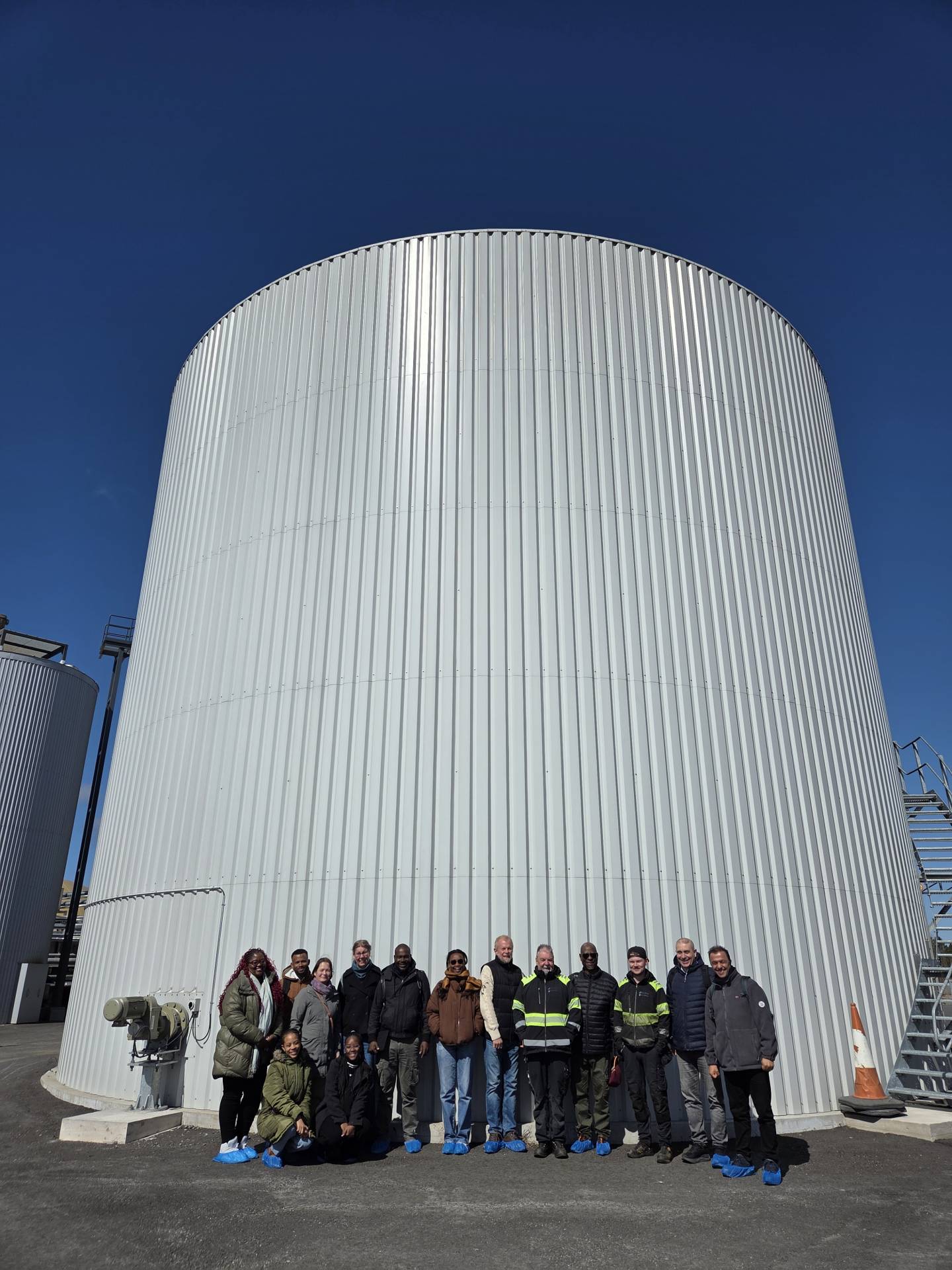
The study visit included industry visits (such as ECO3 business park, Meriaura, and Biomylly Biogas plant), city site visits, presentation of research projects and infrastructures as well as education programs of the participating organizations. Outside project partners’ activities, Turku University of Applied Sciences hosted one day at their campus. Collaboration between higher education institutes, companies, and municipalities is at the center of the Finnish circular economy model. This creates closed-loop cycles that are maintained and developed in a tight knit net of combined knowledge exchange and innovation practices. Each sector plays its part, creating a well-rounded sustainability cycle.
“I have come to learn that these partnerships support knowledge exchange, innovation and most importantly, the implementation of circular economy solutions.”
The significance of this collaborative model was highlighted to the Namibian visitors through site visits to key circular economy hub spaces that showcase the interconnectedness of academia, industry, and local government. One site visit was organized to the ECO3 business park in Nokia, which brings together bio- and circular economy companies and is partially fostered by the city. The ECO3 park also works in collaboration with Tampere University.
The Namibian visitors summarized how the strength of these collaborative models is the “understanding of everyone’s role”. Universities foster innovation and facilitate contact, businesses bring in practical implementation, and city government enables circular economy solutions by considering them while making city and policy plans.
Higher education institutions promote multisectoral collaboration
The role of higher education institutes at the forefront of fostering sustainability innovation and implementation is essential. Creating opportunities for sustainability collaboration on both national and international levels is a key area of this role. Both ProCE and CircBioNam aim to further this as well.
The study visit is one example of how perspectives and cumulated knowledge are best shared and fostered collaboratively. While contexts in Namibia differ from that of Finland, increased multisectoral collaboration is an adaptable model to help support circular economy development in Namibia as well. One Namibian visitor summarized this importance in the feedback as well: “A change towards circular economy can only be achieved through all the stakeholders working together step by step in the long run.”
“Finland shows that strong policy, municipal leadership, industry buy-in, and education and research integration can drive real systemic change.”
References:
Kostia, S. & Tiitola, S. (ed) 2025. Co-Developing in Namibia for Circular Economy Capacity Building and Business Model Mapping. Tampereen ammattikorkeakoulun julkaisuja. Sarja B. Raportteja 164. Tampere. Available: https://urn.fi/URN:ISBN:978-952-7592-11-3
Authors:
Anni Brinck, University Intern, Master’s student in Social Psychology, Tampere University
Silja Kostia, Principal Lecturer, Faculty of Built Environment and Bioeconomy, Tampere University if Applied Sciences
Mika Kautonen, Senior Research Fellow, Innovation Studies, Tampere University
Pictures:
Minna Suuronen