Making of future language teachers
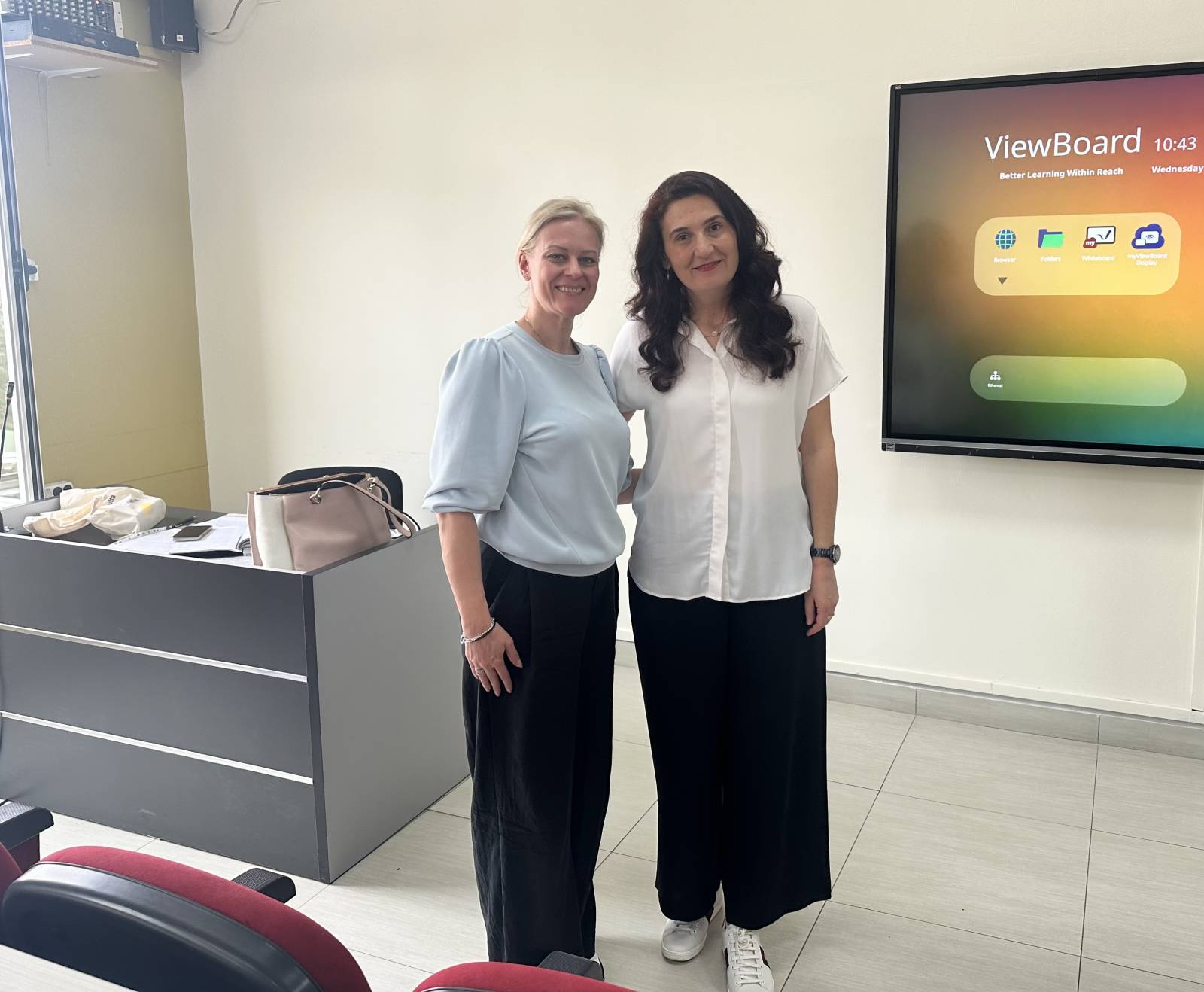
My exchange included job shadowing in the Faculty of Foreign Languages, which offers Bachelor and Master -level courses in modern European languages as well as Greek, Turkish and Russian. The Head of English Department, Prof. Daniela Hasa cordially invited me to give guest lecture in her class. I talked about TAMK, my current job in the field of communications and the Finnish educational system. There seemed to be a strong impression amongst my audience that studying in Finland is hunky glory with no homework and long breaks between classes. Needless to say, I had to somewhat disappoint them on that front.
Compared to Finland, Albanian pedagogy is still far more teacher centered with students having little or no autonomy in the learning process. The grading system is also more conventional, whereby teachers evaluate students’ performance and put them in a hierarchical order. Self and peer evaluation, both actively used in Finland, are practically unheard of. However, for what I saw during my time in Tirana, there is great willingness to learn and benchmark how things are done in Europe, including Finland. With Albania actively seeking EU membership, this makes total sense.
I learned that in Albania majority of language students become teachers. To qualify for a teaching job, students need to complete a Master’s degree along with 3-month long practical training. Teaching jobs in state schools also mandate an average grade of 7.0 or more (on a 10-scale system). Not only do language students need to study for many years (on average 6), but they also need to study hard. Many young people feel that with the same amount of work and time you can earn a degree in medicine or law and land a more prestigious job at the end. This, according to the professors I spoke to, has led to a rapid fall in yearly student intake, so much so that some departments, like French, may even face closure in the future.
Be it as it may, graduates with MA in English do relatively well in the Albanian job market. While the brightest students get employed in the state schools, the rest often make a living by
teaching English privately online. This is paradoxical, given that there are no courses on digital pedagogy included in the higher education curriculum. Hence there is a clear learning gap to be filled, and with TAMK’s experience in digital pedagogy, including online teaching and learning, I see numerous opportunities for co-operation here. This could be anything from joint training sessions and further education courses to bilateral teachers’ exchange, all within the framework of Uninovis Alliance of course.
Uninovis boosts mobilities between Tampere and Tirana
One of my goals was to familiarize myself with the degree programs offered in English, and discuss how we could increase Erasmus+ and Uninovis mobilities between TAMK and UT. To this end I met with the international office staff twice during my stay in Tirana.
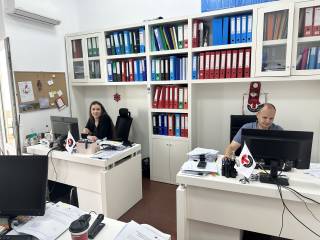
While the number of incoming and outgoing mobilities is currently quite modest, the University of Tirana seems eager to boost co-operation with its Uninovis partners, including TAMK, to rectify the situation. Regarding staff exchange, especially that of teachers, the best time to go to Tirana is November-December or February-March. In Albania the autumn term starts only in October, which makes the exchange time cycle somewhat different from ours. This I witnessed myself, as most of the students were already on an exam study break by the time I arrived in Tirana.
When it comes to student exchange opportunities, there are quite a few courses offered in English. Potential program courses for TAMK students could be the ones offered by the Faculty of Economy, such as business administration, economics and informatics. While most of the teaching is still in Albanian, the University of Tirana is willing to organize individual academic support or tailored lectures in English on a case-by-case basis, which is a great advantage. On the other side of the coin there are perhaps the administrative challenges, such as a lack of student accommodation and migration regulations, which mandate foreign people to register with the authorities every 90 days.
Having said all that, I do encourage everyone to go and explore what Tirana has on offer. With its vibrant city culture, breathtaking nature and interesting history it captures your heart. For sure it has captured mine!
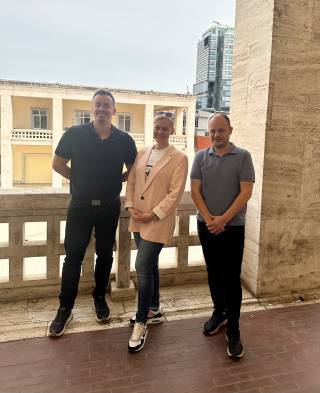
Useful information for international students and staff interested in studying or carrying out a mobility period at the University of Tirana:
https://unitir.edu.al/incoming-erasmus-mobilities/
More about Uninovis European Universities Alliance:
https://www.tuni.fi/en/services-and-collaboration/international-tamk/uninovis
Text and photos: Kirsi Popova, Senior Adviser