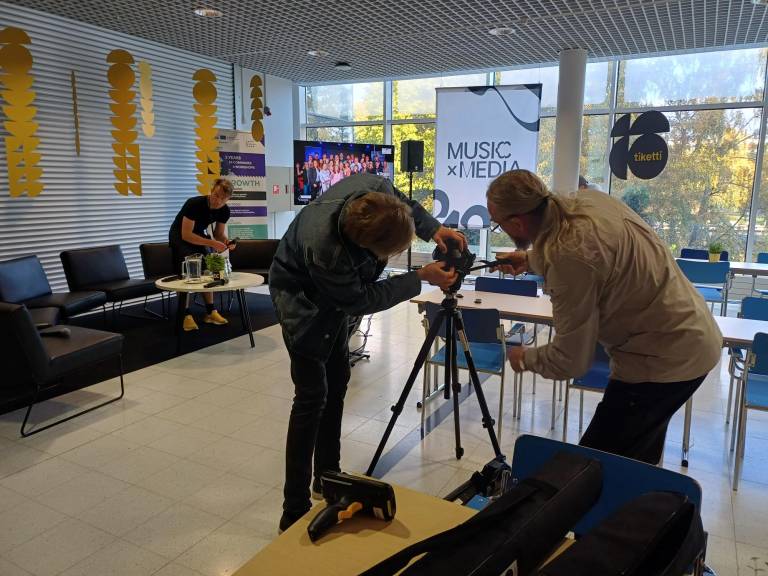



We started the session by asking how “confrontation” would translate to their own languages and contexts. This helped everybody connect with the theme.
Next, facilitator Tanja Lindeman described how reducing confrontation related to the topics researched in the Finnish CLRAs (Community-Led Research and Action): climate action, access to inclusive cultural spaces for young people, and the representation of Roma people in media. She emphasised that in addition to discussion action is important in reducing confrontation. The concrete actions taken by the Finnish youth during CLRAs include bringing together people from diverse backgrounds, co-creating visions of a more just society, and initiating dialogue with decision-makers.
The introduction served as inspiration for the wider discussion aiming at encouraging participants to reflect on what they themselves can do in their own contexts. The discussion was supported by inspiring images and guiding questions. The arrangements allowed to discuss in multiple languages.
The session showed that even challenging topics can be approached constructively when the atmosphere is warm and inclusive, and digital tools are used to accommodate interaction. Working in language-based breakout groups helped deepen understanding and support clearer communication as all participants did not share a common language. The event itself presents an encouraging example of creating safe spaces where people can listen, reflect, and connect across differences.
The topics and practical suggestions for action for each of us are summarised below.
1. Building understanding through dialogue
Participants emphasised the importance of listening before responding and seeking to understand. Across languages, the message was clear: when we listen attentively and acknowledge others’ perspectives, we create space for mutual understanding and prevent misunderstandings from escalating into conflict.
2. Creating a safe and respectful environment
Contributors highlighted that openness, kindness, and inclusive language help people feel valued and heard. In such environments, differences can be expressed without fear, making it easier to engage constructively rather than defensively.
3. Self-awareness and emotional regulation
Many reflections included examples of managing one’s own emotions: taking a moment to pause, reflect, and regulate reactions. Self-awareness allows individuals to respond thoughtfully instead of reacting impulsively, which is a key step in reducing confrontation.
4. Appreciating diversity and different perspectives
Participants noted that viewing differences with curiosity and respect strengthens interactions. Openness to diverse perspectives not only enriches dialogue but also helps to diffuse tension.
5. Practical actions to reduce confrontation
Practical strategies were widely shared: asking clarifying questions, using calm and neutral language, focusing on solutions instead of blaming, and taking pauses when needed. Even small actions, such as apologising when necessary or showing willingness to compromise, can significantly reduce confrontation in everyday interactions.

Written by:
Eveliina Asikainen, Sanna Ruhalahti, Nina Smolander and Tanja Lindeman