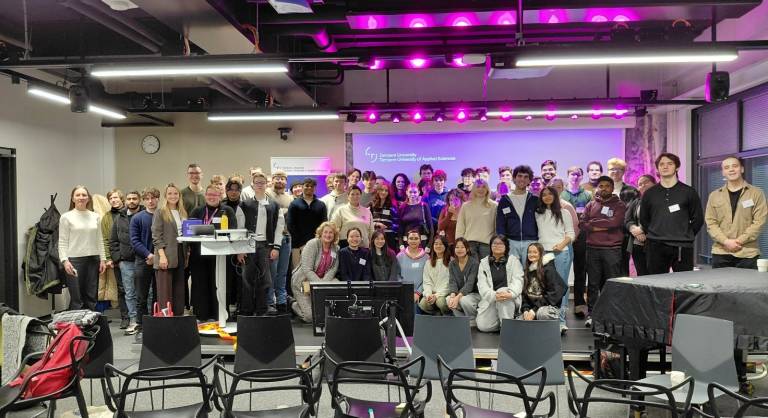


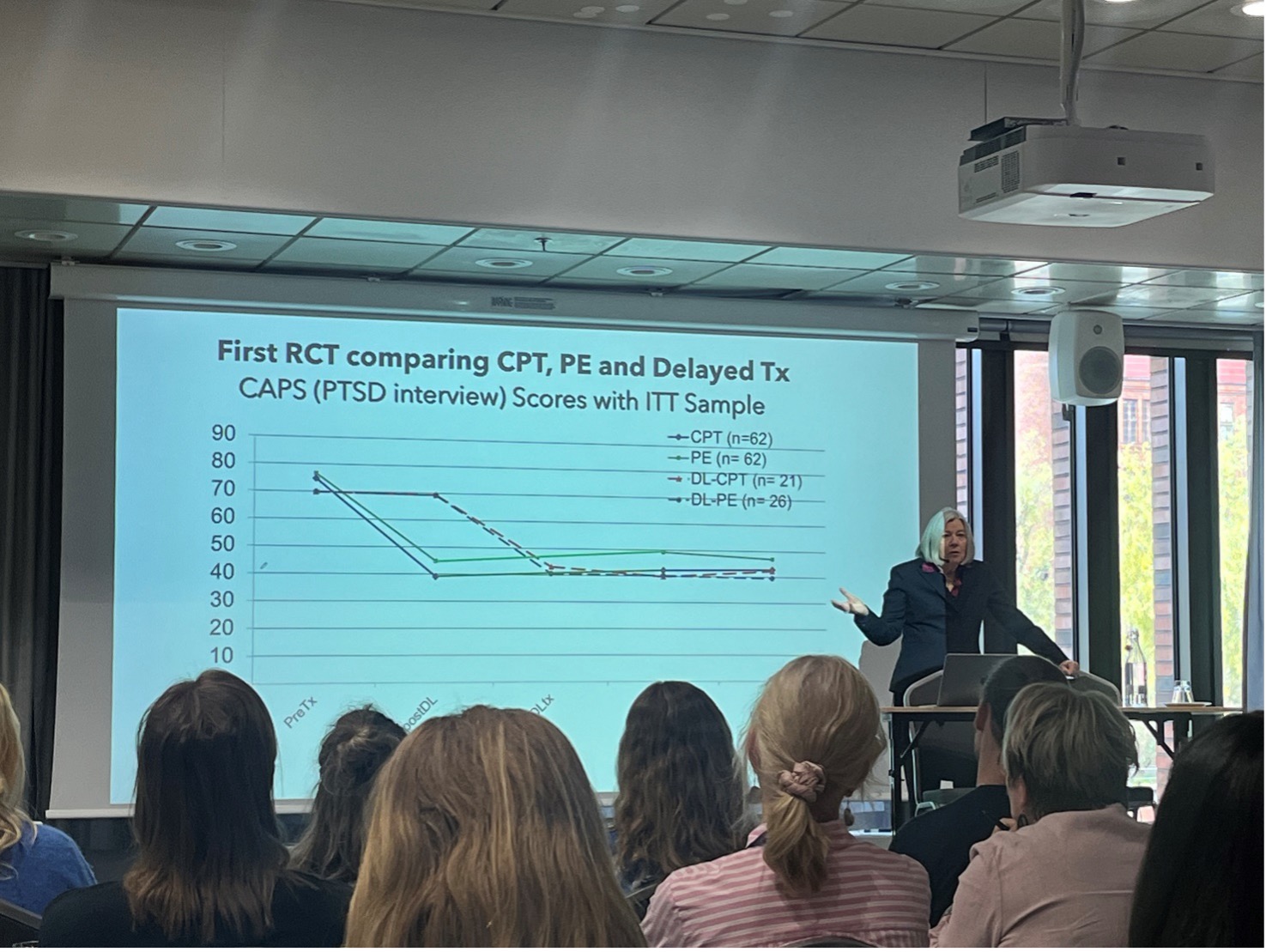
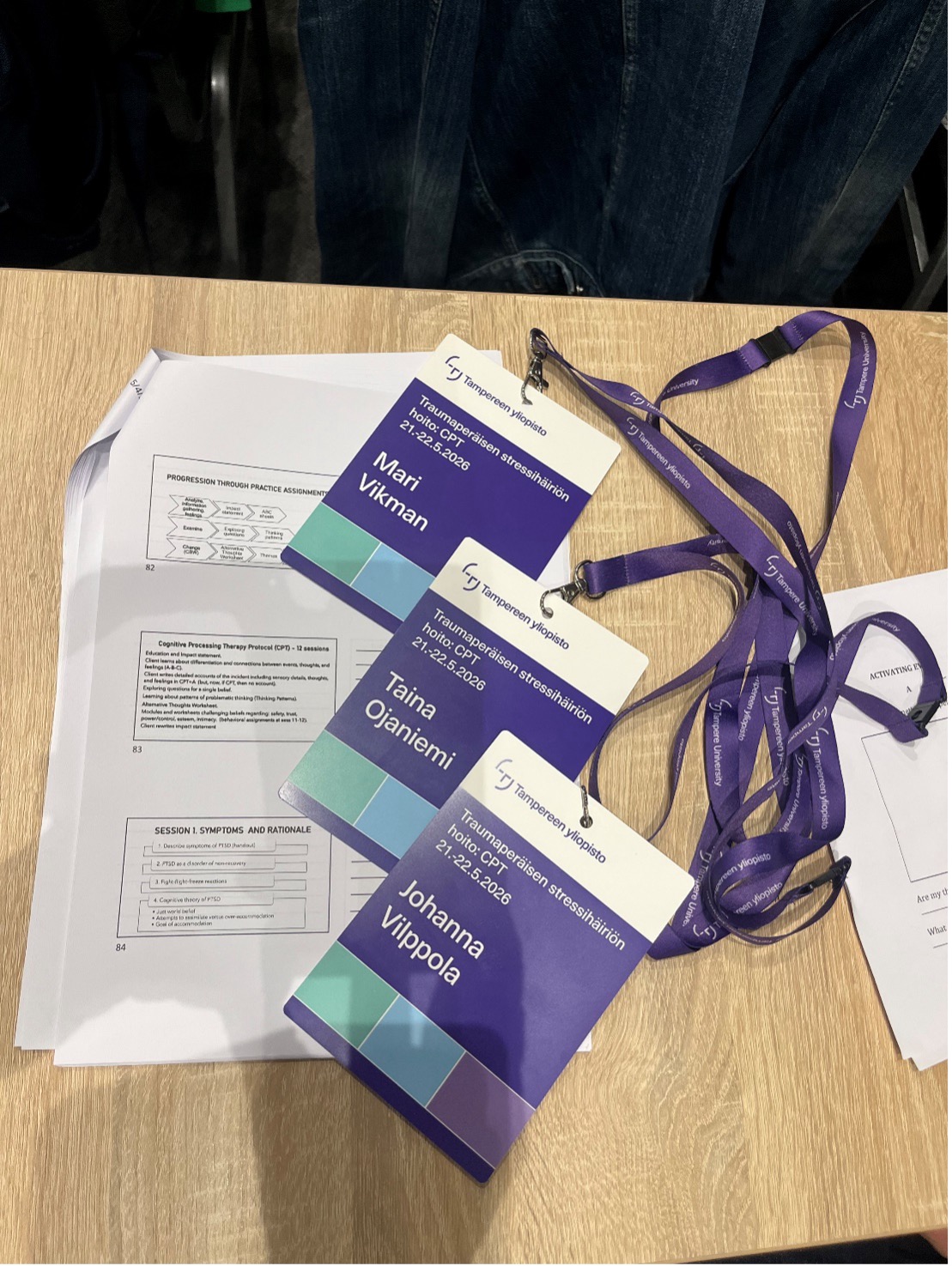
The two-day seminar explored CPT as an evidence-based treatment for PTSD (Resick et al., 2024). It covered the foundations of the method, case conceptualisation, Socratic dialogue, and key themes such as safety, trust, control, esteem and intimacy. A particular highlight was the opportunity to learn from Professor Emerita Patricia A. Resick of Duke University, who developed the method.
The seminar was not only about receiving new information. It was also about learning together: exchanging observations, continuing discussions, and considering what each of us could bring into our own work. Our different backgrounds in teaching, research, and practice enriched our shared understanding and opened up new perspectives for our work.
The seminar also created valuable space for networking. It highlighted how trauma-related expertise develops through dialogue between research, clinical practice, and education. For TAMK, encounters like this help keep education and research up to date while also building connections beyond our own institution.
At TAMK, this kind of competence has wider value. The insights gained at the seminar can feed into degree education, specialisation education, research, and development work through the teaching, supervision, research activities, and development work of the participating experts. This is relevant to mental health specialisation education, health care degree programmes, Master’s-level education such as Clinical Specialist in Mental Health and Substance Abuse and the Master’s Degree Programme in Safety and Security Management in Organisations, and the refugee education course implemented with the Faculty of Education and Culture at Tampere University. It also supports continuing education in crisis- and trauma-related themes and tailored continuing education for different organisations.
What stayed with us after the seminar was more than updated knowledge of CPT. We also left with a stronger sense of shared learning, new professional connections, and the reminder that expertise grows through listening, discussion, and reflection. That is why international learning opportunities matter: they help us stay current and continue to grow as educators, researchers, and professionals.
And perhaps one question stayed with us above all: would a more structured approach, such as CPT, or a more open-ended care encounter feel more suitable to you?
Further reading:
Resick, P. A., LoSavio, S. T., Monson, C. M., Kaysen, D. L., Wachen, J. S., Galovski, T. E., Wiltsey Stirman, S., Nixon, R. D. V., & Chard, K. M. (2024). State of the science of cognitive processing therapy. Behavior Therapy, 55(6), 1205–1221. https://doi.org/10.1016/j.beth.2024.04.003
Authors: Johanna Vilppola, Principal Researcher, SAFE Research Group, TAMK; Mari Vikman, Senior Lecturer, Social and Health Care Unit, TAMK; and Taina Ojaniemi, Senior Lecturer, Social and Health Care Unit, TAMK.