

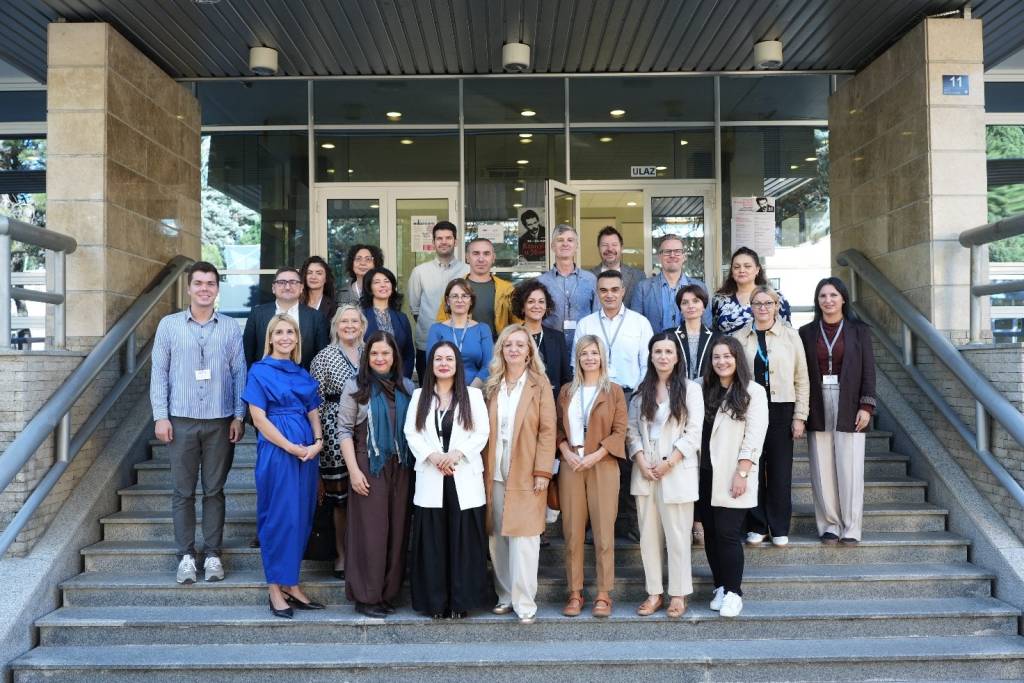
An important milestone of the project was reached in Mostar, Bosnia and Herzegovina, on 22-24 September 2026, where part of partner universities presented and reflected on the results of their first implementation round of redesigned blended education courses. Courses implemented across Albania, Kosovo and Bosnia and Herzegovina covered subjects ranging from English language studies and educational technologies to research methods and teacher education. Educators experimented with flipped classroom approaches, synchronous and asynchronous learning activities, collaborative learning tasks, digital assessment methods, e-portfolios, and AI-supported learning activities.
What Went Well?
Lecturers reported increased student participation and higher levels of learner responsibility. Students became more independent, took greater ownership of their learning, and communicated more actively with both peers and teachers. Collaborative tasks, peer learning activities, discussion forums, and project-based approaches were particularly successful.
Some highlighted that students appreciated having greater flexibility while maintaining meaningful interaction with their teachers. Many courses successfully integrated online and face-to-face learning rather than treating them as separate components, creating coherent learning experiences that supported deeper engagement, which supported also students’ digital, academic, communication and collaboration skills. Students gained experience using a variety of digital tools including Microsoft Teams, Moodle, Padlet, Canva, Google Classroom, Google Meet, Miro, H5P and AI-supported applications.
All reported implementations received generally positive student feedback according to teacher’s presence. Students particularly appreciated flexible access to learning materials, improved communication opportunities, varied learning activities, and increased possibilities for self-paced learning.
Challenges Encountered During Implementation
The first implementation cycle also revealed several challenges that need to be addressed before the next round. Perhaps the most common challenge was maintaining active participation during synchronous online sessions. Some observed that students often engaged enthusiastically in asynchronous activities but were less active during live online sessions. This finding highlights that effective online learning requires carefully designed interaction rather than simply transferring classroom lectures to videoconferencing platforms. Both students and lecturers identified workload as a concern. Designing blended courses required significant preparation time, particularly when creating digital materials, managing multiple learning environments, and providing individual feedback.
Although generally manageable, technical issues occasionally disrupted learning activities, especially in synchronous hybrid sessions. Connectivity problems, unfamiliarity with platforms and methods were common concerns. These observations reinforce the need for continuous technical and pedagogical support for staff and students.
What Have We Learned?
The Mostar workshop confirmed that the BEWBU project has successfully moved from planning and training into meaningful implementation. Participants agreed that blended education offers significant opportunities to increase flexibility, engagement, accessibility and skills development across Western Balkan higher education institutions. At the same time, the first implementation cycle highlighted the importance of strengthening online interaction design, supporting staff workload management, and continuing professional development activities.
Sanna Ruhalahti, PhD, Principal lecturer TAMK
Jiri Vilppola, PhD, Senior lecturer TAMK
This blog post was produced within the framework of the BEWBU project, which is co-funded by the Erasmus+ Capacity Building in Higher Education (CBHE) programme of the European Union.


Kommentit