

Learning to test ideas early, build simple prototypes, understand costs, and see money as a tool rather than a barrier empowers young entrepreneurs to move faster and think bigger. Entrepreneurship today is hands-on, experimental, and full of learning-by-doing. Mistakes are not failures but data, and action beats perfection every time. If you’re curious about creating value, solving real problems, and turning creativity into something tangible, this is where your entrepreneurial path begins.
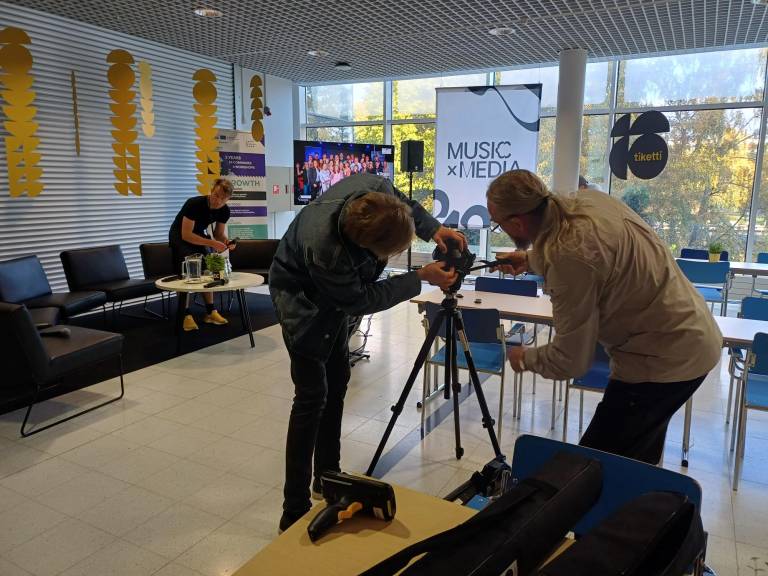
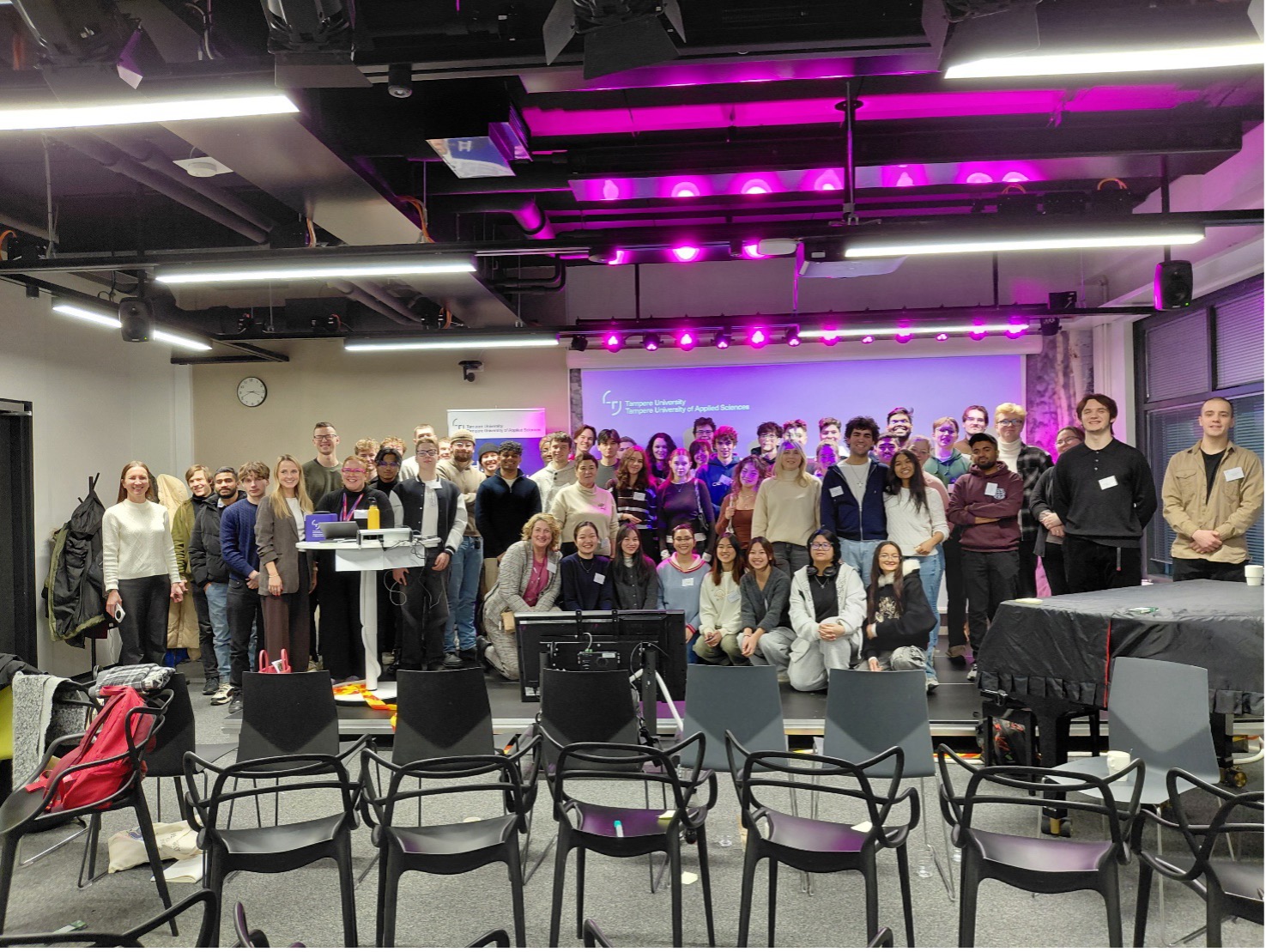
The Succeed in Business project workshop (15.-16.4.2026, in Tampere) brought together participants from Finland, Estonia and Latvia to explore the foundations of entrepreneurship, from accounting and financial decision-making to prototyping and production. The two-day workshop combined lectures, student-led projects and expert perspectives to turn theory into practical insights for aspiring and growing entrepreneurs.
Beyond Numbers: Understanding the Purpose of Accounting
In the first lecture What is Accounting?, senior lecturer Petteri Vilen from TAMK challenged students to look beyond numbers and asked the big “why” questions: Why set up a firm? Why become an entrepreneur? Profit matters, but so do value creation, sustainability, freedom, and social impact. Pete reminded participants that a company is a legal entity with its own capital and responsibilities. From setting up formalities to bookkeeping, accounting helps entrepreneurs measure profit through income statements and understand company value via balance sheets at a specific point in time. Later in the session, lecturer Sven Rassl encouraged students to reflect on topics such as pricing and how supply and demand meet in the market.
Learning Business Finance Through Real Projects and Dialogue
Proakatemia students brought an interesting and inspiring young‑entrepreneur perspective to the workshop days. Ilias Anezary Abbad, Amelia Ilga and Mare Sãrta presented their Vietnam project and its budget, offering a concrete view of how entrepreneurs manage finances in practice. The budgeting model they used was shared with all participants for future use – and it would be useful for developing the participants’ own business projects. The lecture continued with a dialogue circle, where all participants discussed financial management challenges, explored solutions together, and reflected on key choices such as loans versus equity investment. Participants were curious about different business models, and Proakatemia students shared examples from their own ventures. All of this served as a reminder to young aspiring entrepreneurs of the value of sharing their thoughts, reflecting on their ideas together with others, and considering different perspectives.
Financing Growth: Long-Term Thinking and Smart Capital Choices
Roope Hänninen from Nordea shared insights on startup and growth financing, emphasizing that sustainable growth is built through long-term planning and persistent work. He introduced Nordea Speed Dating, a closed matchmaking concept that connects Nordic high-growth startups and scaleups with suitable investors at different stages, from pre-seed to scale-up. Roope also highlighted the benefits of Nordea’s growth loan, which allows founders to avoid early ownership dilution, maintain control of their business, and stay attractive for future investment rounds, all with founder-friendly terms and competitive pricing. For young entrepreneurs, it is important to understand that banks can offer support in various ways, acting as partners and sources of guidance already at the very beginning of their careers.
Design Thinking at the Core of Entrepreneurship Learning
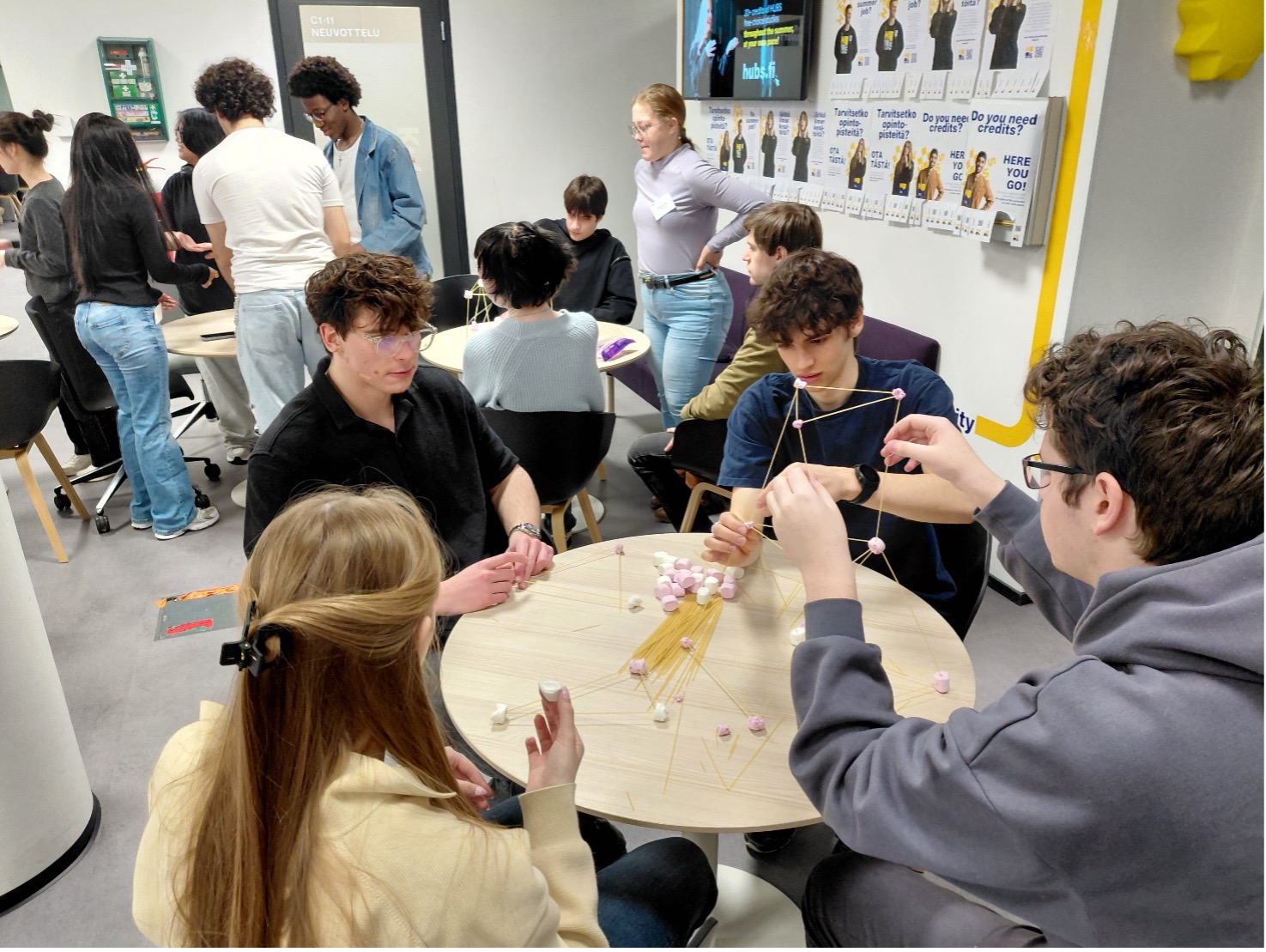
To conclude the workshop days, TAMK coaches Cristian Burr Raty, Kamil Wojcik and Mikko Sävilahti guided participants through hands-on exercises rooted in design thinking and collective thinking. Working in small groups, participants explored different project themes by developing, prototyping and refining ideas, and considering concrete pathways from concept to production through collaborative problem-solving. The Succeed in Business learning journey continues beyond this event, as the training programme runs throughout the summer, during which students will further develop and prepare their own business ideas.
Read more:
Succeed in Business (2024-2026) is co-funded by the European Union, Interreg, Central Baltic Programme: Succeed in Business Training Course 2025-2026 | Succeed in Business | Tampere Universities
Author: Päivi Heimonen, Principal lecturer, Tampere University of Applied Sciences
Photos: Päivi Heimonen