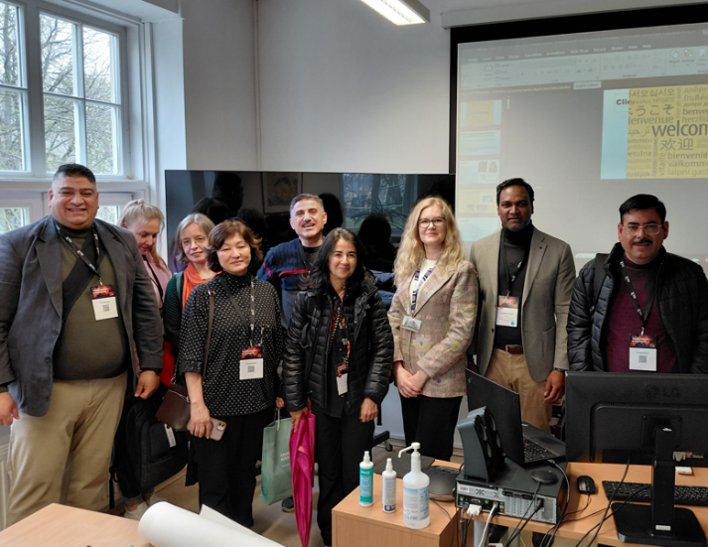

I took part in an Erasmus+ staff exchange in The Hague in April 2026. In addition to me, Kaisa Kokko, Mikko Sävilahti and Kersti Jääskeläinen from TAMK also joined the trip. Our aim was to meet UNINOVIS partners in relation to micro-credentials and continuous learning. We also discussed COILs (Collaborative Online International Learning), which are currently relevant to development work at TAMK as well.
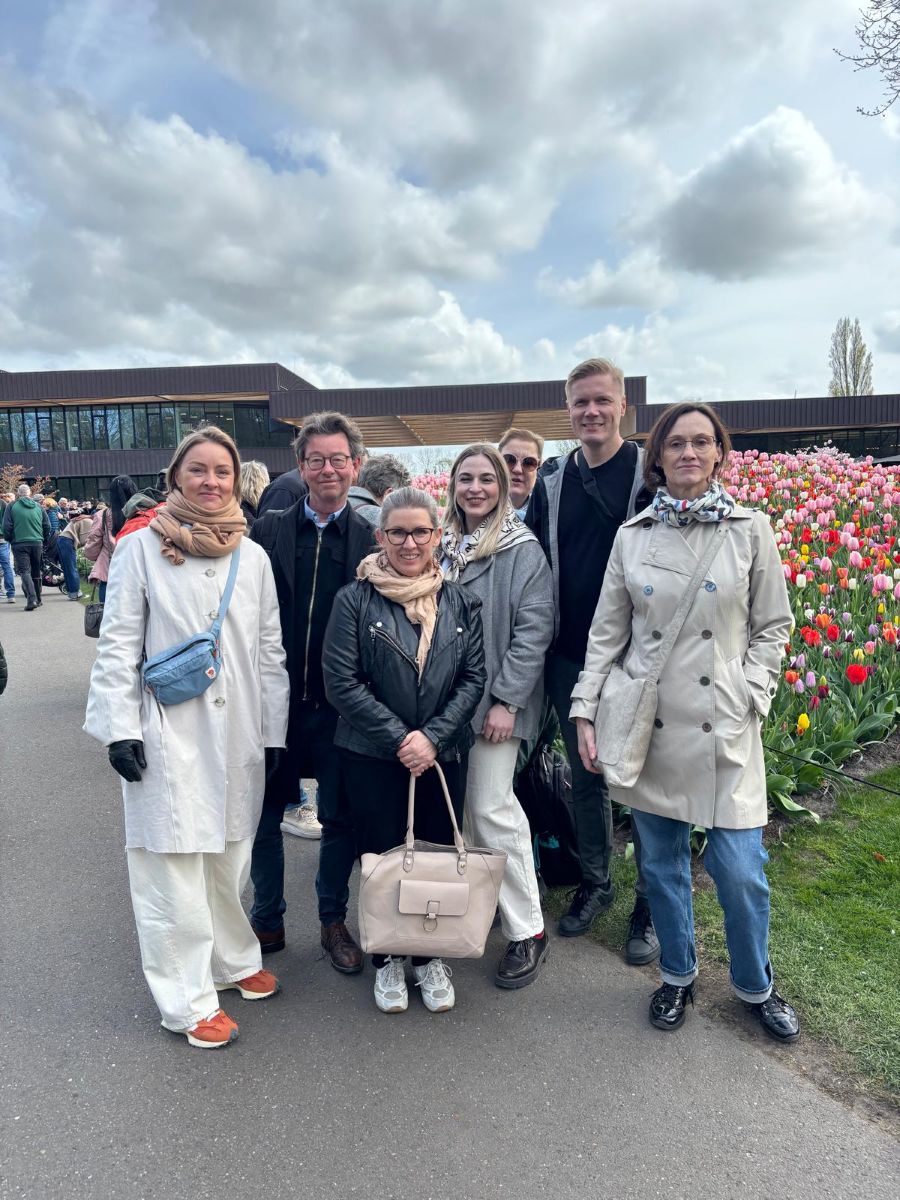
We also participated in the Global Educators Day 2026, whose theme this year was Pluri-perspective learning in times of transition. In the joint workshops, we considered from many perspectives the impact of people’s backgrounds, cultures and diverse characteristics in higher education (HE), and how we can make this superdiversity our superpower in HE. The sessions during the event were based on Marloes Ambagts-van Rooijen’s (2026) dissertation Making (super)diversity our strength. The perspective focused particularly on internationalisation.
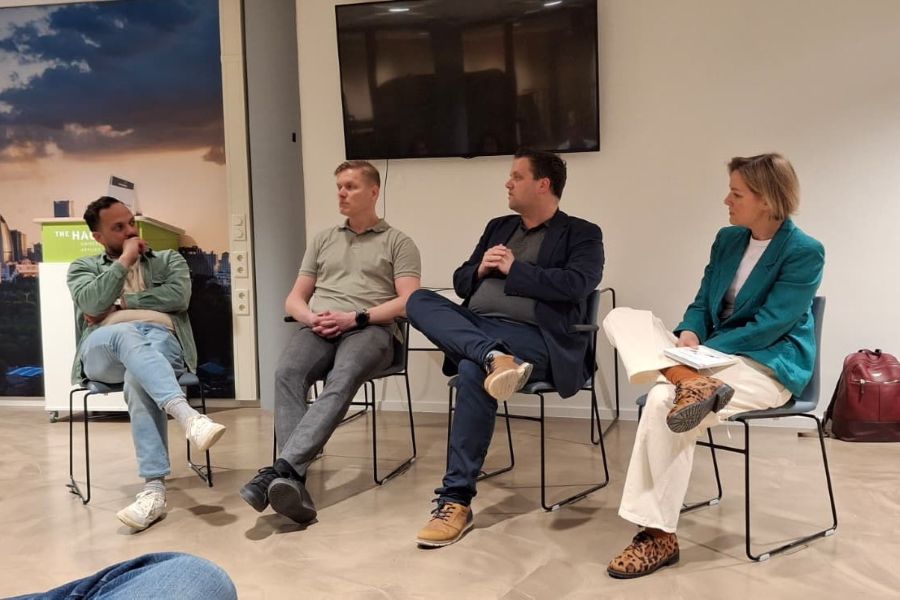
Student diversity is also visible in Finnish higher education institutions (HEI). The same teaching situation may include both degree students and open UAS students, whose prior knowledge, study experiences and life situations differ from one another. Learning challenges are also identified better today than before, and HEIs have increasing opportunities to offer students appropriate support. The growing proportion of international students already enriches our community and will do so even more in the future.
Teaching such a (super)diverse student group requires teachers to pay somewhat particular attention to planning their teaching, but what is fundamentally important is awareness of diversity and an understanding of its effects. It would also be useful to address the topic with students. In the Global Educators Day workshop, we had the opportunity to try out methods in practice that can also be used with students.
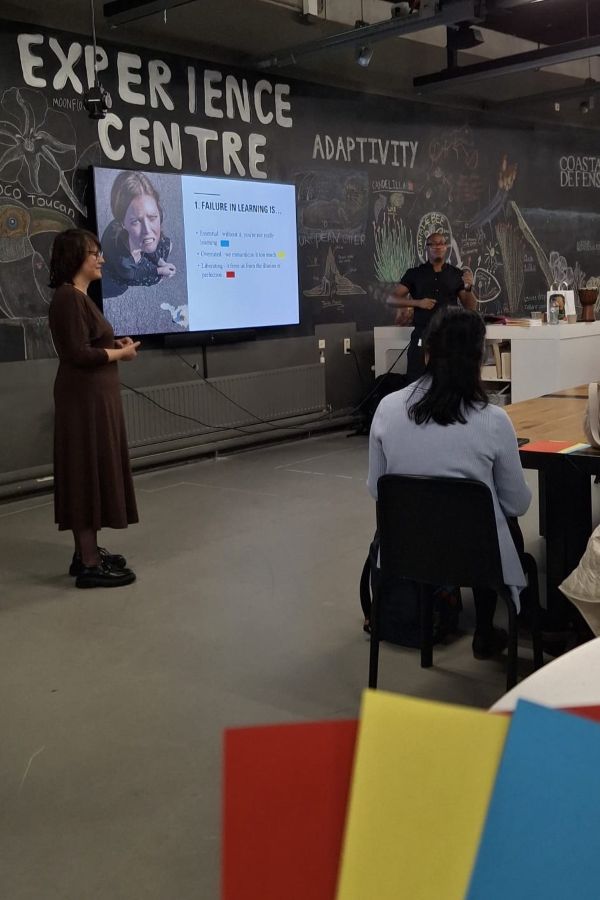
One method that was new to me concerned dealing with differing opinions within a group. Participants were given three cards of different colours, each representing an opinion. The facilitator presented a statement with three different opinions, and participants expressed their view by raising a card of a particular colour. After this, participants formed groups or pairs that included all the different opinions. In the groups, they justified their own view, and quite often it became clear that the opinions were not entirely black and white. This led to fruitful discussion about different perspectives on a shared issue. The method also developed discussion and listening skills. Before applying this method, it may therefore be useful to revisit the basic principles of constructive dialogue with students (e.g. Mäki-Hakola, 2021).
Working with themes of diversity supports the development of generic skills. I do not think that HEIs need a separate study module called From superdiversity to superpower. Rather, the theme can be approached in connection with other topics. Making different experiences, perspectives and backgrounds visible enriches learning and deepens understanding. It also strengthens the community’s ability to examine the world from many directions. When, instead of focusing on challenges, we concentrate on strengthening the superpower, we may perhaps be on our way towards a better future.
Author
Leena Katto, Senior Expert, Faculty of Pedagogical Innovations and Culture, TAMK
The author is an expert in pedagogical development at TAMK, whose work emphasises digital pedagogy, accessibility, and the development of learning environments that support diversity and inclusion.
In this text, artificial intelligence (M365 Copilot Premium) has been used to improve the fluency of the text and for language checking. The content and any factual errors are the author’s own work.
References
Ambagts-van Rooijen, M. (2026). Making (super)diversity our strength: from competent educators in international classrooms to partners in pluri-perspective learning and transformation. [Thesis fully internal (DIV), University of Groningen]. University of Groningen. https://doi.org/10.33612/diss.1503736546
Mäki-Hakola, H. (2021). Dialogiosaaminen haltuun osataito kerrallaan – loikka kohti parempaa ihmisyyttä.