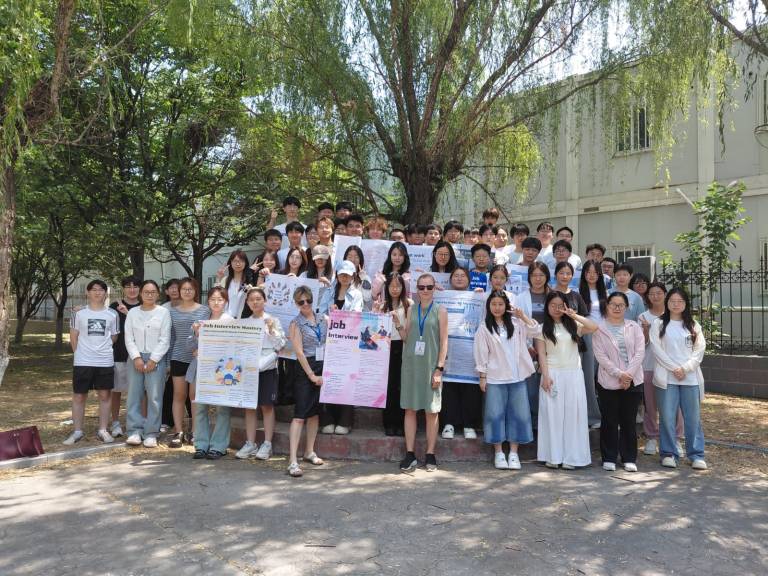
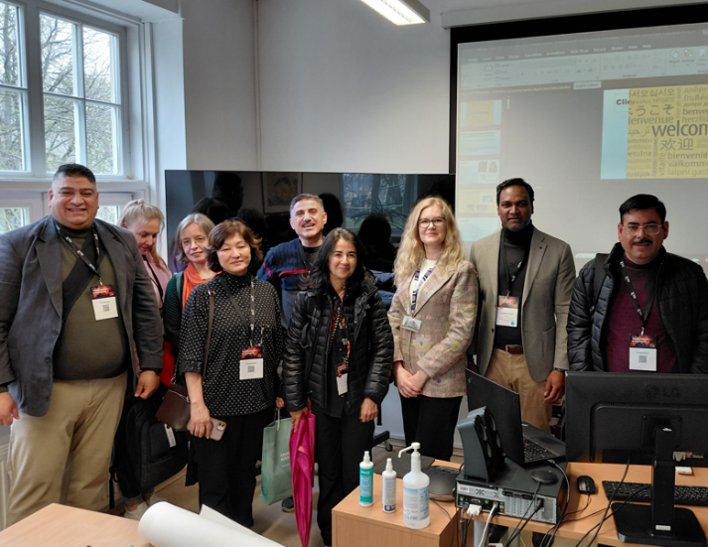
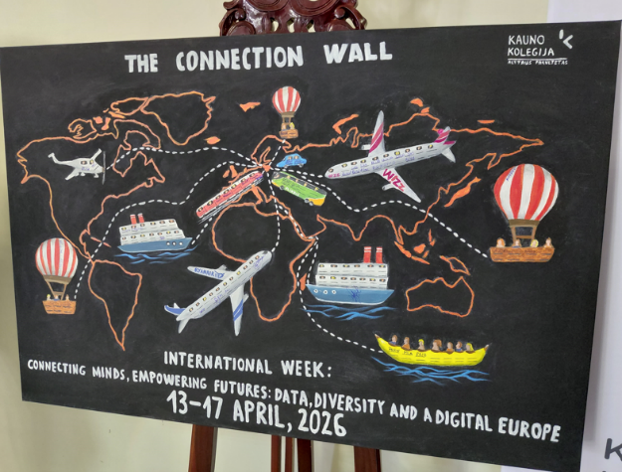
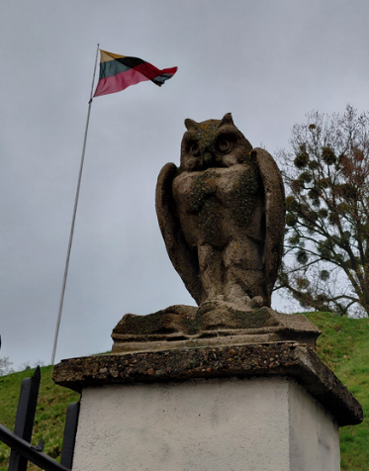
Our visit to the ART campus at the Owl Mountain combined a campus tour, art exhibitions, a case-based workshop, and hands-on glass working, creating an inspiring setting for discussion and idea sharing. The historic, nature oriented campus atmosphere encouraged open dialogue among international colleagues. A key part of the day was the “Design Challenge” workshop facilitated by Gerda Bukauskaite, which focused on the life situation of an older man living alone. The case sparked discussions in international small groups on physical, social, and environmental risks, as well as the kinds of support needed in everyday life. Despite its simplicity, the task highlighted cultural differences in attitudes towards ageing and variations in social support systems. A striking example was the contrast between Jordan, where single-living older men are uncommon, and Finland, where 47% of adults live alone (Official Statistics of Finland 2024). The day showed how a simple, well-designed activity in an inspiring environment can spark meaningful conversation and shared learning.
Interaction is one of the most powerful factors that transforms learning from passive knowledge acquisition into an active and meaningful experience. When students discuss, experiment, reflect, and act together with others, learning becomes deeper and more lasting. We had the opportunity to listen to a presentation on the SimPRENA project (https://simprena.eu) where a key insight was that learning is strongest in interactive and psychologically safe environments. By using simulations, role-play, and realistic scenarios, simulation enables students to face challenges collaboratively and receive immediate feedback on their actions. In these moments, learning is not only about knowing, but about understanding, emotions, and action.
Beyond learning, interaction plays a key role in building connections between people. A shared dinner in the beautiful setting of Raudondvaris Manor offered a valuable opportunity to create connections across different parts of the world and across disciplines. Open conversations and storytelling about local history strengthened a sense of community and enabled the sharing of perspectives, experiences, and values across geographical and institutional boundaries. Such moments remind us that meaningful collaboration often begins with human encounters.
Initiating collaboration still relies strongly on building personal relationships, even though much of, today’s work is carried out through remote connections. Joint discussions around planning project work and teaching collaboration help to identify shared opportunities. Face‑to‑face conversations make it easier to explain working practices, consider cultural differences, and jointly reflect on why developing a particular topic together is meaningful. One concrete outcome of this exchange week is the idea of organizing a BIP (Blended Intensive Programme) mobility focused on the theme “Existential needs and pastoral care in long-term and gerontological care.”
References:
Official Statistics of Finland (OSF). (2024). Dwellings and housing conditions. ISSN=1798-6761. Helsinki. Referenced: 22.4.2026. https://stat.fi/en/publication/cm1ivw3oka7zv07w5c57pzfzc
Authors:
Katja Hautsalo, Senior Lecturer, Tampere University of Applied Sciences
Elina Korpimäki, Head of Degree Programme in Nursing, Tampere University of Applied Sciences